
Alerts
-
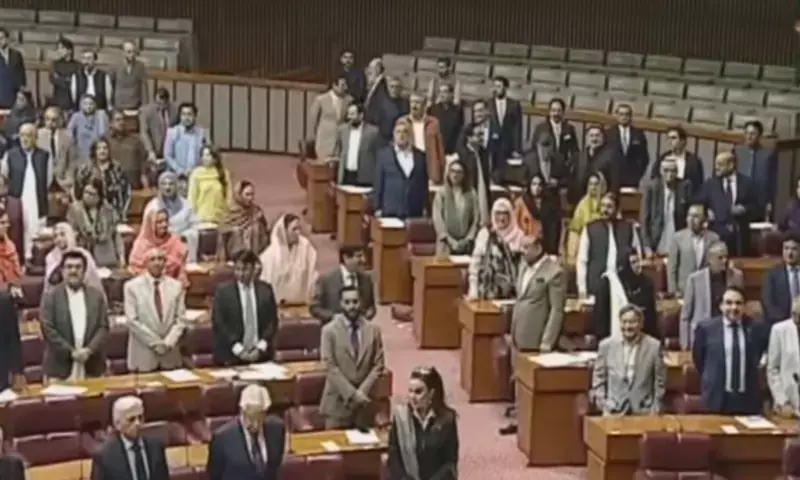
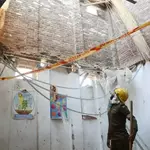
A joint session of the Parliament is currently discussing two resolutions regarding the imposition of governor’s rule and emergency in Khyber Pakhtunkhwa. The joint session of the National Assembly and the Senate is taking place a day after both Houses of Parliament, in separate sittings, passed resolutions endorsing the imposition of emergency in KP. According to Article 232, if the “president acts on his own, the Proclamation of Emergency shall be placed” before both Houses of the Parliament for approval by each House within 10 days. Meanwhile, a proclamation for governor’s rule issued under Article 234 “shall be laid before a joint sitting and shall cease to be in force at the expiration of two months”, unless a joint sitting approves its extension. However, such a measure shall not remain in force for more than six months. The Centre imposed governor’s rule and emergency in KP on Oct 11, citing the provincial government’s “deliberate disengagement” from the fight against terrorism. The move followed weeks of political tensions between the Centre and the PTI after the latter announced a long march to Islamabad to demand the release of its jailed founder, Imran Khan. During Thursday’s joint sitting, opposition members turned up carrying placards inscribed with slogans, such as “emergency na manzoor (emergency is unacceptable)”. At the outset of the proceedings, Parliamentary Affairs Minister Tariq Fazal Chaudhry presented a motion under Rule 232 of the Parliament (Joint Sitting) Rules 1973 to suspend certain sub-rules so he could move the resolutions. As loud noes echoed and opposition members chanted “emergency na manzoor”, NA Speaker Ayaz Sadiq again put the motion to a vote by asking the members to stand up, which was then adopted with 214-56 votes. Subsequently, Chaudhry moved two resolutions before the joint sitting — one for the Proclamation of Emergency under Article 232 and the second for the proclamation of governor’s rule under Article 234. Law Minister Azam Nazeer Tarar then opened the discussion on the two resolutions. Noting that a resolution regarding the imposition of emergency also required to be passed by a joint sitting, Tarar said a special mechanism has been put in place in KP to run its affairs during the emergency and governor’s rule. He said members of the treasury benches were ready to reply to any query raised by the opposition. The law minister highlighted that the PTI-led government in KP, which now stands non-functional, was advised time and again to tackle terrorism. He again lamented that PTI leaders did not attend any funeral of martyrs who lost their lives in terrorist attacks. Tarar went on to stress that governor’s rule was imposed under Article 234, which allows the move if any provincial government was being run against the Constitution. Explaining the constitutional process to approve the resolution for emergency, he said the joint sitting could reject it by a total majority, ie 51 per cent. Similarly, the resolution for governor’s rule also required a total majority of votes for approval. At the outset of the sitting, the Parliament offered prayers for the lives lost, mostly of children, in a roof collapse in Peshawar. Achakzai blames ‘faulty decisions’ Speaking in the Parliament, NA Opposition Leader Mehmood Khan Achakzai blamed “faulty decisions” of the country’s rulers for the current situation. He enquired about the whereabouts of Sohail Afridi, the KP chief minister whose role is now non-functional and was reported to be in preventative custody. Achakzai, who leads the opposition alliance Tehreek-i-Tahafuz-i-Ayin-i-Pakistan (TTAP), accused PML-N’s Sadiq of not running the house judiciously as the speaker. He said the opposition was ready for dialogue on issues such as empowerment of Parliament and eradicating terrorism of all kinds. “If you hold dialogue on these issues, we will give unconditional support,” he added. The opposition leader compared the KP imbroglio to the 1971 separation of East Pakistan, noting that Afridi was called a “terrorist”. “Were multiple attacks on the heads of different political parties in the past in KP committed by Sohail Afridi?” he asked. Achakzai said terrorism was introduced by those who had brought fighters for the Soviet-Afghan war. “When the Afghan war was over, these terrorists were left free in the tribal areas of the country and they started killing Pakistanis,” he added. The opposition leader then mentioned the reported deaths during the July unrest in Azad Jammu and Kashmir (AJK). The TTAP chief sought meetings of incarcerated PTI founder Imran Khan with his family, friends and party workers. He questioned who had “sent” ex-premier Nawaz Sharif to exile in Saudi Arabia and who “murdered” ex-PM Benazir Bhutto. The NA speaker took exception to Achakzai’s remarks on his chairing of the session. “You are saying to me that I am not running the House correctly. You have not read Rule 30. Someone takes their mobile phone; someone disrupts [the proceedings].” Sadiq further said recordings of members’ speeches that were “anti-state” would not be uploaded on the NA’s social media accounts. Meanwhile, Senate Opposition Leader Allama Raja Nasir Abbas accused the government’s delegation of derailing the dialogue with the opposition, including the Oct 3 talks. The Majlis Wahdat-i-Muslimeen (MWM) chief said some more time should have been allowed to make the talks successful and called for resolving the public’s issues instead of blaming each other. The senator contended that people voted for the PTI in large numbers during the February 2024 general elections in reaction to Imran’s imprisonment. Noting that this was his first tenure as a parliament member, Abbas said he realised that the Constitution was a safeguard of the rights of people. He further claimed he did not receive a salary or any perks and privileges from the Senate. PPP wanted to find common ground: Rehman In her remarks, PPP Senator Sherry Rehman asked the PTI to define its agenda and reasons for its long march, which the party had announced to stage towards Islamabad but remained within KP. Rehman added that President Asif Ali Zardari and PPP Chairman Bilawal Bhutto-Zardari had insisted on resolving issues through dialogue because terrorism was a red line for them. She called on the opposition not to dictate to the government and to avoid giving lectures on patriotism. Rehman emphasised that everyone was trying to find common ground and “a path of action”, adding that martial law was not an option any “sensible politician” would want. “PPP has seen many phases of the path towards democracy. It’s a dark chapter in history; we do not want the country to go through such an experience again,” Rehman said, recalling “sacrifices” made by her party. The PPP vice president remarked that the country faced several emergencies, including those regarding education and poverty, that needed to be seen holistically. “If you think PPP is going to support any sort of emergency which is against the Constitution, you are wrong,” she declared. “This Constitution has bound the country together through difficult times. We remember the lessons from the fall of Dhaka,” she said. This is a developing story that is being updated as the situation evolves. Initial reports in the media can sometimes be inaccurate. We will strive to ensure timeliness and accuracy by relying on credible sources, such as concerned, qualified authorities and our staff reporters.





Comment