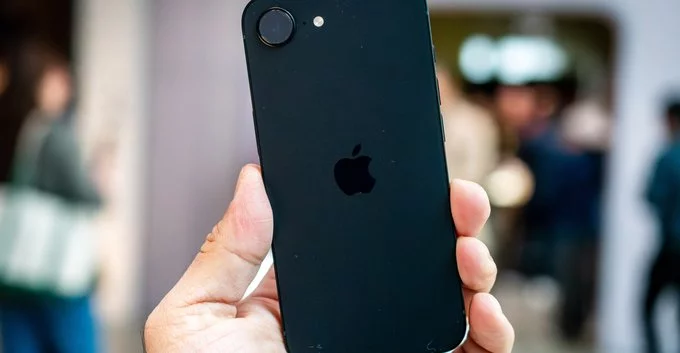
Looking for details on the iPhone 17e price, features, and whether it’s worth $599? Apple’s latest budget iPhone keeps things simple: a 6.1-inch display, a single 48MP camera, and — for the first time in this lineup — MagSafe. Announced alongside other Apple hardware updates, the iPhone 17e doesn’t reinvent the formula. Instead, it refines it, delivering exactly what most entry-level buyers expect — nothing more, nothing less.
Apple’s strategy here is clear. The iPhone 17e replaces the previous “e” model in the lineup and focuses on offering core iPhone features at a steady price. While higher-end models push boundaries with ProMotion displays and advanced camera systems, this device sticks to the basics. And for many buyers, that may be enough.
The iPhone 17e starts at $599, maintaining Apple’s established entry-level pricing tier. That price point positions it comfortably below the flagship iPhone 17 models while keeping it within reach for students, upgraders, and first-time iPhone buyers.
Storage gets a small but meaningful bump this year, addressing one of the most common complaints about base-model devices. For users who primarily browse social media, stream video, and capture everyday photos, the configuration feels balanced. Apple isn’t trying to wow anyone here — it’s trying to keep the value equation stable.
Color options remain minimal but appealing: black, white, and pink. The finishes feel premium despite the lower-tier branding, reinforcing Apple’s consistent design language across the lineup.
The biggest compromise on the iPhone 17e is its display. You get a 6.1-inch screen with a 60Hz refresh rate — no ProMotion, no advanced adaptive refresh tech, and no Dynamic Island. It’s a straightforward panel built for reliability rather than flash.
For everyday tasks like messaging, browsing, and video playback, the screen performs well. Text is sharp, colors are accurate, and brightness levels are sufficient for most lighting conditions. However, users coming from 120Hz displays may notice the difference in smoothness when scrolling.
One notable improvement is the inclusion of Apple’s Ceramic Shield 2 coating. This upgrade enhances scratch resistance and glare reduction, giving the display a bit more durability. While it won’t compete with the premium panels in higher-end models, it’s a practical step forward for a budget device.
On the back, Apple keeps things minimal with a single 48-megapixel camera sensor. By default, the camera captures 24-megapixel images, combining pixels for improved light performance. Users can also switch to full 48MP resolution when needed.
Apple continues to describe its 2x crop mode as “optical-quality,” leveraging the high-resolution sensor to simulate telephoto capabilities. While technically a crop, results in good lighting conditions should remain sharp enough for casual photography.
There are trade-offs. There’s no dedicated telephoto lens, no ultra-wide camera, and no physical camera control button. The front-facing camera drops to 12 megapixels compared to higher-end models in the lineup. For most users, though, the camera system will feel familiar — reliable, consistent, and easy to use.
The biggest headline feature is MagSafe support. For the first time, Apple brings its magnetic accessory system to its most affordable iPhone tier.
MagSafe opens the door to magnetic chargers, wallets, stands, and battery packs. For buyers who previously had to skip this ecosystem feature unless they bought a more expensive model, this is a meaningful addition. It also future-proofs the device, ensuring compatibility with Apple’s expanding accessory lineup.
Adding MagSafe without increasing the price signals Apple’s intent to unify its ecosystem across tiers. That consistency matters — especially for users investing in accessories over time.
Although Apple hasn’t positioned the iPhone 17e as a performance powerhouse, day-to-day responsiveness feels smooth. Apps launch quickly, multitasking is stable, and the device handles common workflows without hesitation.
The software experience remains a core strength. Buyers gain access to the same operating system features, security updates, and ecosystem integrations as higher-end models. That parity keeps the 17e competitive even if hardware specs are trimmed down.
Battery life expectations remain steady for a 6.1-inch device. Without a high-refresh-rate display drawing extra power, the phone may even benefit from improved efficiency compared to more advanced models.
The iPhone 17e is designed for practical buyers. If you want a modern iPhone with reliable performance, strong build quality, and long-term software support — but don’t care about 120Hz scrolling or multi-lens photography — this model makes sense.
Students, budget-conscious shoppers, and users upgrading from much older iPhones will likely find it more than sufficient. On the other hand, tech enthusiasts chasing the latest display technology or advanced camera systems may feel limited.
Apple isn’t trying to convert power users with this device. Instead, it’s reinforcing its entry-level offering with one smart addition: MagSafe.
Nothing about the iPhone 17e feels revolutionary. That’s precisely the point. Apple refined the essentials, improved durability, added MagSafe, and kept the price at $599.
Sometimes, stability is the strategy. In a market full of experimental features and escalating prices, the iPhone 17e stands out by staying steady. For many buyers, predictable value may be more appealing than cutting-edge ambition.
If your priority is owning a dependable iPhone without stretching your budget, the iPhone 17e delivers exactly what it promises — nothing more, nothing less.






Comment