
-
4 minutes, 10 seconds
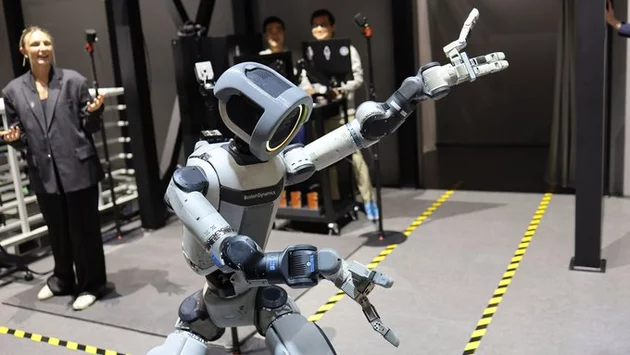
Researchers and engineers are now using human motion to teach robots how to move more naturally. At CES 2026, robots like Boston Dynamics’ Atlas demonstrated lifelike agility, thanks to a combination of motion capture, virtual reality (VR), and advanced AI. For those wondering how robots can walk, run, or even dance like humans, the answer lies in studying every subtle shift in human biomechanics. By capturing the tiniest adjustments our bodies make, engineers can program robots to respond with similar precision.
Motion capture technology allows scientists to record human movements in extraordinary detail. Every step, sway, and twist is analyzed to understand how balance, weight distribution, and momentum interact. This data doesn’t just help robots walk—it enables them to adapt to uneven terrain, recover from stumbles, and even perform complex athletic maneuvers. The result is robots that appear less like machines and more like living organisms responding to the world around them.
Virtual reality plays a surprisingly important role in teaching robots. Engineers use VR environments to simulate real-world challenges for robots, allowing AI to experiment with different movements safely. Robots can "try out" jumping over obstacles, climbing stairs, or maneuvering in crowded spaces without risk of damage. These virtual simulations accelerate learning, making the robots’ real-world actions smoother and more fluid.
What sets this new wave of robotics apart is AI’s ability to mimic human micro-adjustments. Our bodies make thousands of tiny corrections while walking, running, or balancing—most of which we don’t even notice. AI algorithms study these patterns, translating them into robotic movements. The result is machines like Atlas that can adjust their posture mid-motion, navigate uneven surfaces, and perform tasks that once required human finesse.
While CES 2026 showcases robots performing remarkable feats, the technology is moving quickly toward everyday use. Robots trained with human motion could assist in healthcare, helping patients with physical therapy exercises. They may support manufacturing, performing repetitive tasks with precision and speed. Even disaster response could benefit, with robots navigating hazardous environments more safely and efficiently.
What’s clear is that human motion is more than just a guide—it’s the foundation of the robot revolution. By studying the nuances of our movements, engineers are creating machines that feel intuitive and capable. The marriage of biomechanics, VR, and AI is transforming robotics, making robots like Atlas not just functional, but surprisingly lifelike.
The path from human motion to robotic mastery is a thrilling example of technology imitating life. With continued advancements in AI, motion capture, and VR, robots are becoming more agile, responsive, and human-like every year. CES 2026 is just the beginning, showing us a future where robots move with grace, precision, and the intelligence of the human body they were inspired by.

2.5K articles

1.4K articles

34 articles

28 articles














Comment