Alerts

-
4 minutes, 37 seconds
Auracast iPhone support remains one of the most searched Bluetooth audio questions, especially as public audio sharing gains momentum. Apple has not confirmed when—or if—native Auracast support will arrive on iOS, despite growing adoption elsewhere. That silence has slowed Auracast’s mainstream rollout, particularly in North America where iPhones dominate. A CES 2026 announcement, however, suggests a workaround could reach users sooner than expected. Audio technology company Atitan unveiled a compact accessory designed to bridge Apple’s gap. The solution does not rely on an iOS update or hidden system toggle. Instead, it adds Auracast functionality directly to the hardware layer. For iPhone users waiting on Apple, this could be the fastest path forward.
Auracast is designed to let one device broadcast audio to many listeners simultaneously, transforming how people share sound in public and private spaces. The technology is already supported by several Android devices, hearing aids, and audio manufacturers. Apple’s absence, however, has limited real-world adoption at scale. With iOS holding a majority market share in key regions, any missing feature creates a ripple effect across the industry. Developers and venues hesitate to invest without Apple participation. Consumers hear about Auracast but rarely experience it firsthand. This gap has left Bluetooth LE Audio underutilized. Until now, there has been little indication Apple plans to change course soon.
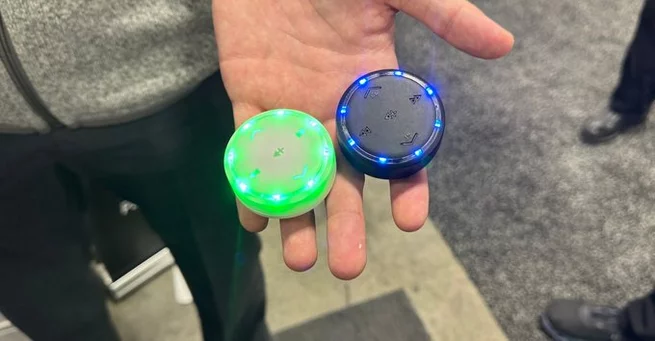
Atitan believes its splitR transceiver solves the Auracast iPhone problem without waiting for Cupertino. The small, disc-shaped device snaps onto an iPhone using MagSafe and enables Auracast transmission or reception. Once connected, the iPhone can broadcast audio streams or tune into nearby Auracast channels. The hardware acts as a bridge between Apple’s Bluetooth stack and the Auracast ecosystem. Atitan positions splitR as lightweight, portable, and simple to use. Early demonstrations show it working without deep system access. That design choice may help it avoid software restrictions. For users, it promises Auracast without replacing their phone.
Powering the experience is Atitan’s connectR app, launching on iOS and Android this summer. The app displays nearby Auracast broadcasts, connected devices, and available listening sessions. Users can create their own channels for group listening or public audio sharing. Music streaming services integrate directly, allowing playlists and songs to broadcast instantly. Atitan is also adding a social layer with posts, chats, and friend interactions. This turns Auracast from a passive feature into an interactive experience. The goal is discovery, not just connectivity. For iPhone users, it offers features Apple has yet to acknowledge.
SplitR is not limited to Apple hardware, despite its MagSafe-friendly design. Atitan allows non-Auracast devices to connect using USB-C or a 3.5mm cable. That means older phones, laptops, TVs, and audio players can join Auracast networks. This flexibility positions splitR as a universal upgrade rather than a niche accessory. It also lowers the barrier for venues and users experimenting with shared audio. If successful, the approach could pressure Apple to act faster. Until then, Auracast iPhone functionality may arrive through third-party innovation. CES 2026 suggests the future of Bluetooth audio may not wait for official approval.









Comment