Alerts

-
5 minutes, 40 seconds

Mental Health, Emotional Distress, Difficult Conversations and Suicide Prevention
This Blog explains how to recognise emotional distress and approach difficult conversations with empathy, active listening and appropriate boundaries. It provides practical guidance for supporting someone while understanding when professional or crisis support may be needed.
Emotional distress can affect anyone at different stages of life. Work-related pressure, relationship difficulties, financial concerns, grief, health problems and major life changes can all affect a person's mental wellbeing. Recognising when someone may be struggling is an important first step toward offering appropriate support.
However, knowing what to say or do is not always easy. A calm, respectful conversation can give someone an opportunity to explain how they are feeling and consider what support may be appropriate.
Mental health can affect a person's behaviour, physical health, work and relationships. The Australian Government recommends seeking appropriate help when difficult feelings or distress become concerning or continue over time. Mental health information and support can help people understand their options and find suitable services.
Supporting someone does not mean solving all of their problems. Sometimes, simply creating a safe opportunity to talk can be an important first step.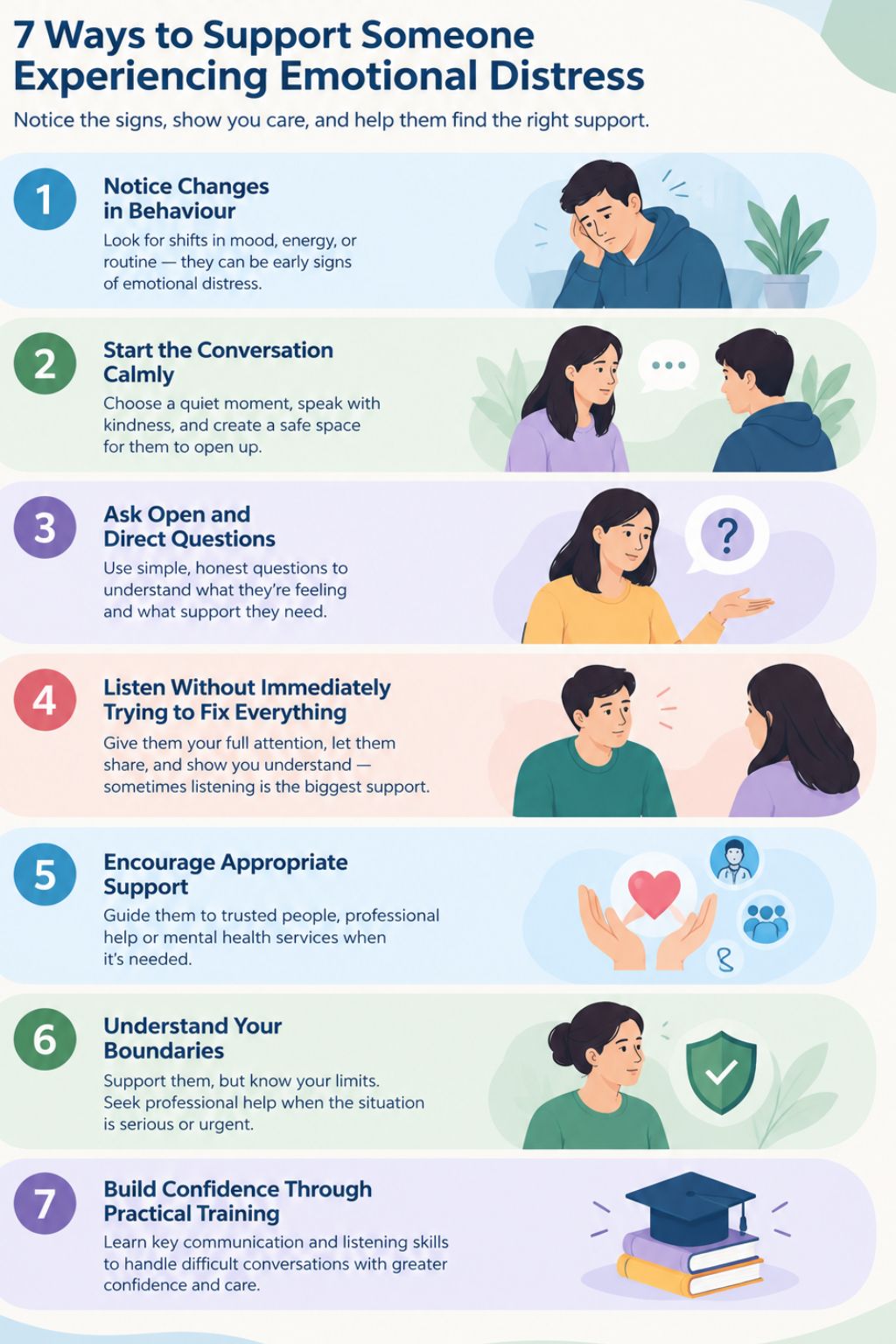
The first step is paying attention to changes in how someone communicates or behaves.
Possible signs may include:
One sign does not necessarily mean that someone has a mental health condition. However, noticeable changes can be a reason to check in with the person.
Starting a conversation about someone's wellbeing can feel uncomfortable. A calm and respectful approach can make it easier for the person to respond openly.
Instead of making assumptions, try saying:
"I've noticed you haven't seemed yourself lately. How have you been going?"
Give the person time to answer and avoid pressuring them to explain everything immediately.
The goal is to create a conversation where the person feels respected rather than judged.
Open questions allow people to explain what they are experiencing in their own words.
You could ask:
If you are seriously concerned about someone's safety, appropriate direct questions may also be necessary. Australian Government guidance recommends taking warning signs seriously and taking action when someone may be at risk.
When someone is distressed, the natural reaction can be to immediately offer solutions. However, the person may first need to feel heard.
Active listening means giving the person your attention, allowing them time to speak and checking that you have understood them correctly.
Helpful responses can include:
Listening does not mean agreeing with everything. It means trying to understand the person's experience before deciding what should happen next.
Friends, colleagues and managers can provide support, but they do not need to become counsellors or mental health professionals.
Depending on the circumstances, encourage the person to speak with a GP or mental health professional or explore trusted Australian support services. Healthdirect provides approved health information and guidance about conditions, symptoms, services and where to get help.
Head to Health is another Australian resource that provides information, advice and links to free and low-cost mental health services and supports.
Supporting someone does not mean taking responsibility for their entire situation.
It is important to understand your role, maintain appropriate boundaries and recognise when additional support is needed.
If someone appears to be at immediate risk, emergency assistance may be required. In Australia, the Australian Government advises calling 000 in an emergency. Crisis and support services such as Lifeline are also available for people experiencing personal crisis or suicidal thoughts.
Difficult conversations can become easier to approach when people have practical communication skills.
Training can help individuals and organisations learn how to recognise emotional distress, ask appropriate questions, listen effectively and respond within suitable boundaries.
Calm Conversations training focuses on developing practical skills for handling difficult and emotionally challenging conversations. Building these capabilities can help workplaces and individuals feel more prepared when sensitive situations arise.
A supportive conversation does not need to have all the answers. What matters is approaching the person with empathy, listening carefully and helping them identify appropriate next steps.
Australian mental health services provide a range of options for people who need information, support or professional assistance. The Australian Government maintains a list of mental health and suicide prevention contacts that includes organisations and services available across Australia.
Supporting someone experiencing emotional distress starts with noticing changes, approaching them respectfully and giving them an opportunity to talk.
By using active listening, asking appropriate questions and understanding personal boundaries, people can become more confident in difficult conversations. When additional help is required, connecting someone with suitable professional or crisis support is an important part of responding appropriately.
Practical communication training can also help individuals and organisations develop the confidence and skills needed to approach challenging conversations with greater empathy and care.
Emotional distress refers to significant emotional difficulty that may affect how a person thinks, feels, behaves or manages everyday life.
Changes in behaviour, withdrawal, anxiety, hopelessness, significant mood changes or difficulty managing normal activities may indicate that someone is experiencing difficulties.
Start with a calm and respectful question such as, "How have you been going?" Give the person time to respond and listen without immediately trying to solve the problem.
Yes. A respectful and direct question can give someone an opportunity to discuss difficulties they may be experiencing.
Australians can access information and support through services such as Healthdirect, Head to Health, Medicare Mental Health, Beyond Blue and Lifeline, depending on their needs.
If someone is in immediate danger in Australia, call 000. For crisis support, Lifeline is available 24 hours a day, 7 days a week on 13 11 14.
Yes. Practical training can help people develop skills in communication, active listening, recognising distress and responding appropriately while maintaining professional boundaries.





Comment