Alerts

-
3 minutes, 15 seconds
How Almagul Menlibayeva Uses AI to Preserve Censored History
Kazakh artist Almagul Menlibayeva is redefining how artificial intelligence can be used in art—not to chase trends, but to reclaim forgotten stories. Her innovative installations, blending traditional crafts with digital media, use AI-generated art to uncover histories erased by state censorship and colonial legacies. Menlibayeva’s unique approach centers not just on visual storytelling but on cultural restoration, making her work a vital commentary on memory, power, and digital ethics. Her use of almagul menlibayeva ai art is not just creative—it's deeply political and personal.
Reclaiming Lost Narratives Through AI Art
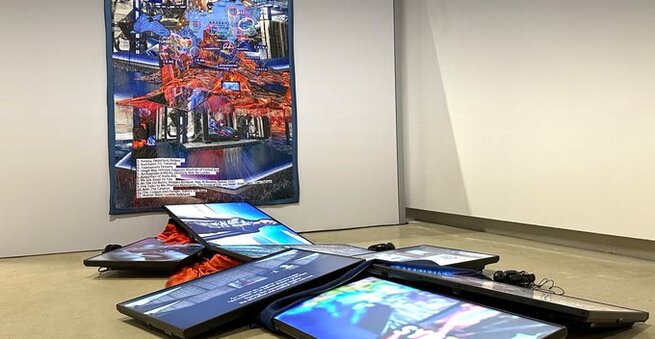
Menlibayeva’s most recent piece, Posthuman Matter: The Map of Nomadizing Reimaginings #3, merges handcrafted Kazakh textiles with AI-enhanced video loops of historically significant sites. Each site—once silenced by empire, war, or ecological disaster—is brought to life through footage enhanced with AI-generated imagery. These visuals are not arbitrary; they’re embedded with feminist rituals, nomadic folklore, and disappearing languages. Unlike many digital artists focused on aesthetics or novelty, Menlibayeva leverages AI as a narrative device, exposing systemic erasures and amplifying voices long ignored.
AI Realism: Turning Collective Memory Into Digital Testimony
Her groundbreaking 2022 project AI Realism: Qantar 2022 stands as a visceral protest against Kazakhstan’s government censorship during the Bloody January protests. With internet access shut down nationwide, Menlibayeva collected voice messages, texts, and firsthand accounts, feeding them into AI systems to reconstruct suppressed realities. Using tools like Stable Diffusion and Google Colab, she created haunting visual interpretations of these memories. This wasn’t just digital art—it was a form of resistance, challenging both authoritarian silence and algorithmic neutrality.
Humanizing AI Through Culture and Resistance
While much of the discourse around AI centers on technical progress, Menlibayeva flips the narrative. She views AI as both a mirror and a battleground—a place where cultural bias, corporate control, and hidden histories collide. By feeding personal archives and Indigenous myths into the system, she challenges the technology's default perspectives. For her, humanizing AI means embedding it with real memories and ancestral stories—not just giving it a human face. This philosophy positions her at the intersection of technology, trauma, and tradition, reshaping what it means to make art in the age of artificial intelligence.








Comment