Honda Axes Zero Series EVs Amid Record Losses
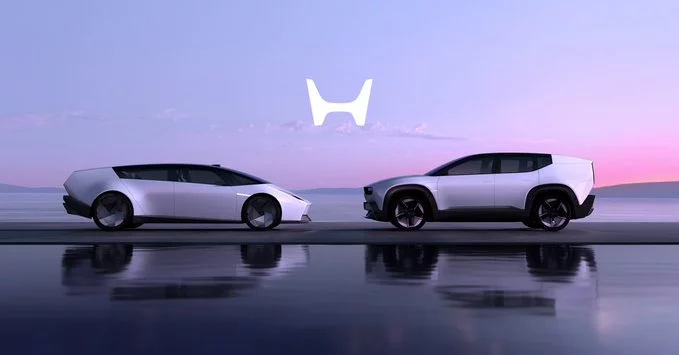
Honda has officially canceled its Zero Series electric vehicles, including the SUV, Saloon, and Acura RSX EVs, citing an “extremely challenging earnings situation.” The decision comes as the Japanese automaker faces a projected net loss of ¥360–630 billion ($2.5–4.4 billion) for the fiscal year ending this month — marking Honda’s first annual loss in its 50-year public company history.
The move leaves Honda’s ambitious EV roadmap in limbo. The company had planned 30 new EV models by 2030, aiming for 2 million units sold, full zero-emission auto sales by 2040, and carbon neutrality across all operations by 2050. Now, Honda records losses of ¥340–570 billion ($2.14–3.58 billion) specifically tied to its EV investments.
The Zero Series: Bold Design Meets Formula 1 Heritage
The Zero Series was Honda’s attempt to blend affordability with cutting-edge design and technology. Both the Saloon and SUV drew inspiration from the automaker’s Formula 1 experience while evoking the styling of iconic cars from the 1970s and 1980s, including the Lamborghini Countach and Aston Martin Lagonda Shooting Brake.
Despite its eye-catching design, the Zero Series struggled to gain traction in a crowded EV market. Rising competition from Chinese automakers, coupled with stagnant US EV sales, made it increasingly difficult for Honda to justify continued investment.
EV Struggles Aren’t Unique to Honda
Honda is far from alone in facing financial setbacks in the EV sector. Ford recently recorded a $19.5 billion write-down on its EV investments, one of the largest in corporate history. General Motors reported a $7.6 billion hit, while Stellantis saw losses totaling $26.6 billion.
Industry analysts point to a combination of factors: intensifying competition, supply chain pressures, rising battery costs, and slower-than-expected consumer adoption of EVs. Honda’s Zero Series cancellation underscores how even aggressive automakers can face harsh market realities.
Tariffs, Trade, and Failed Mergers Complicate Recovery
Honda’s financial troubles have been compounded by geopolitical and corporate challenges. The company has contended with tariffs from former President Trump’s administration, which have affected its US operations. A failed merger with Nissan last year further stalled strategic initiatives, leaving Honda to navigate a rapidly evolving automotive landscape on its own.
The cumulative effect of these obstacles has forced Honda to rethink its EV strategy, potentially scaling back its ambitious targets and focusing on core models that promise a faster path to profitability.
What’s Next for Honda’s EV Ambitions?
With the Zero Series now off the table, Honda faces critical decisions about its electric future. Will the company pursue smaller, more efficient EV investments, or pivot to hybrid and alternative powertrains until the market stabilizes? Industry insiders suggest Honda may recalibrate its approach, learning from competitors’ setbacks to avoid repeating costly mistakes.
For consumers and EV enthusiasts, the cancellation is a sobering reminder of the high stakes involved in transitioning to electric mobility. While Honda remains committed to sustainability and innovation, the road ahead will require careful balancing of ambition with financial discipline.




Comment