
Alerts
-
3 minutes, 15 seconds
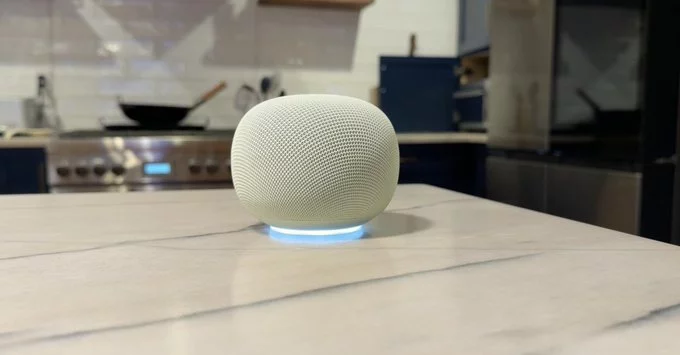
Google Home has officially added support for the Model Context Protocol (MCP), a move that opens the platform to a new generation of AI-driven automation. Previously, smart home control was largely limited to predefined routines and voice commands. With MCP integration, Google Home can now communicate with external AI agents and services in a standardized way.
This means your Google Home ecosystem is no longer confined to the devices and features Google ships out of the box. Instead, it becomes a hub that third-party developers and even hobbyists can extend. The protocol allows an AI agent to understand the state of your home and take actions on your behalf, all while respecting the permissions you set.
For existing users, the change is mostly invisible at first. Your current routines and voice commands continue to work as before. The difference is what becomes possible going forward: new integrations, custom automations, and smarter responses that were not feasible under the old, closed system.
With MCP integration in place, third-party AI agents gain a direct line into your smart home. These agents can analyze your home data and control devices, turning raw sensor readings and device states into useful action.
That means an agent can look across your connected devices and make sense of what is happening at home. It can then act on those insights by controlling devices directly, rather than leaving you to adjust each one by hand.
The result is a smart home that responds to analysis, not just to schedules or voice commands. Instead of you interpreting the data and deciding what to do, a third-party agent can handle both steps: understanding your home's data and then operating the devices that need to change.
For anyone who has wanted their smart home to do more than follow simple rules, this shift matters. Your devices become something an AI agent can reason about and manage on your behalf.
One of the most practical capabilities of third-party AI agents is the ability to build custom dashboards. Rather than relying on the fixed interface Google provides, an agent can assemble a personalised view of your smart home, pulling together the devices and data points you actually care about.
This shifts dashboard creation from a manual, developer-oriented task to something you can simply describe. Because the agent operates through the MCP integration, it can reach the devices and services connected to your Google Home ecosystem and arrange them however you request.
The result is a smart home interface that adapts to you, built on demand by an agent rather than shipped as a one-size-fits-all product.
MCP integration reshapes what your Google Home ecosystem can do, because third-party AI agents are no longer limited to the commands Google itself supports. Instead, those agents can analyze home data, control devices, and help you build custom dashboards tailored to how you actually live.
The practical effects show up in three areas:
Together, these capabilities shift your smart home from a fixed set of routines into something more adaptable. The devices stay the same, but the intelligence layered on top is chosen by you, not dictated by a single vendor. For households invested in Google Home, that means more flexibility in how the system is monitored, managed, and displayed day to day.








Comment