
Alerts
-
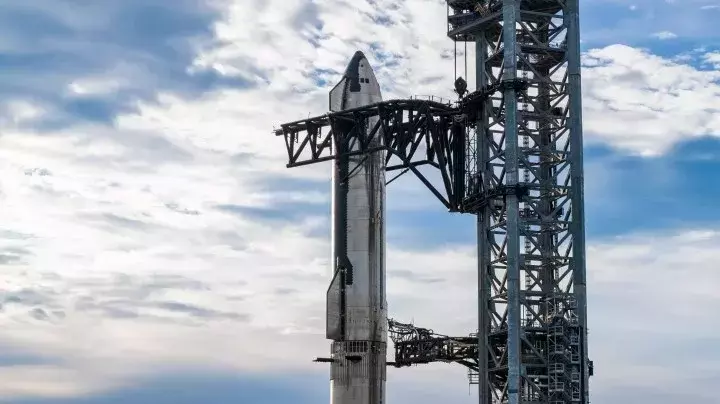
The reported discussions suggest that Google is considering launching data infrastructure into orbit with the help of SpaceX’s rapidly expanding launch capabilities. The project aligns with a growing industry belief that AI’s future may require entirely new forms of infrastructure beyond conventional server farms.
Demand for AI computing has exploded over the past two years. Massive language models, advanced video generation systems, robotics software, and enterprise AI platforms all require enormous amounts of processing power. Traditional data centers are struggling to keep up due to energy consumption concerns and increasing construction costs.
Orbital data centers represent a futuristic solution that could potentially bypass many of those limitations. By operating in space, companies could theoretically use solar energy more efficiently while avoiding local power grid stress and land-use conflicts.
SpaceX’s ambitions in this area appear tied closely to its broader long-term strategy around space commercialization. The company has increasingly positioned itself not just as a rocket provider, but as a foundational infrastructure company for future space economies.
Artificial intelligence is becoming one of the world’s most compute-intensive industries. Training advanced AI systems requires thousands of GPUs operating continuously for weeks or even months. As competition intensifies, tech companies are searching for ways to expand capacity faster and cheaper.
Ground-based facilities face several major challenges. Electricity demands are skyrocketing, water cooling systems are under scrutiny, and environmental concerns are slowing construction projects in several regions. Communities near proposed AI data centers have also raised concerns about power usage, water consumption, and noise pollution.
Orbital data centers could eventually help address some of these issues. Space offers nearly unlimited solar exposure and naturally cold environments that may assist with thermal management. Supporters also argue that moving large-scale AI infrastructure into orbit could reduce environmental tensions on Earth.
However, turning that vision into reality remains highly complex. Building and maintaining computing systems in space would require enormous engineering breakthroughs, especially regarding reliability, repairs, and radiation protection.
Reports indicate that Google is also speaking with multiple rocket-launch providers as part of a broader initiative linked to Project Suncatcher. The company reportedly plans to launch prototype satellites by 2027, signaling that orbital computing may already be moving beyond theoretical discussions.
The initiative reflects how aggressively major technology companies are pursuing AI infrastructure expansion. AI competition is no longer only about software innovation. Increasingly, it is becoming a race to control computing capacity, energy access, and global infrastructure networks.
For Google, orbital infrastructure could eventually complement its cloud computing business. The company already operates some of the world’s largest data center networks, but rising AI demand continues to pressure existing systems.
Launching computing systems into orbit may sound futuristic today, but many technologies once considered unrealistic eventually became mainstream once costs dropped and infrastructure matured.
SpaceX has become deeply intertwined with the AI boom in recent months. The company’s growing ecosystem now spans satellite internet, launch systems, supercomputing partnerships, and potential orbital infrastructure projects.
Its reported discussions with Google come shortly after another major AI-related collaboration involving computing infrastructure. SpaceX appears increasingly focused on positioning itself at the center of the next-generation AI economy.
The company’s reusable rocket systems are especially important in this equation. One of the biggest barriers to orbital infrastructure has historically been launch costs. SpaceX dramatically lowered those costs over the past decade, helping revive conversations around commercial space manufacturing and infrastructure.
The upcoming Starship system could further accelerate those ambitions. Designed for massive payload capacity and lower launch expenses, Starship may become a critical enabler for future orbital computing projects if the technology matures successfully.
Many analysts believe reusable launch technology is the single biggest reason orbital data centers are even being discussed seriously today.
Despite the excitement, many experts remain skeptical about whether orbital data centers make economic sense in the near term. While space-based systems offer theoretical advantages, the costs associated with satellite construction, launches, maintenance, and replacement remain extremely high.
Terrestrial data centers still benefit from decades of infrastructure development, stable supply chains, and easier maintenance operations. Engineers can replace failed hardware quickly on Earth, while orbital systems would face enormous logistical complications.
Radiation exposure also presents major risks for sensitive computing hardware. Equipment operating in orbit must survive harsh environmental conditions that conventional servers were never designed to handle.
Another challenge involves connectivity. Orbital data centers would still need fast communication links to Earth-based networks, adding another layer of infrastructure complexity.
Critics argue that while orbital systems may eventually become viable for specialized tasks, large-scale AI training operations are likely to remain Earth-based for years to come.
Still, technology industries often evolve faster than expected once investment accelerates. What appears economically impractical today may become feasible if launch costs continue falling and space manufacturing technologies improve.
The orbital data center conversation is arriving during a period of intense investor interest in AI infrastructure. Markets are pouring billions into chips, cloud platforms, power systems, and next-generation computing facilities.
Any company positioned to solve AI’s infrastructure bottlenecks could attract enormous investment attention. That is one reason discussions around orbital computing are generating headlines despite the technology still being in its early stages.
Space infrastructure has also become a growing focus for venture capital and government funding. The combination of AI demand, reusable rockets, and falling launch costs creates a unique window for innovation.
Investors are watching closely to see whether Google and SpaceX can turn this ambitious vision into a commercial reality. If successful, orbital data centers could mark a new chapter in both cloud computing and space commercialization.










Comment