
Alerts
-
5 minutes, 29 seconds
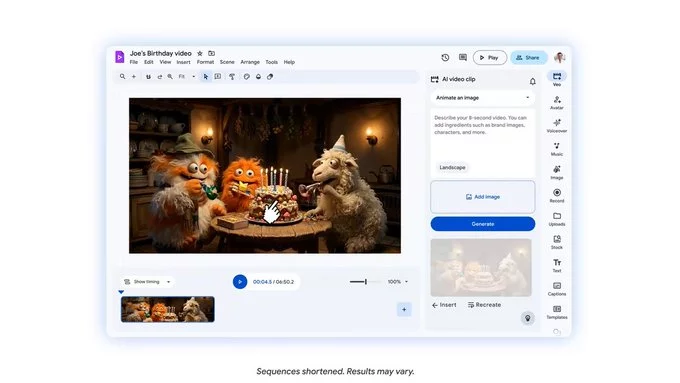
AI video creation is rapidly shifting from experimental tools to everyday features, and Google’s latest push is making that change more visible than ever. Users searching for Google AI video tools, free AI video generators, and practical ways to create short clips are now finding these capabilities built into familiar apps. At the same time, the wider industry is seeing major shifts as competitors adjust their strategies. This article explores how Google AI video is becoming more mainstream and why it matters for creators, students, and businesses in 2026.
Google’s AI video tools are increasingly embedded into everyday apps, turning simple prompts into polished clips without requiring advanced editing skills. This shift is important for users who want quick content creation for school projects, social media posts, or small business marketing. By integrating AI video generation into familiar platforms, Google reduces the learning curve and increases accessibility for non-technical users. As a result, AI video creation is no longer limited to professionals but is becoming a mainstream capability.
The AI video landscape is changing as OpenAI’s Sora strategy appears to slow its consumer-facing rollout while competitors accelerate broader availability. This contrast highlights how different companies are approaching the balance between innovation speed, safety concerns, and product readiness. For users, it means Google’s AI video tools may become more widely available while others remain in controlled environments.
For creators, Google AI video tools offer a faster way to produce engaging visual content without expensive software. This can significantly reduce production time while enabling experimentation with storytelling formats that were previously difficult to access. Students, marketers, and small businesses also benefit from simplified video creation tools that fit modern digital demands.
Looking ahead, AI video is expected to become a standard feature across most digital productivity tools. This evolution will likely blur the line between professional editing suites and everyday applications used by millions. As competition intensifies, users can expect faster innovation, more accessible tools, and improved quality in AI-generated video.
Ultimately, Google’s AI video expansion reflects a broader shift in how digital content is created, shared, and consumed. What was once a specialized skill is now becoming an everyday capability integrated into tools people already use. This democratization of AI video production could reshape industries from education to marketing and even entertainment. At the same time, it raises new questions about creativity, originality, and the role of human input in AI-generated media. The growing presence of Google AI video tools signals a turning point where creativity and automation intersect more closely than ever before. For everyday users, this means faster content creation, fewer technical barriers, and more opportunities to express ideas visually. Businesses may also benefit from more dynamic marketing content that can be produced at scale without large production teams. However, the rapid adoption of AI video also demands thoughtful use, especially when it comes to accuracy and trust. As innovation continues, the line between human-made and AI-generated video will continue to blur across platforms. Ultimately, staying informed about these advancements helps creators, students, and businesses adapt to a rapidly evolving digital landscape where AI video is no longer optional but becoming central to communication, storytelling, and online engagement across platforms worldwide while also encouraging new forms of creativity that blend human imagination with machine intelligence in ways that were not previously possible for everyday users across different industries including education marketing journalism entertainment and small business communication strategies especially as tools become more accessible intuitive and widely adopted in the global digital ecosystem shaping how people create consume and share information in real time across multiple devices and platforms overall impact grows.










Comment