Alerts

-
5 minutes, 30 seconds
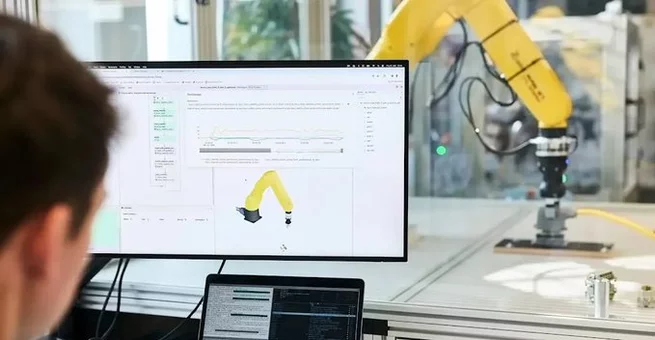
Google is taking a bold step into the world of physical AI by folding Alphabet’s robotics project, Intrinsic, directly into the company. After operating as an independent unit for five years, Intrinsic is set to become a core part of Google’s AI strategy. This move answers a growing question: how will Google turn its AI research into tangible, real-world robotics solutions? By combining Intrinsic’s software tools with Google’s AI models, the company aims to make robots smarter, easier to program, and more adaptable.
Intrinsic has long positioned itself as the “Android for robotics,” offering a platform to simplify complex robotic tasks. Its mission: enable engineers and developers to teach robots efficiently, without extensive programming expertise. Now, with full integration into Google, its technologies will have access to broader AI resources, including DeepMind and Google Cloud, potentially accelerating the evolution of practical physical AI applications.
Physical AI—machines that can sense, think, and act in the real world—represents the next frontier for artificial intelligence. Google’s acquisition of Intrinsic signals a shift from experimental, isolated projects to more integrated and commercially viable solutions. Over the past decade, robotics software has struggled to keep pace with AI advancements. Intrinsic’s tools aim to close this gap, making robots capable of handling tasks that were once considered too complex for automation.
Experts suggest this move will allow Google to compete more directly with robotics companies that focus on factory automation, warehouse logistics, and service robots. By leveraging Google’s AI models, robots could soon learn tasks faster, adapt to new environments, and operate more reliably alongside humans.
Intrinsic began as part of Alphabet’s Other Bets division, a portfolio designed for high-risk, speculative ventures. It was launched in 2021 to develop a robotics “operating system” and software toolkit, drawing comparisons to Android because of its goal to standardize and simplify robotics development.
The company has spent the last five years experimenting with robotic applications, testing AI models that allow robots to manipulate objects, navigate environments, and perform tasks without constant human oversight. Its collaboration with DeepMind is especially notable, as both teams share expertise in AI learning, sensor integration, and task automation.
While Intrinsic will retain a distinct identity within Google, the integration opens doors to advanced AI resources. Google’s Gemini AI models, alongside its cloud infrastructure, will provide Intrinsic with immense computational power and data resources. This could drastically accelerate development cycles, allowing robots to learn new skills faster than ever before.
Moreover, the move may encourage cross-team innovation within Google, linking Intrinsic with other AI-driven projects like DeepMind’s robotics models. The company has already demonstrated the potential of these collaborations, with prior projects showing robots capable of picking up delicate objects, assembling components, and performing precision tasks with minimal human guidance.
Google’s acquisition of Intrinsic reflects a broader trend in AI: the convergence of software intelligence and physical robotics. By making robots easier to program, teach, and operate, Google is paving the way for a future where AI can tackle tasks across manufacturing, logistics, healthcare, and beyond.
Industry observers are watching closely, noting that this integration could set new standards for robotics software. Developers may gain access to robust, modular tools, reducing the barriers to building practical robots for everyday applications. Meanwhile, consumers could see smarter, more capable robots in warehouses, hospitals, and even homes over the next few years.
As Google strengthens its foothold in physical AI, Intrinsic’s “Android for robots” vision may finally become a reality, demonstrating how artificial intelligence can transform not just digital experiences but the tangible, physical world around us.







Comment