
Alerts
-
7 minutes, 10 seconds
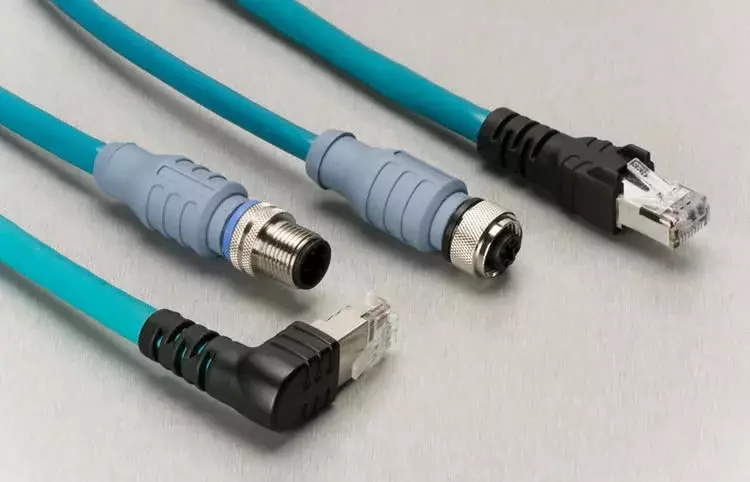
Modern industrial and marine systems depend on reliable data communication, even when equipment is exposed to water, vibration, dust, salt, temperature changes, and mechanical stress. In these demanding environments, standard networking cables may not provide the protection or durability needed for continuous operation.
A Gigabit Ethernet Series Watertight Cable Assembly is designed to address these challenges by combining high-speed Ethernet performance with robust environmental protection.
From offshore equipment and underwater monitoring systems to industrial automation and remote communication networks, rugged Ethernet assemblies can help maintain stable connections where ordinary cables may fail. Choosing the right assembly requires an understanding of environmental conditions, network requirements, connector construction, and installation practices.
A Gigabit Ethernet cable assembly is a pre-terminated networking solution designed to transmit data at speeds of up to 1 Gbps under appropriate network conditions. Instead of installing and terminating individual cables and connectors on-site, an assembly typically arrives ready for integration into equipment or infrastructure.
The watertight version adds protective features around the cable and connection points. Sealing systems, rugged connector bodies, protective jackets, and strain-relief mechanisms can help prevent water and contaminants from reaching sensitive electrical contacts.
This makes these assemblies particularly useful in locations where network equipment must operate reliably despite exposure to challenging environmental conditions.
Water is one of the biggest threats to electrical and networking connections. Moisture can cause corrosion, electrical leakage, signal degradation, and eventual connector failure. In marine environments, saltwater can be especially aggressive because it can accelerate corrosion of exposed metallic components.
A properly designed Gigabit Ethernet Series Watertight Cable Assembly can help create a sealed connection that reduces the risk of moisture entering the connector interface. Depending on the design and application, sealing may be achieved through O-rings, gaskets, overmolding, threaded coupling systems, or other waterproofing technologies.
The exact protection level should always be checked against the manufacturer's specifications. Not every watertight cable has the same resistance to immersion, pressure, chemicals, or environmental exposure.
High-speed watertight Ethernet assemblies are suitable for a broad range of industrial and marine applications. Offshore platforms may use rugged networking connections for cameras, sensors, control equipment, and monitoring systems. Ports and shipboard installations can also require protected Ethernet connections because equipment may encounter spray, humidity, vibration, and salt.
Other potential applications include:
· Underwater observation systems
· Remote monitoring equipment
· Industrial automation
· Robotics
· Offshore energy infrastructure
· Marine communication systems
· Security and surveillance equipment
· Transportation infrastructure
· Outdoor networking cabinets
· Mining and heavy industrial equipment
In each application, the cable should be selected according to the actual environmental and electrical requirements rather than relying solely on a general waterproof rating.
When selecting a rugged Ethernet cable assembly, several characteristics deserve careful attention.
A primary consideration is whether the assembly supports the required Ethernet standard and data rate. Gigabit networking can provide significantly greater bandwidth than older Fast Ethernet connections, making it useful for high-resolution cameras, large sensor networks, industrial data collection, and other bandwidth-intensive applications.
Cable category, conductor quality, connector design, and installation practices can all influence network performance.
The sealing system is particularly important in harsh environments. Look for clearly documented ingress protection ratings and environmental specifications. If the assembly will be submerged, verify whether it is rated for continuous or temporary immersion and whether there are depth or pressure limitations.
For marine applications, resistance to saltwater exposure and corrosion should also be considered.
Harsh environments often involve more than moisture. Cables may be subjected to vibration, bending, pulling, impact, or repeated movement. A rugged assembly should therefore include appropriate strain relief and a durable outer jacket.
If the cable will move continuously as part of a robotic or automated system, select a version specifically designed for flexing applications.
The connector is often one of the most vulnerable points in a network installation. A strong connector body, secure locking mechanism, corrosion-resistant contacts, and effective sealing system can improve reliability.
Compatibility is equally important. Before purchasing, verify connector type, pin configuration, mounting requirements, and mating interface.
Using a pre-terminated assembly can simplify installation. Factory termination can provide consistent connector performance and reduce the possibility of incorrect field termination.
It can also save installation time because technicians do not need to prepare individual conductors and install connectors on-site. In locations where access is difficult, reducing installation complexity can be particularly valuable.
Pre-terminated assemblies can also help standardize installations across multiple pieces of equipment. This is useful for large projects where numerous networking connections must meet the same specifications.
Proper installation is essential for achieving dependable performance. Even a high-quality cable can experience problems if it is installed incorrectly.
Before installation, inspect the cable, connector, seals, and protective components for visible damage. Make sure mating surfaces are clean and free from dirt or debris. Connectors should be fully engaged and locked according to the manufacturer's instructions.
Avoid exceeding the cable's minimum bend radius. Excessive bending can damage internal conductors or affect signal performance. Similarly, do not pull a cable by its connector unless the assembly is specifically designed for that type of handling.
Where cables pass through equipment housings or bulkheads, appropriate mounting hardware and sealing accessories should be used. Cable routing should also minimize unnecessary mechanical stress.
Regular inspection can extend the service life of rugged Ethernet installations. Check connectors for corrosion, physical damage, loose coupling, or deteriorated seals. Examine cable jackets for cuts, abrasion, crushing, or excessive bending.
In marine environments, periodic cleaning may also be beneficial. However, cleaning methods should be compatible with the connector materials and the manufacturer's recommendations.
If intermittent network problems appear, technicians should inspect the physical connection before assuming the issue originates from switches, routers, or other electronic equipment. A damaged connector or compromised seal can cause problems that initially appear to be software or network-related.
The best cable assembly depends on the complete operating environment. Consider the required Ethernet speed, cable length, temperature range, exposure to water, pressure, chemicals, UV radiation, vibration, and mechanical movement.
Connector size and installation space should also be evaluated. Compact equipment may require a smaller connector profile, while larger industrial systems may benefit from connectors designed for greater mechanical strength.
It is also important to consider future requirements. If a network may eventually carry higher-bandwidth applications, selecting suitable cabling and connectors from the beginning can reduce the need for costly replacements later.
Communication failures can have significant consequences in industrial and marine environments. A disconnected camera, sensor, controller, or monitoring device can reduce visibility and interrupt important operations.
A well-engineered Gigabit Ethernet Series Watertight Cable Assembly provides a practical way to protect network connections while maintaining high-speed communication. By combining suitable Ethernet performance with environmental sealing and mechanical protection, these assemblies can contribute to more dependable infrastructure.
However, cable assemblies should be viewed as one part of a complete networking system. Switches, network devices, power supplies, grounding, cable routing, and installation procedures all influence overall reliability.
Hysfsubsea focuses on subsea and marine connectivity solutions designed for demanding operating conditions. For projects involving underwater equipment, offshore systems, marine electronics, or rugged data communication, working with a specialized supplier can make it easier to identify suitable connector and cable configurations.
Product specifications, environmental ratings, connector options, and application requirements should be reviewed carefully before selecting a solution.
Harsh environments require networking components that can withstand conditions far beyond those encountered in ordinary commercial installations. Water, salt, vibration, temperature fluctuations, mechanical stress, and contamination can all threaten conventional Ethernet connections.
A properly specified Gigabit Ethernet Series Watertight Cable Assembly can provide a combination of high-speed data communication, environmental protection, and mechanical durability.
By evaluating waterproof ratings, connector construction, cable performance, installation requirements, and long-term maintenance needs, engineers and technicians can choose a solution better suited to demanding marine and industrial applications.
Whether used for underwater monitoring, offshore communications, industrial automation, robotics, or remote equipment, selecting the right rugged Ethernet assembly can help create a more reliable and resilient communication network.





Comment