Alerts

-
7 minutes, 12 seconds
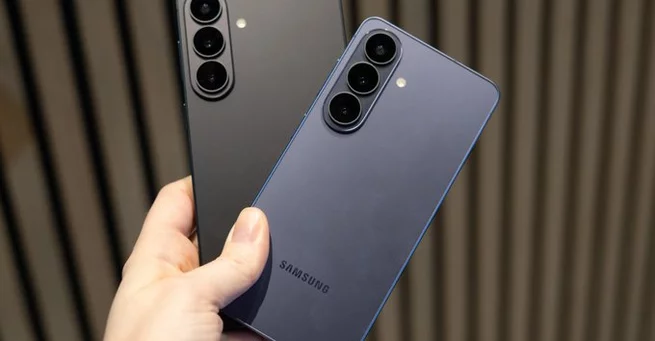
Galaxy S26 price hike questions are everywhere right now. Why did Samsung increase the price by $100? Is the RAM shortage really to blame? And is the new storage upgrade worth it? Samsung executives have now confirmed that rising RAM costs — along with broader material expenses and tariffs — significantly pushed the Galaxy S26 and S26 Plus to higher price points in 2026.
Here’s what’s really happening behind the scenes — and what it means for buyers.
During the recent Samsung Unpacked 2026 event, Samsung unveiled the Samsung Galaxy S26 lineup with a noticeable change: higher prices across the board.
Won-Joon Choi, COO of Samsung’s mobile division, confirmed that memory costs made a “significant contribution” to the price increase. Industry-wide RAM shortages have tightened supply chains, making high-performance memory chips more expensive than in previous years. With AI features becoming standard in flagship smartphones, demand for advanced memory modules has intensified.
This isn’t just a minor fluctuation. Memory pricing has become volatile due to AI infrastructure expansion, affecting everything from servers to smartphones. For Samsung, those costs inevitably reached consumers.
Samsung did include one visible upgrade: the base Galaxy S26 now starts at 256GB instead of 128GB. On paper, that sounds generous. More storage means better future-proofing for AI-heavy apps, high-resolution video, and increasingly large system updates.
However, even when compared to last year’s 256GB model, the S26 still launches at a higher price. The increase isn’t purely about added value — it reflects broader component inflation.
Consumers essentially get more storage, but they’re also paying a premium tied directly to supply constraints and material costs.
RAM wasn’t the only factor. Samsung confirmed that increasing material costs across components contributed to the higher retail price. Smartphone manufacturing relies on a complex web of suppliers, including advanced chipmakers like Qualcomm.
Qualcomm recently warned investors that handset demand has been affected “100 percent” by memory shortages. AI-driven hardware demand is reshaping the entire semiconductor market. As AI servers compete for high-performance memory, smartphone manufacturers face pricing pressure.
Tariffs also played a role. While U.S. trade policies impact pricing, Samsung raised prices globally, not just in one market. That signals systemic supply challenges rather than regional adjustments.
While the base S26 and S26 Plus are seen as incremental upgrades, the Samsung Galaxy S26 Ultra introduces features that may justify its higher cost for some buyers.
The Ultra model includes a built-in privacy screen and what Samsung calls the largest vapor chamber cooling system ever placed in a smartphone. Enhanced thermal management is increasingly critical as AI processing and gaming workloads intensify.
That said, even the Ultra is not immune to broader pricing trends. Advanced cooling systems, high-end camera modules, and expanded AI capabilities all require premium components.
The Galaxy S26 price hike comes at a challenging moment for the global smartphone market. Industry analysts are forecasting one of the largest recorded declines in worldwide smartphone shipments, with a projected 12.9% dip.
Higher device prices, combined with longer upgrade cycles, are slowing replacement demand. Consumers are holding onto devices for three to four years instead of upgrading annually.
When memory shortages intersect with weakening demand, manufacturers face a delicate balancing act. Raise prices too much, and sales fall. Absorb costs internally, and margins shrink.
Samsung appears to be choosing margin protection.
Artificial intelligence is not just a software story — it’s a hardware story. On-device AI features require more RAM, faster storage, and advanced chipsets. That demand has reshaped supply chains.
Cloud AI providers and data centers are aggressively purchasing high-bandwidth memory, tightening supply for mobile manufacturers. As AI workloads grow across industries, component scarcity could persist through 2026.
For consumers, that means flagship phones may no longer follow predictable pricing patterns.
The answer depends on priorities.
If you value expanded base storage and incremental refinements, the Galaxy S26 delivers stability. Samsung continues refining display technology, camera processing, and performance efficiency.
However, buyers upgrading from recent models may struggle to justify the price jump. The S26 represents evolution, not revolution — except in cost.
The S26 Ultra offers more compelling hardware innovation, especially with its enhanced cooling and privacy features. Power users and content creators may find stronger justification there.
The Galaxy S26 price hike signals a broader industry shift. Component shortages, AI-driven demand, tariffs, and material inflation are redefining flagship pricing.
Budget-conscious consumers may increasingly look toward midrange alternatives. Meanwhile, premium devices could continue climbing past traditional psychological price barriers.
For now, Samsung’s confirmation removes speculation. RAM shortages aren’t just an industry rumor — they’re directly impacting what buyers pay.
And if memory supply remains tight, 2026 could be remembered as the year “RAMageddon” changed smartphone pricing for good.










Comment