
Alerts
-
5 minutes, 23 seconds
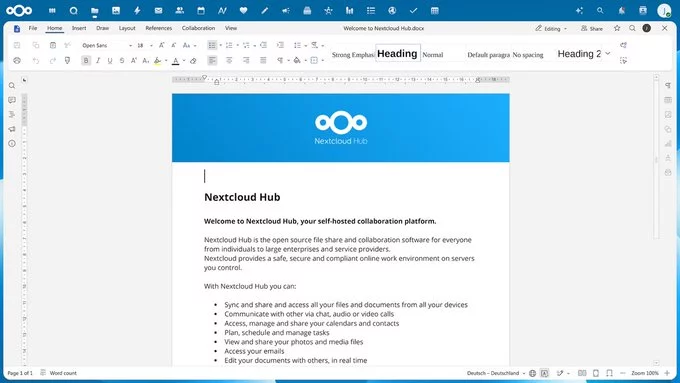
Euro-Office is making headlines as Europe’s bold answer to growing concerns over digital sovereignty and data control. A coalition of major European tech companies and community organizations has unveiled the new open-source office suite designed to rival popular tools like Microsoft 365 and Google Workspace. Built with privacy, transparency, and regional independence in mind, Euro-Office aims to give businesses and governments greater control over their data. Early details confirm the suite will include essential tools for documents, spreadsheets, and presentations. Interest is already building as organizations look for alternatives that align with stricter data protection standards.
Euro-Office is more than just another productivity suite—it represents a strategic shift in how Europe approaches digital infrastructure. The platform is based on a fork of ONLYOFFICE, a known open-source office solution, but has been reworked to better align with European regulations and expectations. Developers and contributors across Europe are invited to participate, reinforcing its community-driven foundation. This collaborative approach ensures that innovation is not limited to a single company but shared across an ecosystem. As a result, Euro-Office could evolve rapidly while maintaining transparency and trust.
One of the biggest selling points of Euro-Office is its focus on data sovereignty. European organizations have increasingly raised concerns about relying on foreign-owned cloud services for sensitive operations. Euro-Office addresses these issues by offering a solution that can be hosted locally or within European-controlled infrastructure. This reduces dependency on external providers and aligns with strict regional privacy laws. For businesses handling sensitive customer data, this could be a game-changing alternative. It also positions Euro-Office as a strong candidate for government and public sector adoption.
While Microsoft 365 dominates the global productivity market, Euro-Office is entering with a different value proposition. Instead of competing purely on features, it emphasizes control, transparency, and customization. The core tools—word processing, spreadsheets, and presentations—mirror what users already expect from modern office suites. However, Euro-Office’s open-source nature allows organizations to tailor the software to their specific needs. This flexibility could appeal to enterprises seeking more control over their digital workflows. Over time, feature parity may improve as more developers contribute to the platform.
A key advantage of Euro-Office lies in its open development model. By inviting companies, developers, and communities to contribute, the project taps into a wide pool of expertise. This approach can accelerate improvements and ensure the platform remains adaptable to changing needs. Open-source software has historically driven innovation by enabling transparency and collaboration, and Euro-Office aims to follow that path. Contributors can help shape everything from security features to user interface enhancements. This shared ownership model also builds trust among users who value accountability.
Despite its promising vision, Euro-Office faces several hurdles. Competing with established platforms like Microsoft 365 requires not only strong features but also widespread adoption and user familiarity. Transitioning organizations away from deeply integrated systems can be difficult and costly. Additionally, maintaining consistent updates and support across a decentralized development model can be complex. However, growing concerns over data privacy and sovereignty may work in Euro-Office’s favor. If the project can deliver reliability alongside its core values, it could gain traction faster than expected.
Euro-Office reflects a broader trend toward regional control over digital tools and infrastructure. As governments and enterprises rethink their reliance on global tech giants, demand for alternatives is rising. The launch of Euro-Office could mark the beginning of a more diversified productivity software landscape. If successful, it may inspire similar initiatives in other regions around the world. For now, all eyes are on how quickly the platform evolves and whether it can meet the expectations of modern users.










Comment