Alerts

-
2 minutes, 40 seconds
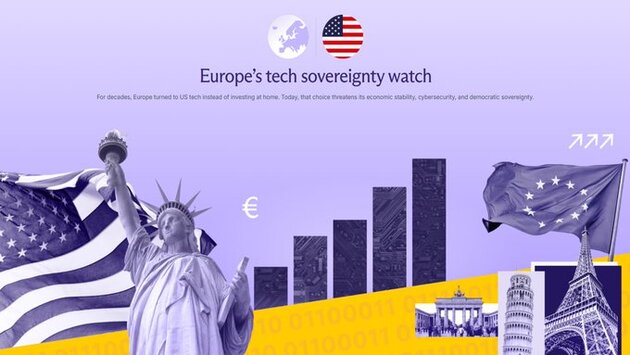
In today’s digital economy, the reliance of EU countries on American tech has become a pressing issue, especially as new U.S. trade policies and sanctions reshape the global landscape. Many readers ask: which European nations are most dependent on U.S. platforms, and what risks come with that reliance? The answer may be surprising—even major economies like France, Germany, and the UK rely heavily on American providers for software, cloud services, and communication infrastructure.
For decades, European governments and corporations have leaned on U.S. companies to power their operations. From office productivity suites to cloud storage and cybersecurity, American firms like Microsoft, Google, and Amazon have become the backbone of Europe’s digital systems. This dependence extends to critical sectors such as healthcare, finance, and utilities, leaving Europe vulnerable to external influence and foreign oversight when geopolitical tensions rise.
With recent sanctions and shifting trade rules under the Trump administration, the risks of this dependency have become even clearer. European companies tied to U.S. platforms face uncertainty, from restricted access to software updates to compliance challenges with cross-border data regulations. For businesses that rely on seamless communication and secure infrastructure, these disruptions highlight the need for Europe to rethink its digital sovereignty strategy.
The heavy reliance of EU countries on American tech has sparked renewed conversations about investing in local alternatives and building stronger European-led digital ecosystems. Initiatives across the EU are pushing for more funding in homegrown cloud solutions, cybersecurity, and AI research. While breaking free from U.S. dominance will take years, the push for technological sovereignty is gaining momentum—driven by both necessity and the desire to secure Europe’s digital future.










Comment