
-
5 minutes, 4 seconds
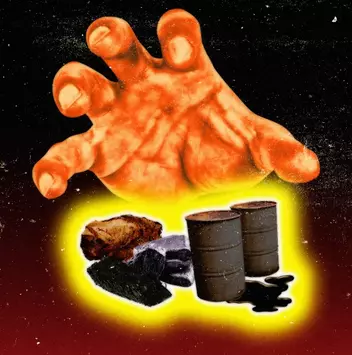
President Donald Trump has made no secret of his aggressive approach toward nations rich in energy resources. From Venezuela’s oil to Greenland’s minerals, Trump’s administration has openly pursued what it calls “energy dominance,” often framing it as a matter of national security. Experts warn, however, that these moves are as much about expanding U.S. power as they are about securing resources. Countries across the Western Hemisphere are now on high alert as the U.S. signals a willingness to assert control over territories and resources with little regard for borders or diplomacy.
The world watched closely as U.S. forces conducted a controversial operation in Caracas, resulting in the arrest of President Nicolás Maduro. Trump justified the move by citing federal drug trafficking charges and claiming it was essential to get Venezuela’s oil “flowing the way it should.” Critics argue this is less about law enforcement and more about consolidating influence in Latin America. Colombia, Mexico, Cuba, and neighboring countries now face heightened political risk, as Trump and senior officials have repeatedly warned that U.S. dominance in the hemisphere will remain unquestioned.
Energy resources aren’t the only target. Senior officials, including White House adviser Stephen Miller, have suggested Greenland should fall under U.S. control due to its vast rare earth elements and strategic location. These minerals are crucial for technology and defense industries, making Greenland a highly coveted prize. Analysts say this reflects a broader strategy: the U.S. is signaling it will claim resources wherever they hold economic or geopolitical value.
The push for resource dominance benefits a select group of domestic allies, including fossil fuel executives and tech oligarchs who supported Trump’s political rise. While these insiders may profit, the ripple effects extend worldwide. Nations rich in natural resources now confront the dual threats of political pressure and environmental exploitation. Even countries not directly in Trump’s sights are likely to feel the consequences of an administration willing to challenge international norms for access to energy and minerals.
Catherine Abreu, director of the International Climate Politics Hub, describes the current moment as “uncertain and scary,” warning that Trump’s aggressive tactics introduce instability at multiple levels. Abreu, who has family in Venezuela, highlights the personal impact of these international maneuvers. For global citizens and governments, the challenge is navigating a landscape where political ambition and resource extraction are increasingly intertwined, raising questions about sustainability, security, and human rights.
Trump’s strategy signals a shift toward a more assertive, resource-driven foreign policy. This era of “energy imperialism” prioritizes control over resources and territories above diplomatic engagement or environmental responsibility. Observers argue the approach risks destabilizing entire regions while rewarding domestic elites. Meanwhile, the world watches closely, uncertain how far the administration will go to secure power, minerals, and oil in the name of American dominance.
As the U.S. continues to pursue energy and mineral control worldwide, experts caution that the consequences could be long-lasting. From Latin America to the Arctic, the pursuit of resources is reshaping alliances, increasing geopolitical tensions, and challenging international norms. For countries with coveted natural wealth, the era of energy imperialism under Trump represents both an immediate threat and a test of global resilience in the face of aggressive foreign policy.

2.5K articles

1.4K articles

34 articles

28 articles














Comment