
Alerts
-
3 minutes, 53 seconds
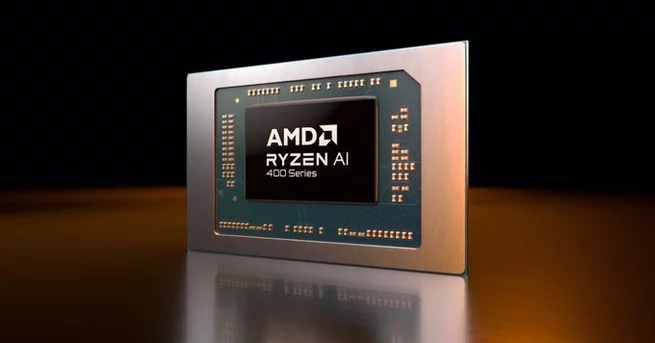
Laptop enthusiasts are asking: will AMD Ryzen AI 400 outperform its predecessor and keep AMD ahead in the mobile CPU race? At CES 2026, AMD introduced its latest laptop processors, building on the success of Ryzen AI 300. While the new “Gorgon Point” chips retain the same core architecture, small upgrades in frequency, memory bandwidth, and AI performance promise smoother multitasking and gaming. These chips are already slated for top-tier laptops from brands like Acer, Asus, Dell, HP, and Lenovo in the first quarter of 2026.
Ryzen AI 400 uses the same Zen 5 and Zen 5c CPU cores and RDNA 3.5 graphics as the AI 300 line. Core counts also remain identical: the HX 475 features 12 cores and 24 threads, just like its predecessor. AMD focused on small but meaningful upgrades, including higher CPU and GPU frequencies and more memory bandwidth. AI processing also gets a boost: the HX 475 offers 60 TOPS, up from previous models, and the HX 470 delivers 55 TOPS. These tweaks aim to enhance performance without overhauling the proven architecture.
When asked about raw performance, AMD emphasized comparisons with Intel’s Core Ultra 9 288V rather than Ryzen AI 300. According to AMD, improvements in manufacturing, firmware, software, and memory speeds should deliver noticeable gains. AMD’s client CPU chief, Rahul Tikoo, confirmed that the new chips outperform AI 300 in real-world tasks, particularly in AI-driven applications and productivity workloads. For users already impressed by Ryzen AI 300 laptops, even modest improvements could make a tangible difference.
The Ryzen AI 400 series emphasizes AI performance as a key differentiator. AMD’s upgraded neural processing units (NPUs) accelerate AI tasks, from on-device image editing to faster content creation. With AI-integrated laptops becoming increasingly mainstream, these enhancements could offer smoother workflows for students, professionals, and creators alike. AMD appears to be betting that AI speed will become a decisive factor in laptop buying decisions.
These new processors face immediate competition from Intel’s just-released Panther Lake series and Qualcomm’s Snapdragon X2 chips. AMD’s strategy focuses on balancing power efficiency, AI performance, and battery life. Early indications suggest that Ryzen AI 400 laptops will hold their ground, particularly in gaming and AI-heavy workloads. Brands like HP and Lenovo will likely showcase these chips in flagship devices by the end of Q1 2026.
Ryzen AI 400 doesn’t reinvent the wheel, but it refines an already strong lineup. Incremental improvements in AI capabilities, CPU/GPU frequency, and memory bandwidth are enough to keep AMD competitive in 2026’s crowded laptop market. For consumers seeking reliable performance with a focus on AI, these chips may represent the sweet spot between efficiency, speed, and cutting-edge features.










Comment