
-
7 minutes, 22 seconds
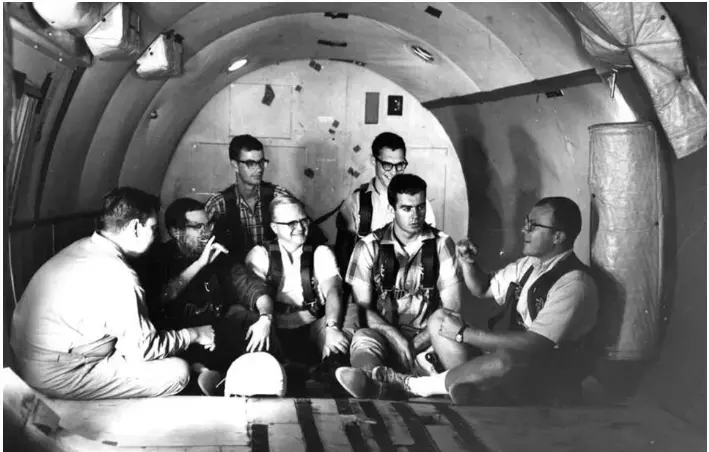
As excitement builds around Artemis II and humanity’s return to lunar exploration, a surprising question is resurfacing: who made modern spaceflight possible? The answer traces back to an unexpected group—eleven Deaf men whose contributions helped NASA understand how the human body reacts to weightlessness. Their story, recently amplified by viral conversations online, reveals a forgotten chapter of innovation. It also highlights a deeper truth about untapped talent pools that still exist today. While astronauts capture headlines, these pioneers quietly shaped the science behind every mission. Their legacy is now forcing industries to rethink how they define ability and expertise.
In 1958, NASA faced a critical challenge that threatened its entire space program. Scientists needed reliable data on how humans would function in zero gravity, but every test subject became severely motion sick during simulations. Experiments involving centrifuges, rotating chambers, and parabolic flights consistently failed because nausea distorted the results. The root cause was the vestibular system—the inner ear mechanism responsible for balance. In weightless conditions, conflicting signals between the eyes and inner ear triggered disorientation and sickness. Without solving this issue, human spaceflight could not move forward. NASA needed a breakthrough, and traditional approaches weren’t working.
NASA found its solution at Gallaudet College, now Gallaudet University, a leading institution for Deaf and hard-of-hearing students. There, researchers recruited eleven Deaf men—many of whom had lost their hearing due to spinal meningitis, which also affected their vestibular systems. This meant they were naturally resistant to motion sickness, making them ideal candidates for testing. Over nearly a decade, these men endured some of the most intense human experiments in aerospace history. From extended stays in rotating rooms to rough sea trials designed to induce nausea, they remained unaffected while researchers struggled. Their unique physiology provided something NASA had never achieved before: clean, usable data.
The contributions of the Gallaudet Eleven became foundational to NASA’s success. By eliminating motion sickness as a variable, scientists could finally isolate how the human body responds to weightlessness. This data directly informed the Mercury program, which laid the groundwork for Gemini, Apollo, and eventually Artemis missions. Without these insights, early space missions may have faced dangerous unknowns. The Deaf participants were not just test subjects—they were essential to solving a mission-critical problem. Their abilities, often seen as limitations in society, became NASA’s greatest advantage. It was a powerful example of innovation driven by inclusive thinking.
Decades later, this story has resurfaced in a powerful way. Deaf actor and activist Nyle DiMarco recently shared the history of the Gallaudet Eleven on social media, sparking widespread attention. Millions of viewers discovered, many for the first time, how these men contributed to one of humanity’s greatest achievements. The viral moment didn’t just celebrate history—it reignited a conversation about representation and recognition. Why had such a critical contribution been overlooked for so long? And how many similar stories remain untold? The renewed interest is pushing both the public and organizations to reconsider whose contributions get remembered.
The story of Deaf talent in space is not just historical—it reflects a modern workforce challenge. Industries like aerospace continue to face severe talent shortages, with companies struggling to fill mission-critical roles. At the same time, the global disability community remains one of the largest underutilized talent pools. Despite representing over a billion people worldwide, individuals with disabilities face significantly higher unemployment rates. Structural barriers, outdated hiring practices, and narrow definitions of performance continue to limit access. Just as NASA once overlooked an obvious solution, many organizations today fail to recognize capable talent in plain sight. The gap between need and opportunity remains striking.
NASA’s decision in 1958 offers a blueprint for modern organizations. Faced with an unsolvable problem, the agency expanded its definition of who could contribute. Instead of viewing disability as a limitation, it recognized it as a unique qualification. This shift unlocked innovation and changed the course of space exploration. Today’s companies facing hiring and retention challenges can learn from this mindset. Building inclusive systems—rather than expecting individuals to fit existing ones—can reveal hidden capabilities. It requires intentional effort, from redesigning recruitment processes to rethinking performance metrics. The lesson is clear: talent often exists where organizations least expect it.
As Artemis missions push the boundaries of exploration once again, the legacy of the Gallaudet Eleven feels more relevant than ever. Their contributions remind us that progress is rarely driven by conventional thinking alone. Behind every major breakthrough are individuals whose abilities were once underestimated or ignored. The success of modern spaceflight stands as proof of what happens when barriers are removed and potential is recognized. Today, the same opportunity exists across industries worldwide. The question is no longer whether the talent is out there—it always has been. The real challenge is whether organizations are willing to see it.

7.9K articles

1.4K articles

34 articles

28 articles














Comment