
Alerts
-
3 minutes, 42 seconds
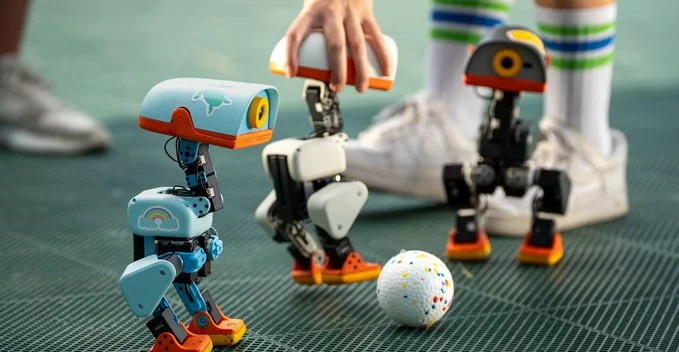
Imagine a world where every digital companion doesn’t just chirp, but truly sings. This is the reality with Microduck, where each individual duck is capable of producing its own unique generated voice. Unlike static, pre-recorded sound files, the novelty lies in the personalization: no two Microducks sound alike, even if they share the same model or batch. This breakthrough transforms a simple toy or virtual pet into a one-of-a-kind musical performer, tailored specifically to its owner’s experience.
The concept is straightforward yet revolutionary. Instead of a generic quack or a standardized melody, your Microduck sings with a voice that is mathematically and algorithmically distinct. This ensures that the bond you form is deeply personal, as the sound becomes a signature of your specific device. For collectors and enthusiasts, this means each Microduck is not just an object but an original artist in its own right, offering a fresh auditory experience that cannot be replicated. This innovation sets the stage for a deeper look into the technology behind the magic.
At the heart of each Microduck’s distinct voice is a neural text-to-speech (TTS) system trained on a vast corpus of vocal recordings. Rather than stitching together pre-recorded clips, the AI uses a deep learning model—specifically a variant of a transformer network—to predict acoustic features directly from phonetic input. This allows the system to generate fluid, expressive speech with natural prosody and pitch variation.
The key to personalization lies in a speaker embedding layer. During training, the model learns a high-dimensional vector space where each unique voice is represented by a specific set of numerical coordinates. When a user selects a Microduck, the system retrieves that duck’s unique embedding and conditions the generation process on it. This conditioning alters the fundamental frequency, formant positions, and even subtle articulation patterns, ensuring that every Microduck produces a voice that is sonically distinct yet fully intelligible. The result is a scalable method: new voices can be added simply by fine-tuning a new embedding vector without retraining the entire network. The underlying architecture is based on publicly available research from VALL-E, which demonstrates high-fidelity voice cloning from short audio samples.
Microduck’s design prioritizes user agency in shaping the voice, which directly enhances the emotional connection. Instead of passively receiving a fixed output, users actively influence the vocal character through simple, intuitive controls. This interaction transforms the AI from a mere tool into a collaborative creative partner.
This process fosters a sense of ownership. When a user crafts a voice that feels distinctly “theirs,” the listening experience becomes more intimate and engaging. The emotional bond grows because the voice is not generic; it is co-created. This personalization loop encourages repeated use and deeper experimentation, as every adjustment offers a new way to hear familiar content. Ultimately, Microduck turns voice customization into a rewarding, expressive activity that strengthens the user’s attachment to the product.
Microduck’s unique voices could transform multiple fields. In entertainment, they offer filmmakers and game developers a way to generate dynamic character vocals without hiring a human singer for every iteration, enabling rapid prototyping of musical scores. For education, the technology might create interactive language lessons where the AI sings phrases with perfect pronunciation, making memorization more engaging for students. In accessibility, a person who loses their voice due to illness could theoretically use a cloned version of their own singing timbre to communicate, preserving a part of their identity.
Looking ahead, future developments in AI-generated audio will likely focus on real-time emotional modulation, allowing the voice to shift from joy to sorrow within a single phrase. We may also see integration with virtual reality, where each user’s avatar sings with a personally generated voice. The key challenge remains ensuring ethical consent, but the potential for creative and therapeutic use is vast, and the technology is only beginning to show what it can do.









Comment