Alerts

-
5 minutes, 33 seconds
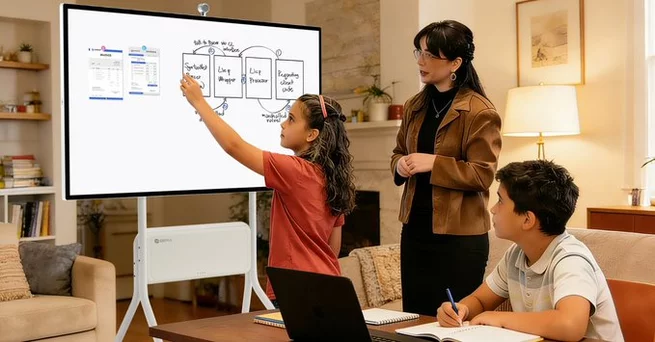
Cozyla Calendar Plus Max is a new 55-inch smart calendar concept unveiled at CES 2026, and it immediately raises questions about size, purpose, and practicality. Designed as a Wi-Fi-enabled 4K touchscreen, the display aims to centralize family schedules, planning, and daily routines in one place. Many people searching for this device want to know how big it is, what it does, and whether it makes sense for a typical home. At 55 inches, it is closer to a living room TV than a tablet-style smart display. Cozyla positions it as an interactive household hub rather than a passive screen. The company says it targets busy, tech-forward families. That ambition sets the stage for one of CES’s most talked-about concepts.
Smart calendars usually blend into a home, but Cozyla Calendar Plus Max does the opposite. Most competitors range from tabletop displays to wall-mounted screens under 30 inches. Cozyla’s own largest retail product, the Calendar Plus 2, measures 32 inches, making this new concept dramatically larger. When paired with its wheeled floor stand, the Plus Max dominates any room it enters. Even mobile displays like LG StanbyME or Samsung’s Moving Style appear modest by comparison. The scale instantly changes how the product is perceived. It feels less like a gadget and more like furniture.
The sheer size of the Cozyla Calendar Plus Max makes it look more suited to classrooms or offices than living rooms. Promotional images show children gathered around the screen, echoing digital whiteboards used in schools. This visual similarity may spark curiosity but also discomfort for parents seeking a cozy home environment. A 55-inch scheduling screen demands dedicated space, which many apartments and smaller homes lack. Unlike wall-mounted calendars, this one becomes a focal point by default. Its wheeled stand suggests mobility, yet moving such a large display may still feel intrusive. The design challenges conventional ideas of smart home minimalism. Cozyla appears willing to test how far households will go for organization.
Despite the size concerns, Cozyla Calendar Plus Max is designed to handle far more than scheduling. The company envisions it as a central command center for modern families. Features include shared calendars, meal planning tools, and video calling for remote family check-ins. Cozyla also highlights learning support, fitness apps, and entertainment as key use cases. Home security monitoring can be displayed on the large screen as well. This multi-purpose approach aims to justify the device’s footprint. Cozyla is betting that utility will outweigh spatial compromise. For some families, consolidation may be appealing.
At the software level, Cozyla Calendar Plus Max runs the company’s Calendar OS. The platform supports integrations with popular services like Google Calendar and Apple Calendar. This compatibility reduces friction for households already invested in existing ecosystems. Users can sync schedules across devices without rebuilding routines from scratch. Cozyla also says the display can stream shows and run fitness applications. The large touchscreen allows multiple people to interact at once. That collaborative angle differentiates it from phones and tablets. Software flexibility is central to the product’s pitch.
The Cozyla Calendar Plus Max represents a broader trend toward oversized, shared household screens. As families juggle work, school, and personal commitments, centralized digital planning tools are gaining appeal. However, the concept also highlights a tension between convenience and comfort. Not every home wants a screen that resembles a digital chalkboard. Cozyla’s gamble is that some users will embrace scale as a feature, not a flaw. Whether it becomes a mainstream product remains uncertain. For now, it stands out as one of CES 2026’s most provocative smart home ideas. The Plus Max sparks conversation, which may be exactly the point.








Comment