Alerts

-
10 minutes, 43 seconds
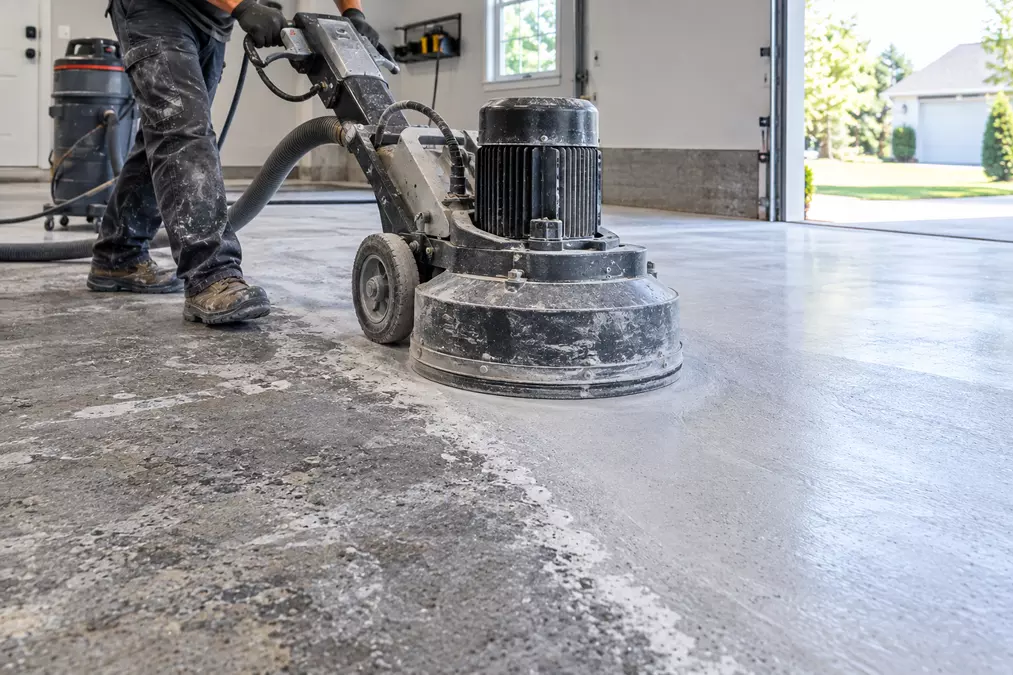
A plain concrete floor can feel unfinished. Maybe it's a gray basement slab, a patio that has dulled after a few Iowa winters, or a garage floor that looks blotchy and dusty. In each case the concrete itself may be sound, but it does not look like part of the space around it. Concrete floor staining adds color and depth while letting the character of the slab, including its natural marks and variations, show through.
Staining and sealing usually go together, but they do different jobs, and not every slab needs the same treatment. This guide covers how stains work, where they make sense, how the process unfolds, and what to look for in a contractor, so you can judge whether your floor is a good candidate.
Concrete stain is a colorant designed to change the look of concrete rather than cover it. Penetrating stains soak into or react with the porous surface, so the color becomes part of the slab instead of a film resting on top. Topical color products, such as tinted coatings or paint, work differently. They form a layer over the concrete and hide the surface beneath them.
Because penetrating stains work with the concrete, the slab itself shapes the result. The age of the concrete, its porosity, the mix it was made from, how it was troweled, and any earlier sealers or spills all affect how color absorbs. Two floors stained with the same product can look noticeably different.
Natural variation is part of the appeal. Stained concrete often has a mottled, cloudy, or marbled look, and some tones will be richer than others. Readers who want a perfectly uniform color may be happier with a different finish. The final appearance depends on the surface and on the products and methods chosen.
The most obvious benefit is visual. Staining can turn flat gray concrete into a warm brown, a deep charcoal, or a soft earth tone, and different application techniques create different effects, from subtle shading to bold variation. These decorative concrete finishes can suit a range of residential and commercial styles, from a modern basement to a rustic patio to a retail showroom.
Staining also lets you use the slab you already have. When the concrete is in suitable condition, finishing it in place can be a practical alternative to covering it with new flooring. Stain can also be paired with a sealer matched to the room's traffic and exposure, which brings protection into the picture.
Stain alone is not a waterproof, scratch-proof, or maintenance-free solution. Protection and long-term care depend largely on the sealer and how the floor is used.
Interior floors in homes are a common fit, including living areas, entryways, and finished lower levels. Basements can also work, but moisture needs to be evaluated first. Concrete that regularly takes on moisture can interfere with stain and sealer performance, so a basement should be assessed before anyone commits to a system.
Patios, walkways, and other outdoor surfaces can be stained as well. Exterior concrete faces sun, rain, and freeze-thaw cycles, and in Iowa it may also see de-icing salts, so the product choice matters more outdoors. Commercial interiors such as offices, showrooms, and some workspaces are other good candidates, provided the finish suits the traffic.
No single stain system fits every garage, basement, or patio. The right treatment depends on the surface's condition, its exposure, how it will be used, and its moisture levels.
Readers often ask whether staining and sealing are the same thing. They are not, and the distinction affects both the look and the lifespan of the floor.
Concrete staining adds color and decorative character, either by penetrating the concrete or by reacting with it, depending on the product.
Concrete sealing applies a protective treatment meant to reduce the effects of moisture, staining, wear, or other exposure, depending on the sealer. A sealer does not necessarily add color.
Concrete sealing and staining combines the decorative treatment with a protective finish, as long as the chosen products are compatible.
A stain does not automatically protect the way a sealer does, and a sealer will not necessarily change the color of the slab. Some properties need only sealing, particularly when the concrete already looks acceptable and mainly needs protection. Others benefit from both steps. A professional evaluation can help sort out which applies to your floor.
Acid-based chemical stains react with minerals in the concrete to create variegated, translucent color. They can produce depth and natural movement, though results vary with the slab and they are not suitable for every surface. Water-based stains rely on pigments rather than a chemical reaction, and they often allow a wider or more predictable color range. They can be a good option where more control over the shade is desired.
Color effects range from subtle, lightly shaded looks to more dramatic variation, and the degree of variation is often adjustable through application technique. Sealers also come in different finishes. Clear, matte, and glossy options are available where appropriate, and each changes how the color reads. A glossy sealer tends to deepen color, while a matte one gives a softer look.
No stain or finish is universally best. Selection should account for the existing concrete, the desired appearance, indoor or outdoor exposure, and the manufacturer's recommendations.
The exact process varies by stain type, surface condition, and product specifications, but a professional job generally follows a sequence like this:
Inspect the concrete and identify damage, contamination, existing coatings, and moisture concerns.
Clean and prepare the surface using methods suited to the concrete and the selected system.
Repair suitable surface defects where necessary.
Test the stain when appropriate to evaluate color and absorption.
Apply the stain according to the product's instructions.
Complete any required rinsing, neutralization, or residue removal.
Allow the surface to dry or cure as required.
Apply a compatible sealer when specified or appropriate.
Follow the recommended curing period before regular use.
Skipping or rushing any of these steps can show up in the finished floor.
Preparation often decides whether a stained floor looks good for years or disappoints within months. Dust, oil, old coatings, previous sealers, and uneven surfaces can all block stain from absorbing evenly or keep a sealer from bonding. Moisture moving through the slab can cause problems of its own.
Preparation should also match the product. Some systems call for mechanical methods such as grinding, while others call for chemical cleaning, and a single cleaning method will not suit every floor. A professional assessment helps identify what is on the surface before any color goes down, which reduces the chance of avoidable problems later.
Stains, paints, and coatings are separate systems with different performance characteristics. Stain generally changes the look of the concrete while leaving its texture visible. Paint and coatings form a film on top, which can hide imperfections, discoloration, and minor surface flaws more fully than a stain can.
Application and preparation differ too. Film-forming products typically depend on thorough surface preparation to stay bonded, and they may need recoating or repair if the film wears or peels. Stained concrete relies on a sealer for surface protection, and that sealer will need maintenance over time. Some spaces, such as busy garages or shops, may be better served by a thicker coating system, which is why Fortress Floors of Iowa also offers garage floor coatings and basement floor coatings. Stained concrete is not always more durable or less expensive than the alternatives, so the best choice comes down to the surface, the use, and the look you want.
Stained and sealed concrete is not maintenance-free, but routine care is usually simple:
Sweep or dust-mop regularly to remove grit that can dull the finish.
Clean with products suited to the stain and sealer.
Avoid harsh chemicals unless they are approved for the finish.
Wipe up spills promptly.
Use mats or protective pads in high-traffic areas and under furniture.
Watch the sealer for signs of wear, and follow product-specific guidance on maintenance or reapplication.
How often a floor needs attention depends on foot traffic, weather exposure, cleaning habits, and the products used. A sheltered interior floor will generally need less than an outdoor patio exposed to Iowa winters.
Several issues can show up on stained floors, and each can have more than one cause:
Uneven or unexpected color may come from differences in porosity, residue left on the surface, or the natural makeup of the slab.
Stain that does not penetrate consistently can point to sealers, coatings, or contaminants that were not fully removed.
Peeling or poor sealer adhesion may relate to surface preparation, moisture, or product compatibility.
A white or cloudy sealer can be linked to trapped moisture or application conditions.
Premature wear in heavily used areas may mean the sealer was not suited to the traffic level.
None of these should be assumed to have one definite source. Evaluating both the concrete and the existing finish is the right first step before choosing a repair method.
Staining is a good fit when the concrete is structurally sound, the surface can be properly prepared, and you are comfortable with some natural variation in color. Professional guidance matters most when the slab has existing coatings, moisture concerns, visible damage, or when the floor will be a prominent decorative feature.
Choosing a system based on the actual surface, rather than a color sample alone, tends to produce better results. A shade that looks right on a card can behave very differently on your slab.
When comparing contractors, look for:
Experience with the type of concrete surface you have.
Working knowledge of stain and sealer compatibility.
A clear explanation of how the surface will be prepared.
Realistic expectations for final color and appearance.
A maintenance plan suited to the chosen finish.
Clear communication about the work involved.
Fortress Floors of Iowa offers concrete sealing and staining alongside concrete floor coatings and concrete polishing, so property owners can compare finishing options in one conversation. The company serves homeowners and businesses in Decorah, Dubuque, Waterloo, Cedar Falls, and surrounding communities, and its process starts with evaluating the concrete, including a moisture check, before any work begins. Sealing is also available on its own for concrete that already looks fine and mainly needs protection.
Concrete floor staining is the process of adding color to concrete using a stain that penetrates or reacts with the surface. The result is a translucent, often variegated finish that shows the natural character of the slab.
Yes. Staining adds color, while sealing adds a protective layer. They are often paired, but a sealer does not necessarily change color, and a stain does not automatically provide the same protection.
In most cases, a sealer is recommended to help protect the surface and the color from moisture, wear, and cleaning. The right product depends on the stain used and the exposure of the space, so follow the manufacturer's recommendations.
Often, yes, if the concrete is in suitable condition. Existing coatings, sealers, oil contamination, or moisture problems may need to be addressed first, and some surfaces may not be good candidates.
It can be, provided the stain and sealer are appropriate for exterior use. Sun, rain, freeze-thaw cycles, and de-icing products all influence product selection and how often the sealer needs attention.
Regular sweeping, prompt spill cleanup, gentle cleaners approved for the finish, and periodic sealer checks go a long way. Needs vary with traffic and exposure.
Timing depends on the size of the area, the condition of the concrete, the stain type, and the drying and curing times the products require. Preparation and sealer curing often take longer than the stain application itself, so ask for a timeline specific to your project.
Good results with concrete floor staining come from matching the system to the slab: its condition, its moisture levels, and how it will be used. Staining adds color, sealing adds protection, and careful preparation connects the two. If you would like to talk through your concrete surface, its intended use, and the finishing options that make sense, contact Fortress Floors of Iowa to request a free estimate.




Comment