Alerts

-
8 minutes, 16 seconds
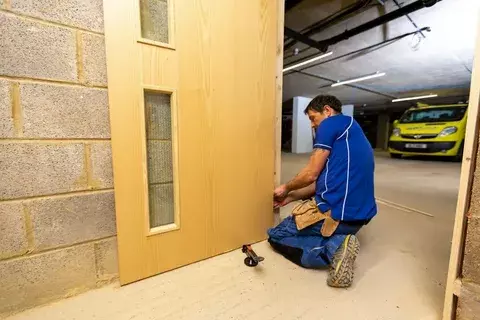
Landlords and property management companies have a continuing responsibility to keep buildings safe, well maintained and suitable for occupation. Fire doors form an essential part of that responsibility because they are designed to restrict the spread of fire and smoke between different areas of a property.
A properly installed fire door can help protect escape routes, stairwells, communal corridors and neighbouring rooms for a defined period. Poor installation, damaged seals or unsuitable ironmongery can reduce that protection considerably.
For property professionals searching for fire door installation London services, the quality of the installation matters just as much as the specification of the door itself. A certified door leaf installed into an unsuitable frame or fitted with incorrect hardware may not perform as intended.
Professional fire door installers normally assess the complete doorset, including the door leaf, frame, hinges, self-closer, seals, latch, threshold and surrounding construction. This approach is particularly relevant for landlords managing blocks of flats, HMOs, mixed-use properties and commercial buildings.
Fire doors are used to divide buildings into fire-resistant sections and protect routes that people may need during an emergency. Flat entrance doors, communal corridor doors, stairwell doors, electrical cupboard doors and plant room doors are common examples.
For landlords, a fire door problem can create more than a maintenance issue. It may affect the property's wider fire safety arrangements.
A door that remains open, fails to latch or has excessive gaps may allow smoke and hot gases to pass through much earlier than expected.
Property management companies often oversee dozens or even hundreds of doors across several buildings. Consistent installation and record keeping can make future inspections much easier.
A clear door schedule showing door location, rating, condition and completed works can also help property managers plan future fire door maintenance London requirements.
A professional fire doors installation should cover more than fitting the door leaf.
Before installation begins, the opening should be checked for size, condition and suitability. The installer can then determine whether the existing frame may be retained or whether a new compatible frame is required.
Typical works may include:
Removal of the existing door and unsuitable fittings
Installation of a certified fire-rated door leaf
Installation or replacement of the fire-rated frame
Fire-rated hinges and suitable fixings
Intumescent strips
Cold smoke seals where required
An appropriate self-closing device
Locks, latches, handles and other suitable ironmongery
Fire-rated letterplates or viewers where specified
Adjustment of perimeter and threshold gaps
Suitable fire-stopping around the frame
Final closing and latching checks
The finished door should open and close without unnecessary resistance and should return to the closed position through its self-closing device.
Installation should also follow the relevant manufacturer's instructions because fire doors are tested as defined assemblies rather than as independent pieces of timber.
Property managers frequently need to decide whether a door requires replacement, inspection, maintenance or repair.
The following table provides a simple comparison.
| Service | When It May Be Needed | Typical Work |
|---|---|---|
| Fire door installation | Existing door is unsuitable, badly damaged or replacement is required | New door leaf, frame, seals, closer, hinges and ironmongery |
| Fire door inspections London | Condition or compliance needs checking | Gaps, seals, hinges, frame, closer and general condition reviewed |
| Fire door maintenance London | Existing compliant door needs adjustment or upkeep | Closer adjustment, hinge tightening, seal replacement and minor repairs |
| Fire door repair | A door has repairable defects | Gap correction, frame work, seals, hardware and closer repairs |
| Fire door certificate London | Documentation is needed following suitable works or inspection | Record of inspection, installation or completed remedial work |
This distinction can prevent unnecessary replacement. A minor defect does not always mean the entire doorset needs to be removed.
Fire doors can deteriorate quickly in busy buildings.
Flat entrance doors may be opened dozens of times each day. Communal doors can experience even heavier use. Over time, hinges can loosen, closers can fall out of adjustment and seals can become damaged.
Fire door inspections London commonly identify problems such as:
Excessive gaps around the door
Damaged or missing intumescent strips
Missing smoke seals
Loose or unsuitable hinges
Doors that do not self-close
Doors that fail to engage with the latch
Damaged door frames
Large threshold gaps
Unapproved alterations
Damaged letterplates
Incorrect replacement hardware
One common example is a door that closes almost completely but stops a few millimetres before the latch engages. From a distance it may appear shut, yet it is not properly closed.
This is why physical testing matters during both installation and later inspection.
Full replacement is not always necessary.
Fire door repairs London services may be suitable when the existing doorset remains in reasonable condition and the identified defects can be corrected without affecting the original fire performance.
Typical remedial work may include replacing worn smoke seals, adjusting an overhead closer, fitting suitable hinges or correcting a door that is binding against the frame.
Some doors may also require work to reduce excessive perimeter gaps.
The installer or inspector should consider the condition of the full doorset before recommending fire door repair. Extensive damage, major alterations or unsuitable construction may make replacement a more appropriate choice.
For larger residential portfolios, repair can also reduce disruption when existing doors remain capable of being restored.
Regular fire door maintenance London services can help landlords deal with defects before they become serious.
A door may pass an inspection shortly after installation and later develop problems because of heavy use, settlement of the building or repeated impact.
Routine maintenance may include checking hinges, adjusting self-closing devices, replacing damaged seals and confirming that the latch still operates correctly.
Landlords and property managers should also discourage occupants from wedging fire doors open or removing self-closing devices.
Where repeated faults occur, the cause should be investigated rather than corrected temporarily. A door that constantly drops out of alignment may have damaged hinges, an unsuitable frame or another underlying issue.
Commercial fire door installation may be required in offices, shops, restaurants, warehouses, clinics, schools and other workplaces.
Commercial doors often experience greater daily use than residential doors. This can affect the choice of hinges, closers, handles and other ironmongery.
Doors protecting kitchens, plant rooms, electrical cupboards and storage rooms may also require different specifications.
The installer should work from suitable building information, a fire risk assessment, door schedule or other relevant records where available.
A generic approach should be avoided. Two doors in the same building can have different requirements depending on their location and purpose.
The fire door installation cost UK property owners receive will depend on several factors.
A plain internal fire door may be relatively straightforward. A flat entrance door with a specialist lock, letterplate, viewer, security fittings and decorative finish will normally require more work.
Costs may be influenced by:
Required fire resistance
Door dimensions
Door design
Existing frame condition
Glazed or non-glazed construction
Required ironmongery
Finishing requirements
Access to the property
Disposal of the existing door
Fire-stopping requirements
Bespoke manufacturing
Number of doors being installed
Property management companies arranging multiple doors may receive a different pricing structure from a single residential customer.
A written quotation should make clear what is included so that different proposals can be compared fairly.
A search for fire door installers near me can return companies with very different levels of experience.
Before placing an order, landlords should ask what type of doorset will be supplied, what fire rating applies and which fittings are included.
They should also confirm whether the price covers the frame, hinges, closer, seals, locks, handles, fire-stopping and final adjustments.
Documentation is another point worth checking.
A fire door certificate London service may refer to an inspection report, completion record or other evidence depending on the work carried out. Property managers should understand what documentation they will receive and retain it with their building records.
Searching for fire door installation near me should therefore involve more than finding the closest contractor. Experience with managed properties, clear quotations and suitable record keeping are all worth considering.
Fire door repairs UK services can support property owners after inspections identify non-compliant or damaged doors.
For management companies, grouping remedial work across a block can be more practical than arranging individual visits for every defect.
A contractor might inspect several doors, prepare a schedule of remedial work and return to complete the agreed repairs in one organised programme.
This can make communication with leaseholders and tenants simpler.
Good records also help when another inspection is completed later because the property manager can show what was identified, what was repaired and when the work took place.
Fire door installation London should not be treated as a one-off building task.
Doors are moving items. They are opened, closed, knocked, adjusted, painted and sometimes modified by occupants or contractors. Their condition can change much faster than other passive fire protection measures.
A sensible management process combines correct installation, planned inspection and timely maintenance.
Where an inspection identifies repairable defects, suitable fire door repairs can keep an existing door in service. Where the doorset is unsuitable or badly damaged, replacement may be required.
For landlords and property management companies, this approach provides a clearer way to manage multiple doors across residential and commercial properties.
Liviosiv provides fire door installation, inspection, maintenance and repair services for landlords, property managers and commercial clients across London. Their team can assess existing doors, prepare suitable remedial recommendations and arrange new fire-rated doorsets where replacement is required.
Company Name: Liviosiv
Address: 34 Ennismore Avenue, Greenford, England, UB6 0JN
Phone: +442046178121
Email: [email protected]





Comment