Alerts

-
3 minutes, 10 seconds
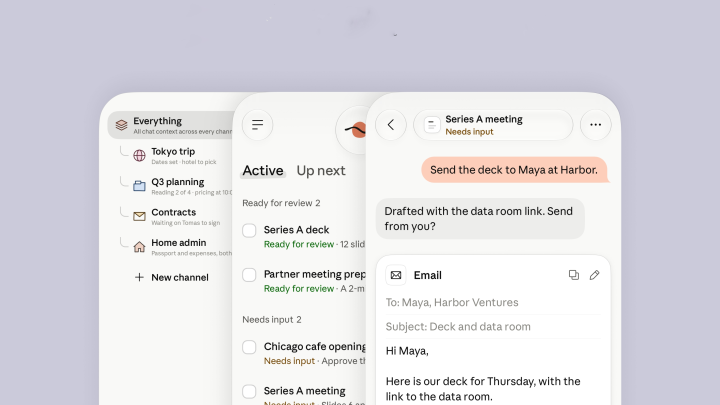
Claude Duet is designed for professionals and small businesses, with a focus on automating and managing tasks. It can build a daily briefing, create dashboards and suggest actions based on a user’s data.
Duet can also work on tasks in the background through its own virtual machine while users handle other things. When a task needs approval, it can return to the user for a decision. Anthropic says Duet proactively delivers recommendations as it monitors ongoing tasks.
Rather than focusing on everyday errands, Duet is positioned as a tool for work. It is not designed to book tickets, and it cannot show users its browser activity as it happens. Its features are aimed at helping users keep track of information and move work forward, while leaving approval of tasks that require it to the user.
Anthropic draws a line between Duet and personal agents such as Instinct. The company says Duet is not designed to handle errands or book tickets, and it cannot show users its browser activity as it happens. Its focus instead is on helping professionals and small businesses automate and manage tasks.
Duet can prepare daily briefings, create dashboards and suggest actions based on a user’s data. It can also work on tasks in the background through its own virtual machine while the user does something else, returning for approval when needed. Anthropic says the agent proactively delivers recommendations as it monitors ongoing tasks.
This positioning reflects a broader shift in the market from AI assistants toward agents that can work on users’ behalf. Many rivals are also pursuing business uses: Meta has released a small-business version of Muse with connections to other apps, while OpenAI’s Dots has a business slant and integrates with professional tools. Duet’s emphasis is therefore less on an always-visible companion for everyday errands and more on task management and recommendations that can continue in the background.
Duet is built on Anthropic’s Claude Opus 5.5 model and connects to more than 6,000 connectors and plug-ins in the Claude Marketplace. These integrations give the agent access to a range of tools as it works on tasks in the background.
It can also make online purchases on a user’s behalf through Stripe Link or Shopify Shop Pay. Purchases and other sensitive steps, such as payments, require the user’s approval, so Duet does not complete them independently.
There are limits on what the agent can do with money: Duet cannot trade securities or transfer money between accounts. Anthropic has also released a classifier that checks messages to help prevent sensitive information from leaking out. By default, the classifier blocks requests for credit card numbers and government identification. These safeguards set boundaries around both financial activity and requests for sensitive personal information.
Claude Duet is available on iOS and Android, as well as on the web through Claude.ai. Access is limited to Pro and Max customers, and the product is being offered as a research preview. That means the app is available to those eligible customers to try in preview, rather than being described as a general release.
There is an additional step for anyone hoping to use it: users have to join a waitlist to try Claude Duet. The source does not specify how long the wait might be or when access will be granted, so joining the list is the stated route to trying the research preview.
For eligible customers, the listed options are the iOS app, the Android app, and Claude.ai on the web. The research-preview access and waitlist requirement apply to trying Duet; the announcement does not provide further details about availability beyond those terms.










Comment