
Alerts
-
6 minutes, 27 seconds
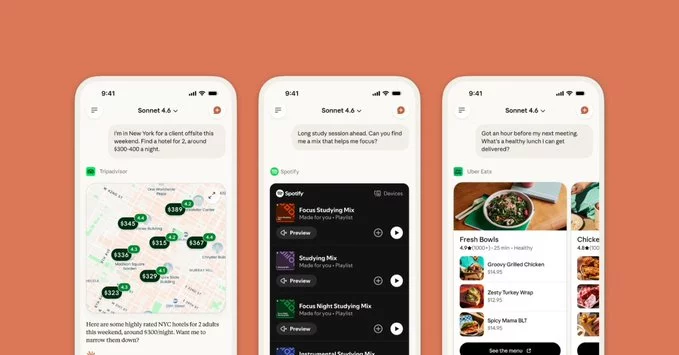
Claude app connectors are expanding how people use AI by letting the assistant connect directly with personal apps like music streaming, food delivery, and tax software. The update gives users a more personalized and practical AI experience, allowing Claude to take action across services instead of simply answering questions. For anyone wondering what Claude app connectors are, how they work, and why they matter, this rollout signals a major shift in consumer AI.
Artificial intelligence assistants have long promised to act more like true digital helpers, but most have remained largely limited to conversations. Claude app connectors appear designed to change that by allowing the assistant to interact directly with services people already use daily.
With these new integrations, users can ask Claude to help manage tasks across connected apps, turning simple prompts into actions. Whether organizing playlists, helping with food orders, or supporting financial preparation, the assistant moves closer to functioning as an operational tool rather than just a chatbot.
That shift matters because AI competition is increasingly centered on utility. It is no longer only about who has the smartest model, but which assistant can save users the most time. Claude’s connector strategy places convenience at the center of the product experience.
Early connectors reportedly focus on popular everyday services, including music, food delivery, and tax-related tools. That selection is notable because it targets frequent, real-world tasks rather than niche productivity experiments.
Music integration could allow users to manage playlists or discover listening recommendations through natural conversation. Food ordering connections suggest AI assistants may help streamline purchases, compare options, or simplify repeat orders. Financial software support also hints at more serious use cases beyond entertainment and convenience.
By starting with familiar consumer apps, the rollout lowers friction for adoption. People do not have to learn an entirely new ecosystem. Instead, they can extend tools they already trust through AI-powered assistance.
This launch is about more than adding features. It reflects a broader move toward agent-style AI systems capable of completing tasks on a user’s behalf. That idea has been central to the future of AI, and connectors make it more tangible.
When an assistant can access personal apps with permission, interactions become context-aware and personalized. That can make recommendations smarter, workflows faster, and responses more relevant. It transforms AI from something reactive into something proactive.
For users, the biggest appeal may be simplicity. Rather than jumping between multiple apps, people may be able to manage more from one conversational interface. That is a compelling vision, especially on mobile where efficiency often matters most.
Anthropic’s note that mobile support is in beta is another important detail. It suggests the company is prioritizing smartphone experiences where digital assistants often have the greatest daily value.
Mobile is where people order food, play music, check finances, and manage schedules. Bringing connectors to that environment could make Claude far more embedded in routine behavior. That may be crucial as AI companies compete to become users’ default assistant.
Beta availability also signals that more integrations may be on the way. Early launches often begin with a small connector set before expanding into travel, shopping, productivity, and communication tools.
As powerful as Claude app connectors sound, user trust will likely determine how quickly they gain traction. Whenever AI connects with personal services, privacy, permissions, and control become central concerns.
Users will want clear visibility into what the assistant can access, what actions it can take, and how data is handled. Those safeguards may become just as important as the features themselves.
Trust is especially critical as AI shifts from answering questions to carrying out tasks. The winners in this next phase may be platforms that balance convenience with strong user control.
Claude app connectors may look like a feature update, but they point to a larger transformation in personal AI. The move brings assistants closer to becoming action-oriented digital companions rather than text-based helpers.
That could have broad implications for how people interact with software altogether. Instead of opening apps first and deciding what to do next, users may increasingly start with an AI request and let the assistant coordinate the rest.
That possibility is why this launch feels bigger than a routine product update. Claude app connectors are offering a glimpse of how everyday AI could soon work.










Comment