Alerts

-
6 minutes, 20 seconds
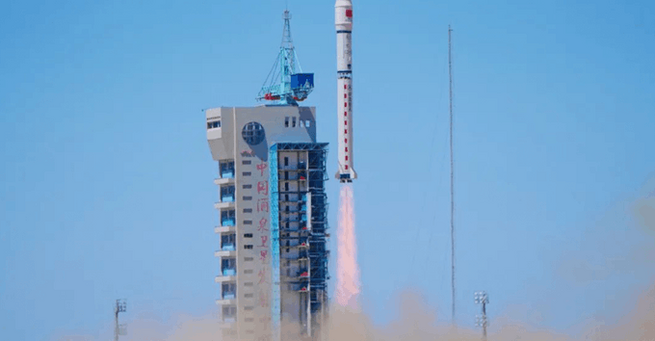
Looking for how China’s space-based AI supercomputer works or what China’s satellite supercomputer network is all about? You're in the right place. China has officially begun assembling a revolutionary orbital AI supercomputer network, marking a major leap in both space technology and artificial intelligence. The initiative, led by ADA Space, involves deploying 2,800 satellites into Earth's orbit—each equipped with advanced computing capabilities designed to process data in real-time without depending on ground stations. This breakthrough aims to boost performance in sectors like defense, aerospace, digital twin technology, and global communications, while also significantly reducing latency and energy consumption.
China’s ambitious project kicked off with the successful launch of 12 satellites aboard the Long March 2D rocket. This marks the beginning of the Star Compute Constellation, also called the “Three-Body Computing Constellation,” developed in collaboration with ADA Space, Zhijiang Laboratory, and Neijang High-Tech Zone. Each satellite is outfitted with an AI model boasting eight billion parameters and can achieve up to 744 tera operations per second (TOPS). In aggregate, these satellites already reach five peta operations per second (POPS)—setting the stage for the final 1,000 POPS goal envisioned by the Chinese government.
The satellites aren't just powerful—they're interconnected. ADA Space’s supercomputing satellites utilize laser-based communication systems capable of 100 Gbps speeds and offer a shared storage capacity of 30 terabytes. These features not only facilitate low-latency data transfers but also support advanced AI workloads like real-time analytics and 3D digital twin modeling. This high-speed infrastructure opens doors to next-gen applications in smart cities, autonomous systems, climate monitoring, and global disaster response.
Beyond raw computing power, these satellites are loaded with specialized scientific tools. One standout feature is an X-ray polarization detector designed to capture fleeting cosmic events like gamma-ray bursts. Other use cases include creating immersive 3D models of Earth for industries such as tourism, gaming, emergency services, and urban development. This cross-sector versatility makes the network an innovation magnet for high-growth tech fields, attracting investment and R&D opportunities.
Unlike traditional Earth-based systems, a satellite supercomputer network enjoys unique advantages. For starters, it eliminates the need for data to travel back to Earth for processing, dramatically cutting down on latency and bandwidth limitations. According to the South China Morning Post, less than 10% of data from typical satellites ever reaches the ground—mainly due to limited bandwidth and sparse ground stations. A space-based solution addresses this bottleneck. Plus, satellites can leverage solar power for energy and naturally dissipate heat into space, lowering the carbon footprint of large-scale computing—something that’s becoming increasingly critical as sustainability becomes a top priority across industries.
Experts suggest that China’s move could spark a new wave of investment and innovation in orbital computing from global powers. Jonathan McDowell, a space historian and Harvard astronomer, mentioned that both Europe and the United States may follow suit by developing their own space-based data centers. As AI computing continues to demand massive infrastructure, the skies may soon become the next competitive frontier—combining national security, energy efficiency, and data sovereignty into a single orbiting solution.
China’s orbital AI supercomputer is more than just a tech milestone—it’s a glimpse into the future of computing. By blending satellite technology, AI advancements, laser communication, and sustainable infrastructure, this project sets a precedent for how global data processing could evolve. It opens possibilities for edge AI, zero-latency global communication, and climate-focused solutions—all while potentially driving up competition in sectors like cloud computing, aerospace engineering, and quantum communications.
China’s leap into space-based AI computing is poised to disrupt multiple industries—offering scalable infrastructure for AI-powered services, precision Earth observation, and intercontinental data delivery. For businesses, investors, and governments alike, keeping an eye on this development is no longer optional—it’s essential. With plans to scale from 12 to 2,800 satellites, the Star Compute Constellation could redefine how we think about cloud computing, AI inference, and even data sovereignty in the age of global interconnectivity.









Comment