
Alerts
-
1 minute, 54 seconds
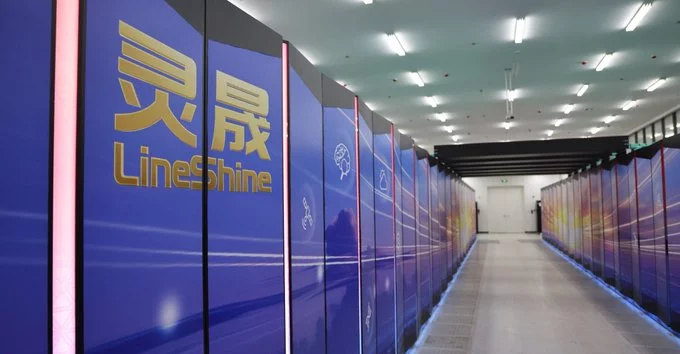
In a groundbreaking development, China claims the world’s fastest supercomputer, marking a major leap in global computing power. This achievement, announced by Chinese researchers, positions the country at the forefront of high-performance computing (HPC), with speeds that outpace previous records. The supercomputer, capable of performing over 1 exaflop (a billion billion calculations per second), is designed to tackle complex tasks like climate modeling, drug discovery, and artificial intelligence (AI).
To put this in perspective, the fastest supercomputer before this was the Fugaku in Japan, which reached about 442 petaflops. China’s new machine is more than twice as fast, making it a game-changer for scientific research. Key comparisons include:
You might wonder, “How does a supercomputer affect me?” The answer lies in its potential to solve real-world problems. For example, it can simulate weather patterns more accurately, helping predict natural disasters. It can also speed up vaccine development by analyzing millions of molecular combinations quickly. In short, this supercomputer could lead to faster innovations in medicine, energy, and technology.
Here are the standout features that make this supercomputer unique:
China’s achievement pushes other countries to invest more in HPC. The US, for instance, is working on its own exascale systems like Frontier. This competition drives innovation, meaning faster computers for everyone in the long run. For businesses, this opens doors to advanced simulations, from designing safer cars to optimizing supply chains.
China claims the world’s fastest supercomputer, and it’s not just a headline—it’s a signal of how computing power is evolving. Whether you’re a tech enthusiast or a curious reader, this milestone shows us that the future of problem-solving is faster, smarter, and more accessible than ever.










Comment