Alerts

-
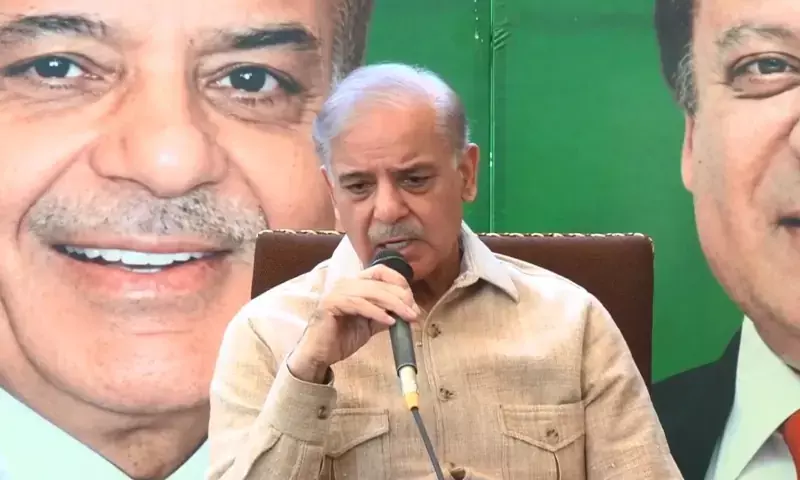
Prime Minister Shehbaz Sharif on Saturday reiterated that the Centre was “compelled” to impose emergency and governor’s rule in Khyber Pakhtunkhwa due to the provincial government’s lack of cooperation in countering terrorism. The Centre imposed emergency and governor’s rule in KP on Oct 11, citing the provincial government’s “deliberate disengagement” from the fight against terrorism. The decisions were also endorsed by the Parliament this week amid protests by the opposition. On Saturday, PM Shehbaz visited the residence of Rashid Bashir Virk in Gujranwala to offer condolences on the demise of his father, late MNA Mahmood Bashir Virk. After recalling the late PML-N lawmaker’s services, the premier stressed that the Centre was compelled to impose emergency in KP. He said the Centre made a “last attempt”, referring to the rounds of talks held by a joint delegation of the PPP and the government with the opposition. The hours-long second round, held on Oct 3, ended without a breakthrough. The prime minister highlighted that he had held multiple meetings with Sohail Afridi, the KP chief minister whose role now stands non-functional, as well as with his predecessor Ali Amin Gandapur. “In every meeting, I tried my best to convey to him from the depths of my heart and with seriousness that KP is an extremely beautiful province of Pakistan and has very brave and honourable people, […] and I am always present in every way for their development and prosperity,” PM Shehbaz said. The premier added that he assured the KP government of the Centre’s support in fighting against terrorism together to face the security challenges in the province. PM Shehbaz said he had assured the chief minister that he would make the decisions regarding the administration, resources and necessities in consultation with him. “But, unfortunately, despite all these efforts, thousands of our law enforcement agencies personnel, soldiers, officers and officers of the armed forces were sacrificing their lives every day to defend the homeland.” The prime minister stressed that the federal government “made many efforts” regarding the situation, but there were “threats and long marches every other day in response”. “Their past history is very horrific,” he remarked, recalling the 2014 sit-ins staged by the PTI at Islamabad’s D-Chowk during the tenure of his brother Nawaz Sharif. “Last year as well, you saw how the entire country was jammed by staging a sit-in in Islamabad,” he added, possibly referring to the PTI’s November 2024 protest that had resulted in clashes. The Oct 11 imposition of emergency and governor’s rule followed weeks of political tensions between the Centre and the PTI — as well as negotiations to bridge their differences — after the latter announced a long march to Islamabad to demand the release of its jailed founder, Imran Khan. Federal ministers alleged that the PTI-led government in KP had a “nexus” with terrorist groups and asserted that the province’s security situation necessitated the imposition of emergency there. The Centre and the PTI have been at odds over various issues, particularly on the counterterrorism policy, which was one of the main reasons behind the breakdown of their October 3 talks. The PTI said it was being left out of security decisions concerning KP, which the Centre denied. It also called for reviewing the counterterrorism policy, while the latter criticised the KP government’s efforts to combat terrorism in the province and objected to its stance on dialogue with the Afghan Taliban.





Comment