
Trending
Trending Hashtags
Alerts
-
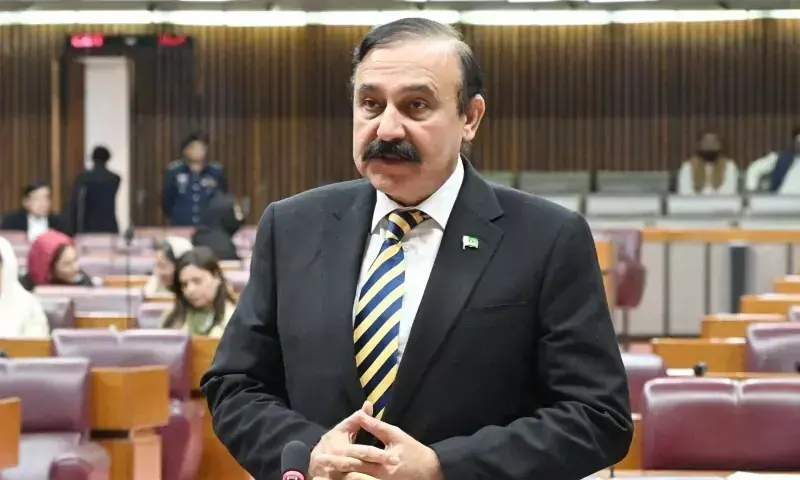
Parliamentary Affairs Minister Dr Tariq Fazal Chaudhry said on Friday that the Centre had finished deliberating on the imposition of an emergency in Khyber Pakhtunkhwa, warning that a lack of provincial government cooperation on counter-terrorism would lead it to enforce a state of emergency and then eradicate terrorism. The minister made these remarks on Geo News programme ‘Aaj Shahzeb Khanzada Kay Saath’, during which he also refused to confirm reports that a high-level meeting was expected on Saturday to decide on the imposition of an emergency in KP. “The matter of any decisive meeting is not final, nor has it been notified,” he said. The Centre has warned the PTI-led KP government in recent days of sending it packing through an emergency or governor’s rule as the party goes ahead with a protest march to demand the release of its jailed founder, Imran Khan. Federal ministers have cited the security situation in KP in this connection with the possibility of a state of emergency in the province. Regarding the reports that the government was considering implementing an emergency in 12 districts of KP, he said, “The reality is that the government has completed its deliberation regarding the implementation of an emergency. Now it is in the hands of the KP government what role it plays in this regard.” The Centre and law enforcement agencies (LEAs) had to end terrorism in KP no matter what, he said, adding that it would be better if provincial government were to cooperate and play a part in this. “But if they don’t want to get involved, then our other option is that after imposing an emergency, terrorism be wiped out, terrorists be eradicated — and as for that Article 232 … it is for the whole province, not just 12 districts,” he added. On the matter of these districts “extremely affected by terrorism”, Chaudhry said that “extraordinary measures are the need of the hour”. However, when questioned, he categorically stated that the consideration of imposing an emergency had “definitively no relation” to the PTI’s ongoing long march, adding that the simultaneous occurrence of the long march and the mulling of an emergency declaration “could be a coincidence”. Rather, he said, the Centre’s deliberations on imposing an emergency had been ongoing for a long time, as an increasing number of police and LEA personnel were being martyred in the province. He claimed that many efforts had been made to bring the KP government on board to play their role, but they were instead “standing like a wall” in front of the Centre’s peace efforts. “There is a cutoff point, at which one has to decide that the final and decisive elimination of terrorists must be done,” the minister said. Although he said no decision had been made regarding a date for the “cutoff”. Chaudhry continued that the federal government had reached the conclusion that further delay in the fight against terrorism was not possible: “Terrorists cannot be given more time to keep carrying out these actions against citizens’ lives and properties and against LEAs.” However, he emphasised that the final decision had definitely been made to take “decisive action to end terrorism in KP”. The minister added that he had met with JUI-F chief Maulana Fazlur Rehman, who has offered to play a role in breaking the deadlock in negotiations between the PTI and federal government. He stated that this option was present, while noting that the “ball is in the KP government’s court”. “The PTI doesn’t even have consensus within their own party on whether they are ready to appoint Maulana Fazlur Rehman as an arbitrator for talks … so how can negotiations move forward?” he said. He added, however, that the door for negotiations and dialogue among political parties “never closes permanently”, and that assurance of cooperation from PTI leadership regarding counter-terrorism efforts was the “foundation for a permanent solution”.






Comment