
Cassette Boy Turns Familiar Adventure Games on Their Head
Cassette Boy answers a simple question many players are already asking: what makes this indie adventure different from the classics it resembles? Within the first hour, the answer becomes clear. While the game borrows visual and structural ideas from beloved retro titles, it introduces a perspective-based mechanic that fundamentally reshapes how exploration, combat, and puzzles work. Instead of merely navigating a map, players must think about what they can and cannot see. That twist transforms Cassette Boy into a thoughtful, sometimes surprising experience that feels both nostalgic and entirely new.
A World Built From Retro Inspiration
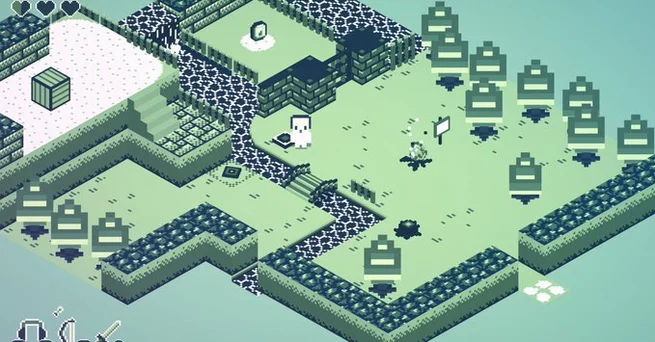
Cassette Boy wears its influences proudly. At a glance, it looks like a top-down adventure from gaming’s earlier eras, complete with a compact overworld, simple character designs, and a cozy hometown that acts as a narrative anchor. The blocky 3D visuals feel intentionally lo-fi, creating a soft, nostalgic atmosphere that recalls portable consoles of the past. Even the color palette leans into this feeling, bathing the world in a muted green hue that subtly reinforces the retro mood.
Yet these familiar elements never feel copied outright. Instead, they function as a foundation. Cassette Boy uses recognizable design language to ease players in, then gradually begins to challenge their assumptions. The result is a game that feels welcoming at first, before revealing surprising depth beneath its charming surface.
Perspective Is the Real Puzzle
The core mechanic in Cassette Boy revolves around perception itself. Objects, enemies, and even obstacles only truly “exist” when they remain within the player’s view. The moment something moves off-screen, it freezes in place, effectively pausing its impact on the world. This single idea reshapes everything from movement to problem-solving.
Push a block behind a wall, and it no longer obstructs your path. Lead an enemy out of sight, and it becomes harmless, locked in a suspended state. At the same time, unseen objects cannot be interacted with or damaged. This creates a constant push and pull, where players must decide not just where to go, but how to look.
Camera Rotation Changes Everything
To support this mechanic, Cassette Boy allows players to rotate the camera across eight fixed angles. Each rotation dramatically alters the environment, revealing new pathways or erasing obstacles that were moments ago impossible to bypass. What seems like a dead end from one angle may become a clear route from another.
This system encourages experimentation rather than brute force. Instead of reacting quickly, players are rewarded for slowing down and thinking spatially. Every puzzle feels like a small mental exercise, asking players to consider how perspective defines reality within the game’s rules.
Combat That Rewards Thought Over Speed
Combat in Cassette Boy benefits just as much from its perception-based design. Enemies lose their threat the moment they slip out of view, forcing players to think strategically about positioning rather than relying on reflexes alone. Luring a dangerous foe behind a wall can be just as effective as attacking it directly.
However, this doesn’t make encounters trivial. Because unseen enemies also cannot be harmed, players must carefully manage when to engage and when to manipulate the environment. This balance keeps combat engaging while reinforcing the game’s central theme: what you see matters more than what you do.
Saving, Resetting, and Learning Through Failure
Cassette Boy uses rest points that reset the world state, allowing players to recover while reintroducing environmental challenges. Rather than feeling punishing, this system supports experimentation. Failure often feels like part of the learning process, encouraging players to test ideas without fear of long-term consequences.
Each reset becomes an opportunity to apply new understanding. Over time, puzzles that once felt confusing start to make intuitive sense, creating a steady sense of growth that mirrors the game’s coming-of-age narrative undertones.
Why Cassette Boy Feels Genuinely Fresh
Despite its clear inspirations, Cassette Boy never feels trapped by nostalgia. Its defining mechanic transforms familiar gameplay into something quietly radical. By tying the rules of the world to player perception, the game invites reflection as much as interaction.
Cassette Boy succeeds because it respects the intelligence of its audience. It trusts players to experiment, fail, and ultimately rethink how game spaces function. That confidence, paired with a warm visual style and clever design, makes the experience linger long after the screen fades to black.
A Thoughtful Indie Worth Your Attention
Cassette Boy is more than a retro-inspired adventure. It is a carefully constructed puzzle box that challenges players to question what they assume about game worlds. Through its inventive use of perspective, it delivers moments of genuine surprise without relying on spectacle alone.
For players searching for something familiar yet intellectually rewarding, Cassette Boy offers a fresh lens on classic design. It proves that even small games can introduce big ideas, as long as they’re willing to let players see the world differently.










Comment