
Alerts
-
4 minutes, 15 seconds
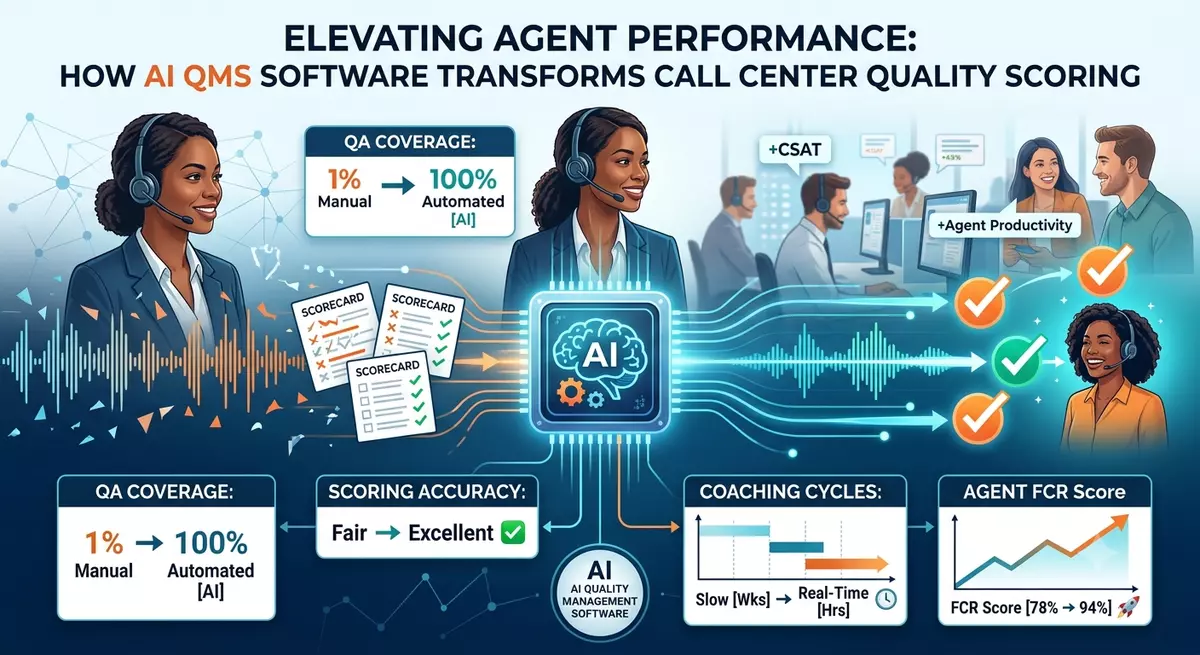
In the fast-paced world of customer service, balancing operational efficiency with exceptional customer satisfaction is a constant challenge. How do you know if your team is truly meeting customer needs? The answer lies in data.
Implementing a robust Quality Assurance (QA) program requires looking beyond guesswork and relying on concrete numbers. By tracking the right call center agent performance metrics, managers can gain deep insights into agent behavior, identify coaching opportunities, and ultimately elevate the customer experience.
Let’s explore the essential metrics every contact center should track and how they tie into effective contact center quality assurance.
Quality assurance isn't just about listening in on a few random calls a month; it is a systematic approach to evaluating, measuring, and improving customer interactions.
Without key performance indicators (KPIs), your QA program lacks direction. Metrics provide an objective baseline. They help you distinguish between an agent who is genuinely struggling and one who is simply having a bad day. When paired with a structured call center quality monitoring scorecard, these metrics transform subjective evaluations into actionable, data-driven coaching sessions.
To build a comprehensive picture of agent performance, you need a balanced mix of efficiency, quality, and customer-centric metrics.
First Contact Resolution measures the percentage of customer issues resolved during the very first interaction, without the need for a follow-up call or email.
Why it matters: FCR is one of the strongest indicators of customer satisfaction. High FCR means agents are well-trained, empowered, and equipped with the right knowledge bases. Low FCR often points to gaps in training or convoluted internal processes.
AHT combines talk time, hold time, and after-call work (ACW) time.
Why it matters: While traditional metrics often pushed for the lowest possible AHT, modern QA takes a more nuanced approach. Rushing customers just to lower AHT harms the customer experience. However, tracking AHT helps identify agents who may need assistance with time management, system navigation, or typing speed.
These metrics measure the customer's perspective directly, usually gathered through post-interaction surveys.
Why it matters: CSAT tells you how happy the customer was with a specific interaction, while NPS measures their overall loyalty to your brand. These are the ultimate benchmarks for your QA program. If an agent has great efficiency metrics but a low CSAT, your quality monitoring scorecard needs to reevaluate how "success" is defined.
This is the score an agent receives when a supervisor or QA analyst evaluates their recorded or live calls using a standardized call center quality monitoring scorecard.
Why it matters: This metric directly reflects adherence to company policies, soft skills (like empathy and active listening), tone of voice, and accuracy of information provided. Regular evaluations ensure brand consistency and compliance.
ACW refers to the time an agent spends completing notes, updating CRM systems, and wrapping up administrative tasks after a call ends.
Why it matters: Excessive ACW time inflates queue wait times for other callers. Tracking this metric helps you identify workflow inefficiencies or agents who need help with note-taking and system shortcuts.
Tracking these metrics in isolation won't move the needle. To maximize their impact, they must be integrated directly into your call center quality monitoring scorecard.
A well-designed scorecard bridges the gap between hard numbers and qualitative behavior. For example:
Quantitative metrics (like AHT and FCR) can make up 30% of the scorecard.
Soft skills and compliance (like empathy, greeting, and regulatory disclosures) can make up the remaining 70%.
When managers review calls using this balanced approach, agents receive a holistic view of their performance. Instead of hearing, "Your calls are too long," they hear, "Your resolution rate is fantastic, but let's work on reducing ACW so you can handle post-call notes more efficiently."
Once you are tracking the right metrics and scoring calls effectively, how do you use this data to drive actual results?
Focus on Coaching, Not Policing: Use metrics to highlight growth areas, not just to penalize mistakes. Agents who feel supported are much more likely to improve.
Share Dashboards Transparently: Give agents real-time access to their own performance metrics. When agents can track their progress, they naturally take ownership of their development.
Calibrate Your QA Team: Ensure that all supervisors and QA analysts score calls using the same standards. Regular calibration sessions prevent bias and ensure fairness across the team.
Mastering call center agent performance metrics is the cornerstone of any successful contact center quality assurance strategy. By combining quantitative data—like FCR and AHT—with qualitative insights gathered from a detailed call center quality monitoring scorecard, you can create a culture of continuous improvement.
Ultimately, when your agents are equipped with clear metrics, constructive feedback, and the right tools, everyone wins: your agents feel more confident, your operations run smoother, and your customers receive the exceptional service they deserve.





Comment