
Alerts
-
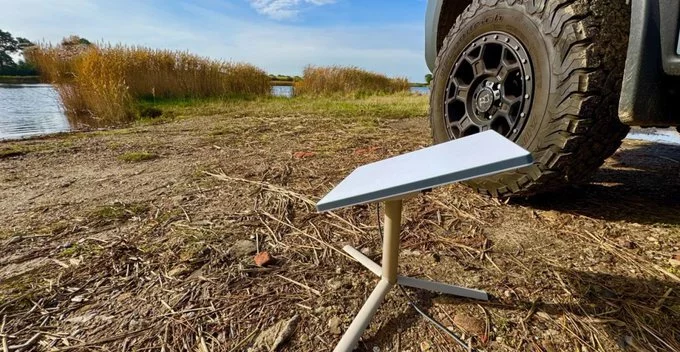
Recent code in the Starlink firmware suggests that SpaceX is developing a battery-powered version of its smallest internet dish. This Starlink Mini with integrated battery would offer truly portable, untethered internet access for vanlifers, emergency responders, and anyone needing fast, low-latency connectivity from almost anywhere on Earth.
University researcher Jinwei Zhao discovered strings hinting at an integrated battery in a May firmware release, as reported by PCMag. The "message DishBatteryStats" line indicates code designed to return specific battery fields, including the current state_of_charge. If the dish were simply connected to an external power bank, the firmware could not natively read the exact charge percentage or charging state.
The firmware also references three power states, suggesting the unit can run off a direct USB-C power source, its internal battery, or both simultaneously. This pass-through support helps extend battery health, preventing the dish from becoming an expensive paperweight after a few hundred cycles.
Currently, the Starlink Mini must be tethered to an AC wall outlet or portable battery to connect to the 10,000+ satellites in low Earth orbit. While third-party batteries like the PeakDo LinkPower series exist, they come with janky software and high costs compared to similarly-specced external power banks.
A Starlink Mini with an integrated battery would work seamlessly in the Starlink app, be covered by SpaceX's warranty, and allow the dish to be constructed as compactly as possible. It likely features an airline-friendly 99Wh battery, which could yield over five hours of runtime based on testing.
SpaceX's move toward a battery-powered Starlink Mini signals a shift toward truly portable satellite internet. This innovation could revolutionize connectivity for digital nomads, remote workers, and emergency services, making high-speed internet accessible in the most remote locations.
Unlike the current Starlink Mini, which requires external batteries or AC power, the integrated battery version simplifies setup and reduces equipment bulk. It also eliminates the need for third-party accessories with poor software support.










Comment