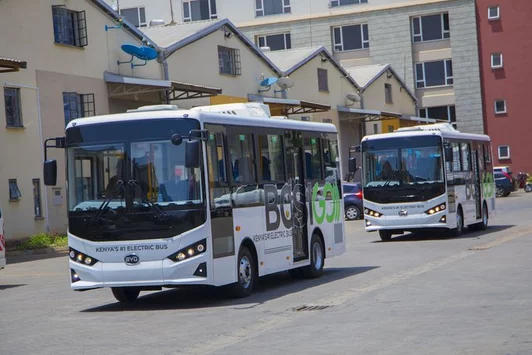
BasiGo fixed-route commuting is introducing structured travel in Nairobi, promising predictable routes, fixed fares, and guaranteed seats. The electric bus model aims to answer a simple question many commuters ask daily: is reliability worth paying extra for? With preset schedules and digital booking, the service targets professionals tired of uncertain matatu pricing and erratic travel times. As traffic congestion worsens across the city, the experiment could reshape how Nairobi values time.
For decades, commuting in Nairobi has revolved around flexibility. Routes shift based on demand, fares fluctuate with traffic, and departure times often depend on when a vehicle fills up. That improvisation has kept millions moving but rarely guarantees punctuality. For office workers, students, and shift employees, unpredictability often translates into daily stress and lost productivity.
BasiGo fixed-route commuting flips that model. Instead of dynamic routes, buses operate on scheduled departures between estates like Nyayo and Mwiki and business districts such as Westlands and Upper Hill. Travelers book seats in advance and know exactly when they will arrive. The approach replaces guesswork with structure, a concept still rare in Nairobi’s informal transit ecosystem.
One of the most striking aspects of the model is pricing transparency. A trip from Nyayo Estate to Westlands via the Nairobi Expressway costs KES 200, while a Mwiki to Upper Hill journey goes for around KES 150. These fares exceed the typical KES 80–120 charged by diesel matatus. However, the premium reflects a trade-off between cost and certainty.
For many commuters, matatu fares fluctuate wildly depending on weather, fuel prices, and rush-hour demand. That unpredictability makes budgeting difficult and often fuels commuter frustration. By offering fixed pricing, BasiGo aims to appeal to riders who value financial predictability as much as time savings.
Beyond structure and pricing, BasiGo’s electric fleet introduces an environmental dimension. As one of the early adopters of electric public transport in Kenya, BasiGo positions itself at the intersection of climate action and urban mobility innovation. Electric buses promise lower emissions and quieter operations compared to traditional diesel alternatives.
This sustainability angle aligns with Nairobi’s broader ambitions to modernize public transport and reduce pollution. For environmentally conscious commuters and corporate clients, electric mobility adds another reason to consider switching. While sustainability may not drive daily choices for every rider, it strengthens the brand’s long-term appeal.
Digital convenience plays a central role in the rollout. Riders pay through M-PESA till numbers, allowing quick reservations without physical cash. That integration taps into Kenya’s strong mobile money culture, making the service accessible without complex onboarding. Booking a ride becomes as simple as sending money and showing up on time.
The frictionless payment system also reinforces the structured nature of the service. Prepaid seats reduce uncertainty for both operators and passengers. For commuters used to cash negotiations at bus stops, the shift to digital reservations signals a broader modernization of daily transport habits.
Structured commuting models are not entirely new to Nairobi. Previous attempts struggled to gain long-term traction despite early enthusiasm. One of the most notable examples was Swvl, which introduced app-based bus bookings before eventually exiting several markets.
Those earlier experiments highlight the challenges of balancing affordability, scale, and commuter behavior. Nairobi’s transit culture thrives on flexibility, and convincing riders to pay more for structure has historically been difficult. BasiGo enters this landscape with a slightly different angle: electric buses, clearer routes, and tighter cost controls.
At its core, BasiGo fixed-route commuting tests a deeply personal metric: the value of time. For professionals heading to meetings or parents managing school schedules, predictable arrival times may justify higher fares. Avoiding chaotic rush-hour delays could mean better productivity, reduced stress, and improved quality of life.
Yet affordability remains a key barrier. A consistent KES 200 fare might feel steep for lower-income commuters who rely on the flexibility of traditional transport. The success of the model will likely depend on whether enough riders prioritize reliability over cost.
Urban mobility in Nairobi is evolving as the city grows denser and more connected. Infrastructure like the Nairobi Expressway has already introduced premium travel options that trade cost for speed. BasiGo’s structured commuting extends that logic into daily public transport, blending predictability with sustainability.
If the model gains traction, it could inspire similar services or push traditional operators to adopt more predictable systems. Competition might drive improvements across the sector, benefiting commuters regardless of which option they choose. Even if adoption remains niche, the experiment adds valuable insight into how Nairobi’s transport ecosystem can evolve.
Rapid urbanization and worsening congestion make Nairobi ripe for mobility innovation. With more residents moving to satellite estates and commuting longer distances, the demand for reliable transport continues to rise. Services that offer certainty in chaotic environments often gain loyal followings, even at premium prices.
BasiGo fixed-route commuting arrives at a moment when expectations around urban mobility are shifting. Riders increasingly compare options not just by price but by experience. Whether the model scales widely or stays a niche solution, it reflects a broader shift toward structured, tech-driven commuting.
Early adoption will likely determine whether BasiGo becomes a mainstream alternative or a premium niche. Success depends on maintaining punctuality, managing costs, and building trust among daily riders. Expanding routes and optimizing pricing could help broaden its appeal over time.
For now, the experiment continues to spark conversations across Nairobi. Commuters are watching closely, weighing cost against convenience with each trip. As the city’s rhythm accelerates, one question remains central: in a place where every minute counts, how much is predictability really worth?
BasiGo Fixed-Route Commuting Tests Nairobi’s ... 0 0 0 0 2
2 photos





Array