
-
5 minutes, 43 seconds
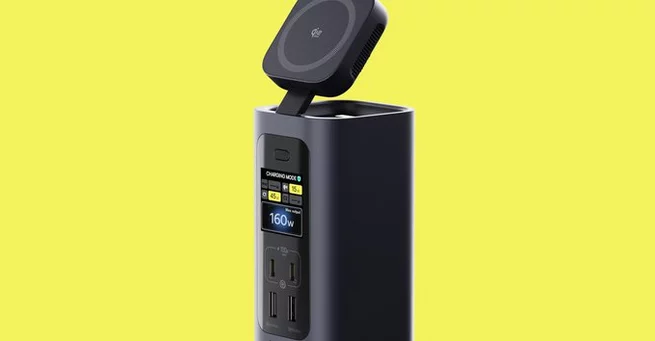
Baseus has officially unveiled the Spacemate RD1 Pro at CES 2026, answering common questions around faster wireless charging, high-refresh-rate displays, and all-in-one desktop connectivity. Designed for power users, the new dock combines a wide selection of ports with one of the first built-in Qi2 25W wireless chargers on a desktop docking station. The product targets professionals who want fewer cables, faster charging, and cleaner desk setups. With support for modern laptops and multiple operating systems, Baseus is positioning the RD1 Pro as a future-ready workstation hub. Early interest is high due to its rare mix of power delivery and display performance. CES attendees got the first hands-on look this week.
The standout feature of the Baseus Spacemate RD1 Pro is its magnetic Qi2 25W charging pad, which flips up from the top of the dock. This makes it one of the first desktop docks to support the faster Qi2.2 wireless charging standard. Compared to older Qi docks, the new standard delivers quicker, more efficient charging while maintaining magnetic alignment. Smartphones compatible with Qi2 can charge at speeds previously reserved for wired connections. The flip-up design also keeps the charging surface visible and accessible. For users juggling phones, earbuds, and laptops, this feature alone adds daily convenience. Baseus clearly aims to future-proof the dock as Qi2 adoption grows.
Baseus markets the Spacemate RD1 Pro as a 15-in-1 docking station, and while the math may be generous, the port selection is undeniably extensive. Users get two HDMI ports, four USB-C ports, four USB-A ports, and a 1Gbps Ethernet connection. The dock also includes UHS-I SD and microSD card slots, making it appealing to photographers and video editors. Combined with the wireless charger, the dock delivers at least 14 functional connections without adapters. This setup reduces desk clutter and simplifies workflows. Everything connects through a single cable to your laptop.
Display performance is another major highlight of the Baseus Spacemate RD1 Pro. The dock can output 4K at 120Hz to a single monitor, a feature still rare among desktop docking stations. For dual-monitor setups, it supports 4K at 60Hz on two displays simultaneously. This makes it suitable for gaming, video editing, and smooth multitasking. Data transfer speeds reach up to 10Gbps over USB-C, ensuring minimal bottlenecks. While only one monitor can hit 120Hz, the flexibility still beats many competing docks. Visual performance remains a key selling point.
Baseus has built the RD1 Pro with serious power needs in mind. Each USB-C Power Delivery port supports charging up to 100W, enough for most high-performance laptops. The Qi2 wireless charger delivers up to 25W, while the dock’s total power output maxes out at 160W. This allows multiple devices to charge simultaneously without slowing down. Users can power laptops, tablets, phones, and accessories from one central hub. For hybrid work setups, this reduces the need for multiple chargers. Power management is clearly a core focus.
Although Baseus is pitching the Spacemate RD1 Pro primarily as a Windows dock, it also supports macOS and Linux systems. This broader compatibility makes it attractive to developers, creatives, and mixed-device households. Many docks limit features depending on the operating system, but Baseus appears to offer consistent core functionality. This flexibility aligns with modern workflows where users switch between platforms. It also increases the dock’s long-term value. Cross-platform support strengthens its appeal at a premium price point.
Baseus confirmed that the Spacemate RD1 Pro will launch in April with a price tag of $259.99. The company initially shared a lower figure, later correcting it ahead of CES coverage. While not cheap, the price reflects its advanced charging, display, and connectivity features. Compared to buying separate chargers, hubs, and adapters, the value proposition becomes clearer. The RD1 Pro stands out as one of CES 2026’s more practical productivity gadgets. For users seeking a powerful, future-ready desktop dock, Baseus is making a strong case.

2.5K articles

1.4K articles

34 articles

28 articles













Comment