
Alerts
-
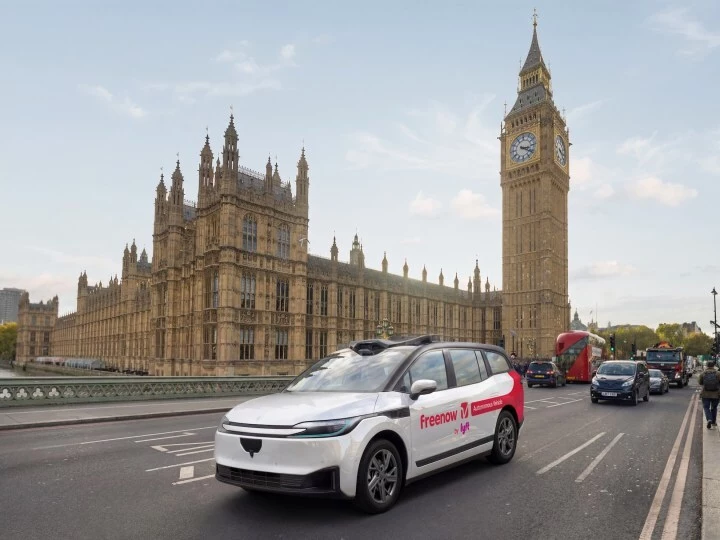
Chinese tech giant Baidu has started testing autonomous vehicles in London as part of its strategic partnership with Lyft and Freenow, the German taxi and multi-mobility app now owned by Lyft. The testing, which began with human safety operators on board, marks Baidu's entry into the UK market ahead of planned commercial robotaxi deployments.
Nearly a year after Lyft and Baidu announced a strategic partnership to deploy Baidu's purpose-built Apollo Go RT6 robotaxi across key European markets, the first test vehicles are now operating in London. The autonomous vehicles will eventually be available through the Freenow app, which Lyft acquired in 2025 for approximately $197 million. This acquisition gave Lyft a strong foothold in Europe's competitive ride-hailing market.
London is emerging as a critical market for autonomous vehicle testing. Waymo began testing its self-driving cars with human safety operators in the city in April 2025. Uber and its autonomous driving partner Wayve have also announced plans to launch a robotaxi service in London this year, initially with safety drivers before moving to fully driverless operations.
Baidu and Freenow by Lyft expect to invite the public to hail their robotaxis in 2027, though the exact timeline depends on regulatory approval. The companies continue discussions with safety officials, including Transport for London (TfL) and the Centre for Connected and Autonomous Vehicles (CCAV).
The UK government is actively creating autonomous vehicle regulations. In May 2025, it opened applications for an AV pilot program that allows companies to test self-driving vehicles under government oversight. Baidu's test vehicles will initially operate within London's borough of Brent.
When the service launches, Freenow by Lyft plans to operate a hybrid network — similar to rival Uber's strategy — where human drivers (taxis and private-hire vehicles) work alongside robotaxis. Thomas Zimmermann, CEO of Freenow by Lyft, emphasized: "As a platform with deep roots in the taxi industry, our priority is ensuring that autonomous technology supports the professional drivers who keep London moving."
The race to dominate self-driving ride-hailing in the UK is intensifying. Waymo, Uber/Wayve, and now Baidu/Lyft are all vying for first-mover advantage. Baidu's Apollo Go RT6, designed specifically for robotaxi services, offers a purpose-built platform that could give it an edge in cost efficiency and scalability.
While widespread robotaxi availability is still a few years away, Londoners can expect to see more test vehicles on the roads. The eventual service promises to offer a new mobility option alongside traditional taxis and ride-hailing apps. Safety remains the top priority, with all companies required to operate with human safety operators during testing phases.
Key takeaways:










Comment