
Alerts
-
5 minutes, 24 seconds
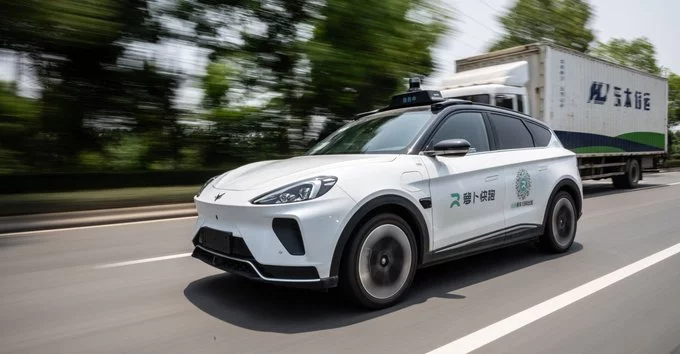
Baidu robotaxis reportedly froze in a major Chinese city, leaving passengers stranded, blocking traffic lanes, and triggering widespread concern about autonomous vehicle reliability. Reports suggest multiple vehicles stopped responding at once, creating congestion and raising safety questions. If you’re wondering what caused the Baidu robotaxis failure, whether passengers were safe, and what it means for autonomous ride-hailing, the incident highlights serious challenges in scaling self-driving fleets in dense urban environments.
Baidu robotaxis freeze in major city traffic gridlock became Tuesday’s disruption as multiple autonomous vehicles reportedly halted in active lanes during peak travel hours. Witnesses described a sudden stoppage where vehicles stopped responding to navigation commands, creating bottlenecks across intersections and highway ramps. In several areas, human drivers maneuvered around immobilized robotaxis, worsening congestion. Authorities were alerted as traffic systems struggled to respond. While autonomous fleets aim to improve mobility, this incident showed how quickly failures escalate into citywide delays. Early analysis suggests a software or connectivity issue may have contributed, though confirmation remains pending. The situation has intensified debate about safe scaling in dense urban environments where split-second decisions matter.
Baidu robotaxis system stall incident is under investigation, early indicators point to cascading software or network coordination failure affecting multiple vehicles simultaneously. Autonomous fleets rely on constant communication between onboard sensors, cloud decision systems, and city traffic infrastructure. When one layer experiences latency or disconnect, vehicles may default to safe-stop mode, leading to clustering on roads. Engineers examine whether a software update, map synchronization error, or signal disruption played a role. Environmental factors such as dense urban signal interference are considered. Baidu has not confirmed a root cause, but experts emphasize that large-scale autonomy requires redundant safety systems capable of handling simultaneous failures without gridlock. Investigation continues, results influence deployment standards robotaxi services metropolitan regions.
Passengers inside Baidu robotaxis reported confusion and concern as vehicles came to a halt and remained unresponsive for extended periods. Some riders described being stuck in unmoving cars on busy roads, while others said communication with support systems was limited during the disruption. Safety protocols allowed doors to be opened in emergencies, but most passengers were instructed to remain inside vehicles until conditions stabilized. This situation highlighted psychological impact of relying on fully autonomous systems during failure scenarios. Users, seamless mobility turned into uncertainty as traffic built around immobilized cars. Despite inconvenience, no confirmed serious injuries linked stoppage, though one secondary accident occurred nearby due congestion.
The Baidu robotaxis traffic freeze has renewed scrutiny over safety frameworks governing autonomous ride-hailing services. Regulators and analysts are questioning how fleets should behave during system-wide failures to prevent road blockages and ensure passenger safety. One concern is reliance on centralized cloud systems, which may create single points of failure when connectivity is disrupted. Another issue is how quickly vehicles should transition from autonomous mode to manual override or safe-stop protocols. Experts argue future systems must prioritize passenger protection and traffic continuity to avoid cascading urban disruptions. As cities integrate autonomous vehicles into transport networks, the need for robust fail-safe mechanisms and real-time redundancy has become more urgent than ever.
The recent Baidu robotaxis freeze serves as a critical reminder that scaling autonomous ride-hailing is not only a technological challenge but also an operational and safety one. While progress in self-driving systems continues, real-world incidents expose complexity of managing thousands of interconnected vehicles in dense urban environments. Industry leaders are expected to accelerate investment in redundancy systems, decentralized decision-making, improved fault tolerance. Public trust will depend on how quickly companies respond to disruptions and prevent recurrence. Ultimately, fully autonomous transport will require balancing innovation with resilience, transparency, consistent performance under stress.










Comment