


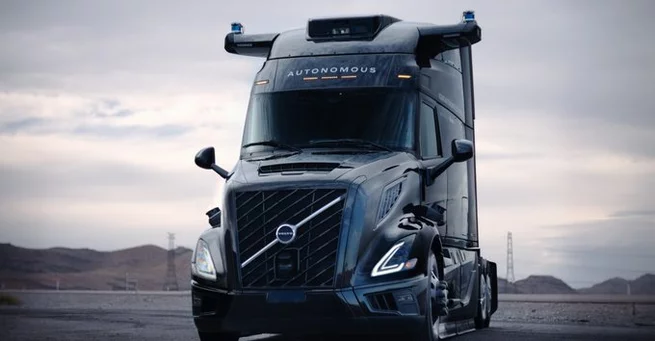
Aurora driverless truck network is expanding fast — and many are asking: where will it operate next, and what does this mean for long-haul trucking? The autonomous trucking company says a new software update will triple its driverless routes to 10 across the Southern United States. Even more striking, Aurora is launching ultra-long routes that normally require mandatory rest breaks for human drivers. The move signals a major leap forward in commercial autonomous freight.
Aurora Driverless Truck Network Expansion Explained
Aurora confirmed it will expand its fully driverless operations from its existing Texas routes into new interstate corridors, increasing its total network to 10 commercial routes. The update comes ahead of the company’s quarterly earnings report and marks its fourth major software release focused on scaling operations.
Currently, Aurora operates 10 autonomous trucks without safety monitors across routes connecting Dallas, Houston, Fort Worth, and El Paso. Earlier software updates allowed the company to first remove human safety drivers, then operate at night, and later expand service to El Paso.
Now, the latest upgrade significantly broadens the company’s footprint across the Southern US.
New Long-Haul Routes: Fort Worth to Phoenix and Beyond
One of the most ambitious additions is the Fort Worth to Phoenix corridor — a journey that takes more than 15 hours by road. Under federal regulations, human truck drivers are limited to 11 hours of driving within a 14-hour work window before taking mandatory rest breaks.
Autonomous trucks, however, are not subject to those same hours-of-service limits.
That distinction could reshape long-haul freight logistics. Continuous operation allows freight to move faster between distribution hubs, potentially reducing delivery times and increasing asset utilization for carriers.
Additional new routes include:
-
Dallas to Houston
-
Fort Worth to El Paso
-
El Paso to Phoenix
-
Fort Worth to Phoenix
-
Dallas to Laredo
Together, these routes form a growing autonomous freight corridor stretching deep into the Southern freight belt.
How Aurora’s AI Mapping Accelerates Growth
Scaling autonomous trucking isn’t just about adding vehicles — it’s about mapping highways safely and efficiently. Aurora says it is using AI-powered, cloud-based systems to dramatically speed up route mapping.
After a single manual drive on a new corridor, Aurora’s algorithms can automatically generate “semantic components” — essentially digital understanding of road features, signage, lane markings, and infrastructure. This reduces the need for extensive human input.
Map automation shortens the time between testing, validation, and commercial deployment. That efficiency could become a competitive advantage as more companies race to build scalable autonomous freight networks.
Faster mapping means faster route launches — and more revenue-generating lanes.
Aurora’s Driverless Strategy vs. Safety Monitor Operations
While Aurora now operates fully driverless trucks on certain routes, it still deploys safety monitors for some customers and corridors. The company continues to work with established freight carriers, including major logistics operators running routes from Phoenix and other hubs.
This dual-approach strategy allows Aurora to scale gradually while maintaining commercial partnerships. Driverless operations are expanding, but monitored deployments remain part of the transition strategy.
For the freight industry, this signals cautious but steady commercialization rather than an overnight transformation.
Why the Southern US Is a Strategic Focus
The Southern United States is one of the busiest freight corridors in North America. Major highways connect ports, border crossings, manufacturing centers, and distribution hubs across Texas and Arizona.
By focusing on warm-weather states with high freight density, Aurora avoids some of the complexities that colder climates present for autonomous systems. Fewer snow and ice conditions simplify early-stage scaling.
The Dallas–Houston–El Paso–Phoenix corridor also supports cross-border trade and e-commerce distribution, making it commercially attractive for autonomous freight pilots.
Strategic geography is playing a key role in Aurora’s expansion roadmap.
What This Means for the Trucking Industry
The Aurora driverless truck network expansion raises big questions about efficiency, cost, and workforce impact.
Autonomous trucks capable of operating beyond human driving limits could reduce transit times on long-haul routes. That may lower per-mile costs over time, particularly on predictable interstate corridors.
However, widespread replacement of human drivers is not imminent. Autonomous systems are currently optimized for highway driving, not complex urban pickup and delivery scenarios. Human drivers still handle many critical parts of the freight journey.
Instead of sudden disruption, the industry is likely to see hybrid logistics models — combining autonomous long-haul highway segments with human-driven first- and last-mile delivery.
A Critical Year for Commercial Autonomous Freight
Aurora’s expansion signals that 2026 could be a defining year for commercial driverless trucking. Moving from limited pilot routes to a broader, multi-state network represents a transition from experimentation to scalable deployment.
Investors and logistics operators will closely watch performance metrics such as uptime, safety records, delivery times, and cost efficiencies. Consistency across longer routes like Fort Worth to Phoenix will serve as a real-world stress test for the technology.
If successful, the tripling of the Aurora driverless truck network may mark one of the most meaningful commercial milestones in autonomous freight to date.
Autonomous trucking is no longer just a future concept — it is steadily building its own highway system across the American South.


Array