Alerts

-
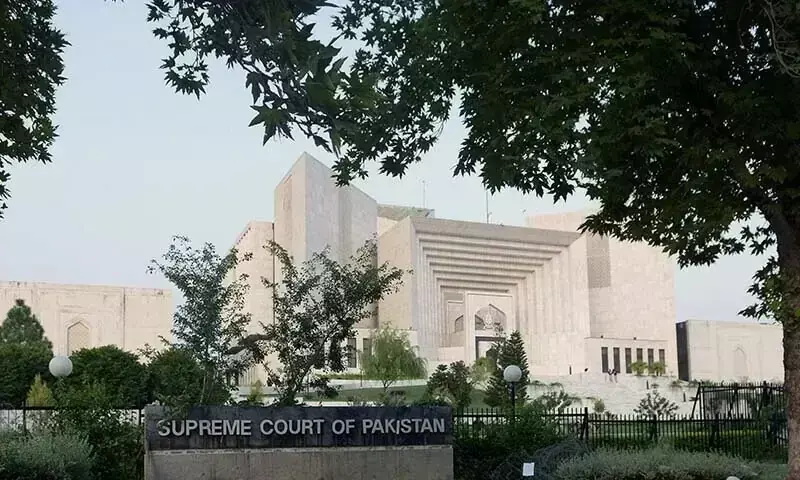
• Clear, predictable rules stressed for public servants • Administrative convenience can’t justify denying legitimate promotion, bench observes ISLAMABAD: The Supreme Court has emphasised that the government, being the largest public employer, must conduct itself as a model employer, as good governance requires clarity not only at the policy stage but also in rule-making and subsequent implementation. “Where rules do not prescribe coherent promotional tracks or options, the resulting uncertainty leads to failure in governance,” regretted Justice Ayesha A. Malik in a six-page judgement she authored. Justice Malik, who headed a two-judge SC bench also comprising Justice Shahid Waheed, observed that the consequences of opaque rules were borne not only by the institution that created the ambiguity but also by the employee, who then had to spend years seeking an entitlement that should have been provided for in the rules and service structure. The observation came while restoring the promotion of Muhammad Shafiq, a former Elementary School Teacher (Physical Education) (EST-PE), and setting aside the withdrawal of his promotion to Assistant Education Officer (Physical Education) (AEO-PE). The petitioner had challenged the March 12, 2025 decision of the Punjab Service Tribunal, which rejected his plea against the withdrawal of his promotion order dated May 24, 2023. He joined the Education Department on Nov 22, 1995, as EST-PE and was promoted to AEO-PE (BS-16) on Oct 31, 2020. However, the promotion order was withdrawn on May 24, 2023, triggering the dispute between the petitioner and the Education Department. The judgement emphasised that the service structure must provide a clear and predictable career path so employees can understand where they enter the service, how progression takes place and what conditions govern their advancement. “Questions with reference to pay, seniority, promotion and retirement are not administrative inconveniences; they are matters that determine the security, progression and dignity of a public servant throughout their working life,” the judgement said. Citing the Punjab School Education Department (School Education) Service Rules, 2014, notified on March 14, 2014, which prescribed the method for promotion from EST-PE (BS-14) to SST or AEO-PE, the judgement noted that a note at the end of the rules had created the dispute. The note stated that the post of AEO would be filled from among SSTs through transfer. The judgement explained that reliance on the note to deny the promotion was without basis or justification, adding that the department’s interpretation of the rules was flawed because the note could not be read as a bar on the promotion criteria clearly provided in the 2014 rules. The judgement said structural gaps were often the consequence of policies developed without adequate data, institutional consultation or an understanding of how the service actually functioned on the ground. Such gaps were then aggravated at the implementation stage by an administrative approach that first asked why a benefit should not be given, rather than whether it was due and how the governing framework could be fairly applied. “Administrative convenience cannot be a substitute for the law and neither can ambiguity become a reason to deny someone legitimate progression,” the judgement said. “Where repeated difficulties expose a gap in the service structure, the appropriate response is not to withdraw the benefit given to a litigant, but rather to identify anomalies, consult those affected and correct the rules,” it added. Good administration was not measured by how effectively it resisted a claim, but by how fairly, consistently and efficiently it determined what was due and delivered it. There was a wider rule-of-law consequence to such administrative uncertainty and lethargy. The law could not effectively regulate the conduct of those governed by it, including public servants, if they could not easily ascertain what was required, the judgement observed. Legal certainty demanded more than the existence of rules. It required rules to be coherent, predictable and capable of application. When a service structure was unclear, its deficiencies were addressed through ad hoc orders, withdrawals and repeated representations, creating contradictions and anomalies that remained uncorrected. This encouraged employees to seek exceptions, interventions and litigation simply to establish something that should have been obvious under the rules. “This is the absolute opposite of good administration and good governance,” the judgement said, stressing that the burden of resolving deficiencies rested with the State. In that process, policy-making and rule-making were important and decisive stages at which all relevant factors should be considered, it emphasised. “Clarity is not merely good drafting, it is an element of legality itself, an essential condition for consistent, fair and accountable governance,” the judgement explained. Published in Dawn, October 8th, 2026








Comment