
-
5 minutes, 59 seconds
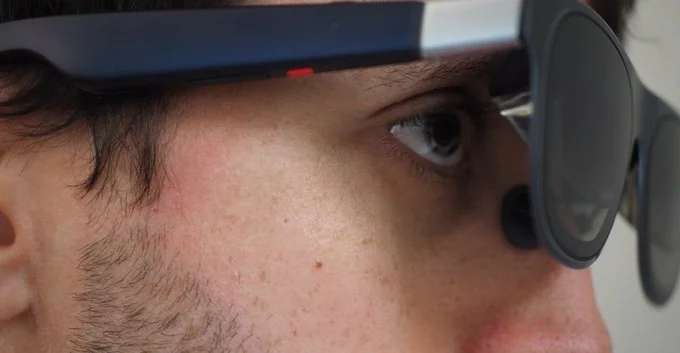
AR gaming glasses are quickly transforming portable entertainment, but most gamers still wonder what makes the “perfect” pair. From immersive floating screens and ultra-low latency to all-day comfort and seamless device support, expectations in 2026 are higher than ever. This article breaks down the nine essential features that define next-generation AR gaming glasses. It also explores how leading devices like Xreal and Viture are pushing the boundaries, even though no single model has fully perfected the experience yet.
The most important expectation from AR gaming glasses is true visual immersion. Players want a massive virtual screen that feels cinematic while remaining sharp and stable during fast gameplay. High refresh rates are critical because they ensure smooth motion without stuttering or lag.
Brightness consistency also matters, especially in mixed lighting environments. Without it, the illusion of a floating display breaks instantly. As gaming shifts toward portable-first experiences, immersion becomes the defining feature separating average devices from premium AR gaming glasses.
Display quality is where many AR gaming glasses still struggle. Edge-to-edge clarity is essential, yet some devices still produce slight blur or distortion around the corners. Advanced lens alignment and waveguide improvements are solving this problem gradually.
When optical precision is high, the brain accepts the virtual screen as natural, reducing eye fatigue. This makes long gaming sessions more comfortable and visually stable, especially for users who rely on handheld consoles or cloud gaming setups.
Comfort is a non-negotiable feature for serious AR gaming glasses. Lightweight frames, balanced weight distribution, and adjustable nose support determine whether a device can be worn for hours.
Heat control is equally important because extended play sessions can make poorly designed glasses uncomfortable. A well-engineered pair feels almost invisible, allowing gamers to stay focused on gameplay instead of physical strain or pressure points around the face.
Modern AR gaming glasses must connect effortlessly to multiple devices. Users expect plug-and-play compatibility with consoles, PCs, and smartphones through USB-C or wireless streaming.
Low-friction connectivity ensures that switching between devices feels instant and natural. The fewer setup steps required, the more the glasses behave like a true extension of the gaming system rather than an external accessory.
Latency is one of the most critical performance factors in AR gaming glasses. Even minor delays between input and visual output can break immersion instantly.
Manufacturers are improving response times with faster processors and optimized rendering pipelines. For competitive gamers, achieving near-zero delay is just as important as resolution or field of view, making performance tuning a top priority in next-generation designs.
Audio plays a huge role in immersion, yet many AR gaming glasses still rely on basic sound output. Built-in spatial audio can significantly enhance gameplay by placing sound cues in a 3D environment.
However, privacy remains a concern, especially in public spaces. Some users prefer hybrid setups with external headphones for deeper sound layering. The future likely lies in adaptive audio systems that balance immersion and discretion.
Power efficiency is another major challenge for AR gaming glasses. Since these devices depend on compact batteries or external power sources, energy optimization is crucial.
Better chip design and smarter thermal systems help extend playtime while preventing overheating. Without strong battery management, even the most advanced features lose value during long gaming sessions on the go.
Software flexibility is what turns good AR gaming glasses into great ones. Users want adjustable screen positioning, scaling options, and compatibility across gaming ecosystems.
A strong software layer ensures that the experience feels personal rather than fixed. As AR gaming evolves, customizable interfaces will define which brands lead the market and which fade into the background.
Overall, the goal is to create AR gaming glasses that feel invisible while delivering console-level performance in everyday portable use, blending entertainment, productivity, and mobility into one seamless experience that finally redefines how players interact with digital worlds in 2026 and beyond altogether.

2.6K articles

1.4K articles

34 articles

28 articles













Comment