
Alerts
-
4 minutes, 48 seconds
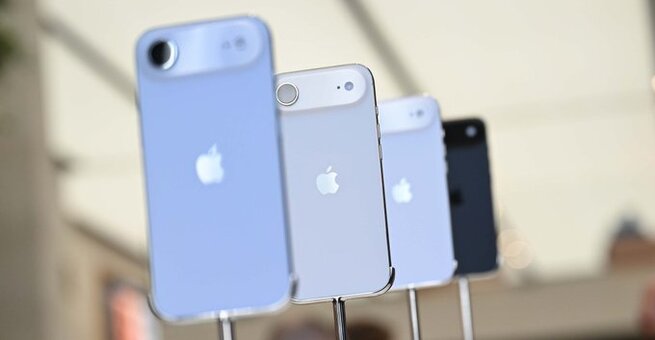
Apple’s reportedly pulling back on iPhone Air production following slower-than-expected sales for its new ultra-thin smartphone. Despite strong overall performance for the iPhone 17 lineup, the sleek “Air” model hasn’t captured the same excitement. According to Nikkei Asia, Apple is notifying its supply chain partners of reduced production targets—hinting that the model could soon reach “end of production” levels.
Sources familiar with Apple’s plans say the company is maintaining its total iPhone 17 production estimate—roughly 85 to 90 million units—but cutting iPhone Air manufacturing significantly. Supply chain insiders told Nikkei Asia that Apple’s reportedly pulling back on iPhone Air production to refocus resources on models showing stronger demand, such as the base iPhone 17 and the Pro lineup.
The iPhone Air accounted for about 10–15% of planned production orders, but that share will drop sharply starting November. Meanwhile, Apple has increased production for its base iPhone 17 by around 5 million units and also boosted Pro model orders to meet higher-than-expected demand.
Despite reduced output, the iPhone Air still garnered praise for its design. The Verge’s Allison Johnson described it as “a joy to hold,” noting that its lighter weight was its standout feature, even more than its thin profile. However, the Air’s single camera and limited battery life have drawn criticism compared to the iPhone 17 Pro.
Apple’s foray into ultra-thin phones with the iPhone Air might serve as a testing ground for future innovations—possibly the long-rumored foldable iPhone. But early data suggests that design appeal alone hasn’t been enough to drive strong sales.
Analysts at Counterpoint reported that total iPhone 17 series sales outperformed the iPhone 16 lineup by 14% during the first 10 days of availability in the U.S. and China. The base iPhone 17 saw a 31% jump in sales, thanks to upgrades like an always-on, high-refresh-rate display.
Pro and Pro Max models also performed well, with a 12% sales boost attributed to attractive carrier upgrade offers. However, the iPhone Air’s sales mirrored those of the iPhone 16 Plus, which previously held the smallest market share within its generation.
Apple’s reportedly pulling back on iPhone Air production could indicate a strategic pivot. Instead of investing heavily in ultra-thin devices, Apple may double down on models that balance premium features with mass appeal. The move also underscores how Apple adjusts rapidly to real-time demand shifts, leveraging supply chain agility to protect its margins.
If the iPhone Air truly represents the company’s first step toward a new design era, the pullback doesn’t necessarily mean the end—it could simply be a recalibration before the next major leap, possibly the foldable iPhone.
Apple’s decision to scale down iPhone Air production highlights how even tech giants aren’t immune to market realities. As consumer preferences lean toward performance and battery life over aesthetics, Apple appears ready to redirect focus to models that resonate more broadly.
Still, the iPhone Air’s design experiment could shape future hardware innovation—proving that even setbacks can pave the way for what’s next in Cupertino’s playbook.










Comment