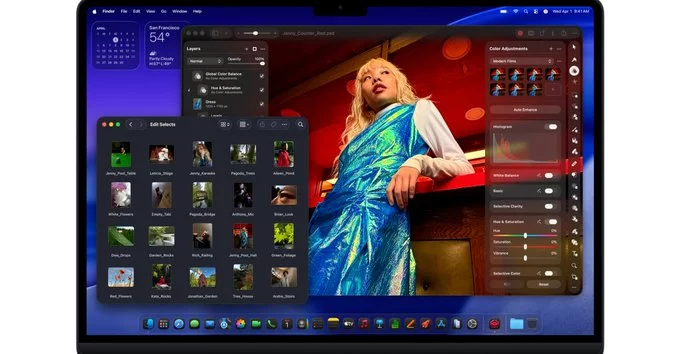
Apple M5 MacBook Air and MacBook Pro models are officially here, bringing faster performance, more base storage, and higher starting prices. Announced this week, the refreshed laptops feature Apple’s new M5, M5 Pro, and M5 Max chips. Preorders begin March 4, with in-store availability starting March 11. If you’re wondering what’s new, how much they cost, and whether the upgrade is worth it, here’s everything you need to know.
The new MacBook Air introduces Apple’s next-generation M5 chip to its thinnest laptop. Performance improvements are expected across productivity, multitasking, and light creative workloads. Apple is also promising a noticeably faster SSD, claiming up to 2x faster read and write speeds compared to the previous generation.
Base storage has doubled. The M5 MacBook Air now starts with 512GB, replacing the 256GB base configuration found in the earlier M4 version. Maximum storage has also expanded to 4TB, up from 2TB, giving power users more headroom for large files, video projects, and creative assets.
Connectivity sees a welcome update as well. The M5 MacBook Air supports Wi-Fi 7 and Bluetooth 6, ensuring faster wireless speeds and better long-term compatibility with modern networks and accessories.
However, these improvements come at a cost. The 13-inch model now starts at $1,099, while the 15-inch version begins at $1,299. That’s a $100 increase over the previous generation, making this the priciest base MacBook Air lineup to date.
The updated MacBook Pro lineup brings even bigger upgrades. Apple has introduced the M5 Pro and M5 Max chips, both designed for demanding workflows such as 4K video editing, 3D rendering, and advanced software development.
Both M5 Pro and M5 Max configurations feature an 18-core CPU. On the graphics side, the M5 Pro offers up to a 20-core GPU, while the M5 Max pushes performance further with up to a 40-core GPU. These upgrades signal a serious boost in graphical performance for creative professionals and engineers.
Storage is also improving across the board. All M5 MacBook Pro models now start at 1TB of base storage, replacing the previous 512GB standard. For professionals juggling massive files, this change alone may justify the refresh.
The Apple M5 chip builds on Apple’s ARM-based architecture, focusing on efficiency and sustained performance. While Apple hasn’t disclosed full benchmark comparisons yet, the generational jump suggests stronger CPU performance, enhanced GPU rendering, and improved machine learning capabilities.
Users upgrading from Intel-based Macs will likely see a dramatic performance boost. Those moving from M1 or M2 models can also expect noticeable gains, especially in multitasking and graphics-heavy tasks. For M3 or M4 users, the improvements may feel more incremental but still meaningful for professional workloads.
Faster SSD speeds also contribute to real-world performance. Launching large applications, transferring files, and rendering projects should feel snappier across both Air and Pro models.
Apple has increased prices for both MacBook Air and MacBook Pro models. The base 14-inch M5 MacBook Pro now starts at $1,699, up from $1,599. The M5 Pro configuration begins at $2,199, reflecting a $200 increase from the previous M4 Pro version.
The most powerful M5 Max MacBook Pro now starts at $3,599, a $400 jump over its predecessor. These price hikes position the MacBook Pro firmly in premium territory, targeting creative professionals and enterprise users.
While price increases can be frustrating, Apple appears to be offsetting them with more generous base storage and improved internal performance. For many buyers, the added storage alone may reduce the need for costly upgrades at checkout.
Connectivity improvements might not grab headlines, but they matter for long-term value. Wi-Fi 7 promises faster speeds, lower latency, and improved performance in crowded network environments. That’s especially useful for remote workers and students relying on high-speed cloud services.
Bluetooth 6 ensures better compatibility with modern accessories, including wireless headphones, keyboards, and smart home devices. Together, these upgrades future-proof the M5 lineup for years to come.
For students and everyday users, the M5 MacBook Air delivers meaningful improvements in speed and storage. If you’re upgrading from an older Intel Mac or an early Apple silicon device, this is a strong leap forward.
Creative professionals and developers will find the biggest gains in the M5 Pro and M5 Max configurations. The added GPU cores, higher base storage, and improved SSD performance make the new MacBook Pro models particularly attractive for demanding tasks.
However, if you’re already using an M3 or M4 MacBook Pro, the upgrade decision depends on your workload. Unless you need maximum graphics performance or expanded storage, the differences may not justify the higher price.
Apple’s latest Mac refresh reinforces a familiar pattern: steady performance gains paired with incremental price increases. By boosting base storage and adding next-generation connectivity, the company positions the M5 lineup as a forward-looking investment.
Preorders begin March 4, with retail availability starting March 11. Early demand is expected to be strong, especially among professionals seeking cutting-edge Apple silicon performance.
Apple M5 MacBook Air and MacBook Pro models mark another step in Apple’s rapid silicon evolution. Faster chips, bigger storage, and future-ready connectivity define this release. The real question now isn’t whether they’re powerful enough — it’s whether the higher prices will slow down eager upgraders.






Comment