
Alerts
-
3 minutes, 30 seconds
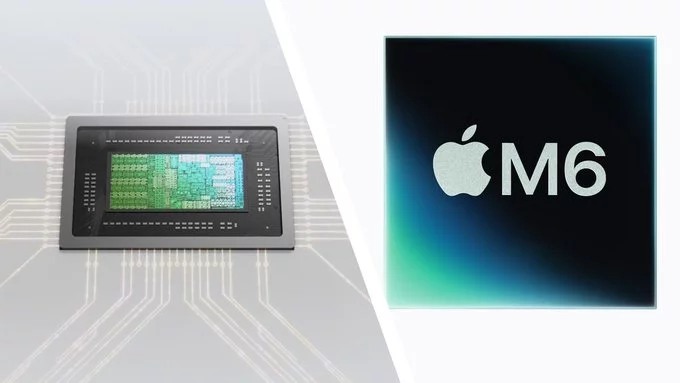
It is tempting to frame the arrival of Nvidia's RTX Spark as the moment Apple's silicon ambitions finally meet their match. The comparison invites a simple narrative: the undisputed leader in AI hardware versus the company that designs its own chips. Yet that framing misses something important about how Apple competes.
Apple has never needed to win every benchmark to stay relevant. Its strength lies in tight integration between hardware and software, and in delivering performance that feels effortless within its own ecosystem. The M6 is not designed to chase raw specifications for their own sake; it is designed to make the machines people actually use faster, cooler, and more efficient.
That distinction matters. Nvidia's RTX Spark may post impressive numbers, but numbers alone do not decide which platform developers and creators choose. Apple's track record suggests it will answer with refinements rather than theatrics, and it would be premature to write off a company that has repeatedly turned scepticism into momentum.
The component expert opened the M6 and found a chip that, on paper, looks like a modest refresh — but the details tell a different story. Fabricated on a 2nm process, the M6 is not a dramatic architectural leap, yet it is a meaningful one. Apple has clearly focused on efficiency and sustained performance rather than chasing headline clock speeds.
What stands out most is the memory subsystem. The expert noted that Apple has widened the memory bus and increased on-package bandwidth, which should pay off in workloads that move large amounts of data — exactly the kind of work the RTX Spark is built for. The GPU cores have also been reworked, with a greater emphasis on matrix operations and on-chip caching.
The expert's conclusion was measured: the M6 is not a chip that will embarrass the competition outright. It is, however, a chip that closes the gap in the areas that matter most, and one that does so without the thermal and power penalties that have historically held Apple's high-end silicon back.
The component expert's teardown of Nvidia's RTX Spark reveals a chip built on a different philosophy from Apple's M6. Where the M6 chases efficiency, the RTX Spark leans into raw parallel throughput, and the die tells that story plainly.
Three details stood out to the expert:
The takeaway: the RTX Spark is not trying to be an M6. It is a part designed for sustained, bandwidth-hungry work, and the expert argues that distinction matters more than any single benchmark number in the sections that follow.
So where does that leave things? The expert's take is that the M6 and the RTX Spark are chasing genuinely different goals. The M6 leans on Apple's unified memory and efficiency, which makes it a natural fit for laptops and desktops where power draw and thermals matter as much as raw output. The RTX Spark, by contrast, is built for users who want maximum graphics performance and don't mind the trade-offs that come with it.
In the expert's comparison, neither chip simply wins outright:
The conclusion is that the right choice depends entirely on what you need. If you value battery life and a seamless Apple experience, the M6 is the sensible pick. If peak graphical power is your priority, the RTX Spark holds the edge. Apple, as the expert notes, isn't out for the count — but the M6 is a different proposition rather than a straight knockout blow.










Comment