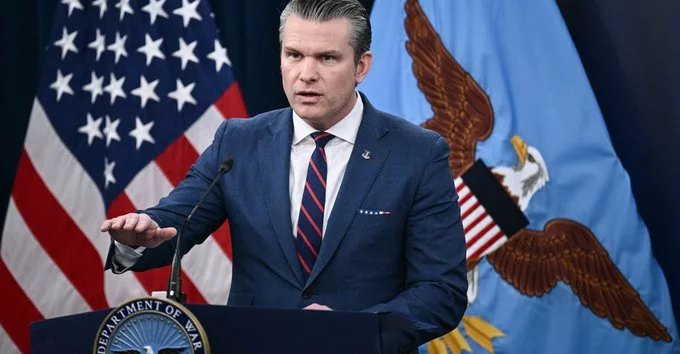
A major dispute between the U.S. Department of Defense and AI company Anthropic has reached a critical turning point. The Pentagon has officially labeled Anthropic a “supply-chain risk,” a designation that could block defense contractors from using the company’s Claude AI system in government-related technology. The decision comes after weeks of failed negotiations over how the U.S. military wants to use artificial intelligence. At the center of the conflict are ethical boundaries around autonomous weapons and mass surveillance.
The Pentagon’s decision to classify Anthropic as a supply-chain risk marks a rare and controversial move against a domestic technology company. Typically, this designation is reserved for foreign firms that may pose national security threats due to ties with rival governments.
With the new classification, defense contractors may face restrictions if their systems rely on Claude, Anthropic’s flagship AI model. Contractors working with the Department of Defense could be forced to remove or replace the technology to maintain compliance with federal regulations.
The label effectively creates a barrier between Anthropic’s AI tools and military projects. Analysts say the move could reshape how defense contractors select AI providers, especially as the military increasingly relies on artificial intelligence for intelligence analysis, logistics, cybersecurity, and battlefield decision support.
The dispute began during negotiations between the Pentagon and Anthropic about potential government uses for the company’s AI models. Officials reportedly pushed for fewer restrictions on how the military could deploy the technology.
Anthropic refused to loosen certain safeguards embedded in its acceptable use policies. Specifically, the company rejected requests that could allow Claude to be used for autonomous lethal weapons without human oversight. It also declined to permit large-scale AI-enabled mass surveillance.
These refusals created a major friction point. Defense leaders argued that allowing a private company to dictate operational limitations would grant excessive control over national defense tools.
Anthropic, however, maintained that strict guardrails are necessary to prevent misuse of advanced AI systems. The company has repeatedly emphasized its commitment to responsible AI development and ethical deployment.
Anthropic CEO Dario Amodei confirmed the company received official notification of the supply-chain risk designation earlier this week. Shortly afterward, the company signaled its intention to challenge the ruling legally.
According to the company’s leadership, the Pentagon’s action lacks proper legal justification. Anthropic argues that the designation unfairly penalizes a private technology firm for maintaining ethical standards around AI use.
Legal experts believe the case could become a landmark battle over how much authority the U.S. government has to pressure AI companies into supporting military programs. If the dispute goes to court, it may set precedents affecting the entire artificial intelligence industry.
For defense contractors, the Pentagon’s decision could create operational complications. Companies currently integrating Claude into analytics platforms, cybersecurity tools, or automated systems may have to reconsider their technology stack.
Switching AI providers is rarely simple. Many AI platforms are deeply embedded in software infrastructure, making replacements costly and time-consuming. Contractors might also need to re-test systems to ensure compliance with government security requirements.
The uncertainty could delay certain defense technology projects as companies evaluate alternatives. At the same time, rival AI providers may see new opportunities to fill the gap created by Anthropic’s restricted status.
The clash between the Pentagon and Anthropic highlights a broader global debate about the role of artificial intelligence in warfare and surveillance. Governments increasingly want access to powerful AI capabilities, while many developers are establishing ethical boundaries around how their technology can be used.
Anthropic has been particularly vocal about preventing AI systems from being used in autonomous weapons without meaningful human control. The company has also warned about the dangers of mass surveillance powered by advanced machine learning.
Defense officials, on the other hand, argue that restricting AI capabilities could weaken national security. Modern militaries are rapidly integrating AI for threat detection, strategic planning, and real-time intelligence processing.
This fundamental difference in priorities is shaping a new kind of tension between technology companies and government agencies.
The situation reflects a widening divide between Silicon Valley-style AI development and defense policy goals. While some tech companies collaborate closely with military agencies, others have adopted strict ethical frameworks that limit defense partnerships.
Industry observers say the Anthropic dispute could influence how other AI companies approach government contracts. Some may adopt clearer boundaries around military use cases to avoid similar conflicts.
At the same time, governments may seek to reduce reliance on private AI providers whose policies restrict military applications. This could accelerate investment in government-developed AI systems or encourage partnerships with companies willing to offer fewer restrictions.
The Pentagon’s supply-chain risk label represents more than a policy dispute. It signals the beginning of a larger struggle over who ultimately controls how powerful artificial intelligence systems are used.
If the legal challenge proceeds, the outcome could reshape the relationship between technology developers and national security institutions. Courts may be asked to determine whether AI companies can enforce ethical limitations even when governments push for broader access.
For now, the conflict continues to escalate. Defense contractors must navigate new compliance rules, Anthropic prepares for a potential court battle, and policymakers face growing pressure to define the boundaries of AI in military operations.
One thing is clear: the intersection of artificial intelligence, national security, and corporate ethics is becoming one of the most consequential technology debates of the decade.






Comment