
Alerts
-
3 minutes, 26 seconds
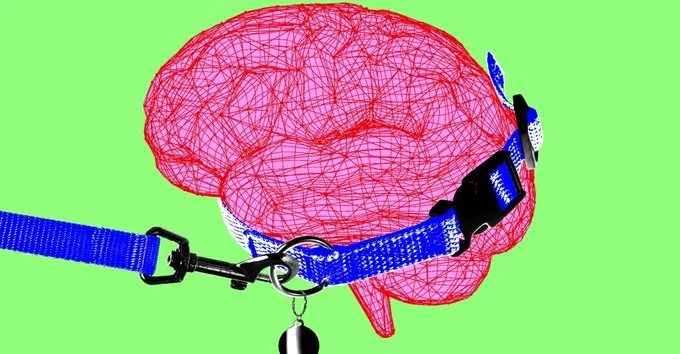
Anthropic CEO Dario Amodei has become an unexpected voice for slowing down. In a new essay titled "The Urgency of Slowing Down," Amodei argues that the industry's current trajectory is reckless, and that the race to build ever-larger models is outpacing our ability to understand them. His warning lands at an awkward moment: his own company sits near the front of that race.
Amodei is not calling for a halt. He frames the problem as a mismatch between capability and control, where each new generation of models arrives before safety research can catch up. The essay, published by Anthropic, sets out his case in detail.
It is a striking position for someone whose company competes directly with OpenAI and Google DeepMind. Yet Amodei insists the alternative — continuing at full speed without guardrails — carries risks the field may not be able to undo.
Amodei's proposal rests on three interlocking measures designed to keep development at a manageable speed. First, he calls for radical transparency: labs should publish detailed safety and capability information, so outsiders can see what is actually being built rather than relying on press releases.
Second, he proposes a coordinated slowdown among leading developers. If frontier labs agree to hold back simultaneously, no single company gains an advantage by racing ahead, and the incentive to cut safety corners disappears.
Third, he wants government involvement to make those commitments stick. Regulators would set binding rules and verify compliance, turning voluntary pledges into enforceable obligations.
Together, these steps form what Amodei describes as pacing the frontier: not halting progress, but deliberately setting its tempo. Each layer reinforces the others — transparency makes coordination verifiable, and government backing gives coordination teeth. Without all three, he argues, the race dynamic simply reasserts itself.
If adopted, Amodei's proposal would not halt frontier AI development so much as ration it. The transparency requirements would give regulators and competitors far greater visibility into the largest training runs, ending the current era in which labs can train flagship models largely out of public view. That alone could slow the pace at which new capabilities arrive, since companies would need to document and justify compute above the threshold before proceeding.
The compute ceiling is the sharper constraint. By capping training runs at a set level, the plan would directly limit the scale of experiments that labs can attempt, which is where much of the recent progress has come from. Smaller labs might benefit, since the rules would apply equally to everyone, but the largest players would feel the tightest squeeze.
Critically, Amodei's plan is designed to pace the frontier rather than freeze it. Development would continue, just at a rate that regulators can monitor and, if necessary, adjust. The result would be a more deliberate industry, with fewer surprise leaps and more predictable, incremental releases.
Amodei's intervention lands at a moment when the industry's default setting is acceleration. Every major lab is racing to ship bigger models, and the compute behind them keeps multiplying. Against that backdrop, a leading CEO publicly arguing that the frontier should be paced rather than sprinted is genuinely unusual.
The timing sharpens the stakes. Amodei's plan rests on three pillars: transparency, coordination, and safety standards that scale with capability. If those mechanisms arrive only after systems are deployed, they arrive too late to shape anything. That is the core of his urgency — governance tends to lag capability, and the gap widens with every release cycle.
His warning is not abstract. Amodei has said the technology could become dangerous and that AI could soon help create novel bioweapons, a risk that does not wait for consensus. He has also warned that a government that ignores safety could face a "nightmare scenario."
For developers, investors, and regulators alike, the question is no longer whether to pace the frontier, but who sets the pace — and whether anyone does before the next model ships.









Comment