
Alerts
-
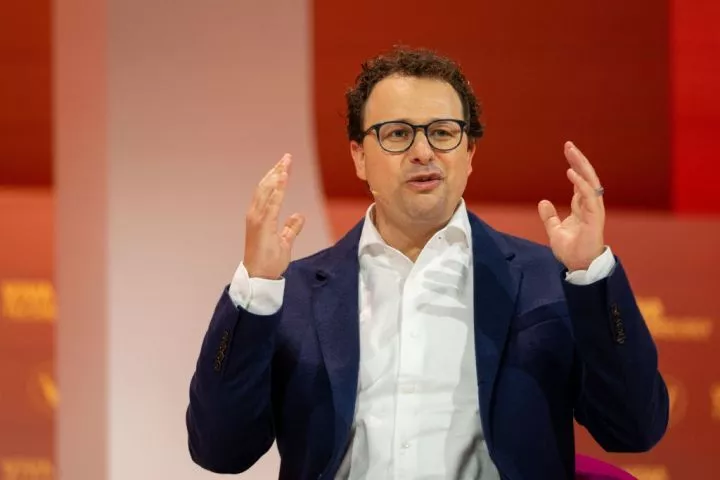
Anthropic CEO Dario Amodei has publicly denied that his company supports any ban on open-weight AI models, addressing swirling industry rumors. In a blog post published Monday, Amodei stated unequivocally: 'Anthropic has never advocated for a ban on open-weights models.' This came after Nvidia CEO Jensen Huang released an open letter urging policymakers to avoid broad restrictions on open-weight AI, signed by Meta, Microsoft, Mistral, Hugging Face, and others.
The controversy centers on whether open-weight models, especially those from Chinese labs, should be regulated. Critics argue that Chinese AI companies may be using techniques like distillation to steal intellectual property from U.S. models. However, Amodei draws a clear line between the threat posed by China and the value of open-weight models.
Distillation occurs when an AI bombards another model with prompts to learn how it works. The U.S. has threatened sanctions against China over alleged IP theft, and Amodei supports a formal crackdown on distillation as a measure to protect American innovation.
Amodei emphasized that open-weight models without dangerous capabilities are a public good. 'They don’t cost anything besides the compute needed to run them, and they provide value to businesses, developers, and researchers,' he wrote. He explicitly stated that businesses using open-weight models, even from China, are not among his concerns.
His real fear lies with authoritarian governments building models more powerful than those in the U.S. to achieve 'permanent military superiority' or repress their own people. While the Chinese Communist Party is the most capable example, Amodei is also worried about other regimes.
Amodei listed concrete steps to thwart China's AI progress, including restricting its access to powerful chips (a longstanding U.S. policy) and a formal crackdown on distillation. He also supports the creation of a global model safety testing organization, noting that the Trump administration has moved in this direction.
'I think this idea is actually close to a consensus,' Amodei wrote. He highlighted industry proposals that would apply testing to the most capable models regardless of origin or openness. Notably, he believes China may cooperate on preventing AI biological weapons because it is in their interest too.
Amodei suggested that startups and academia should be exempt from stringent testing, focusing only on the most powerful models. This balanced approach aims to foster innovation while managing existential risks.
As the AI industry grapples with regulation, Amodei's stance offers a nuanced middle ground: supporting open-weight models as a public good while advocating targeted restrictions and global cooperation on safety.










Comment