
Alerts
-
3 minutes, 36 seconds
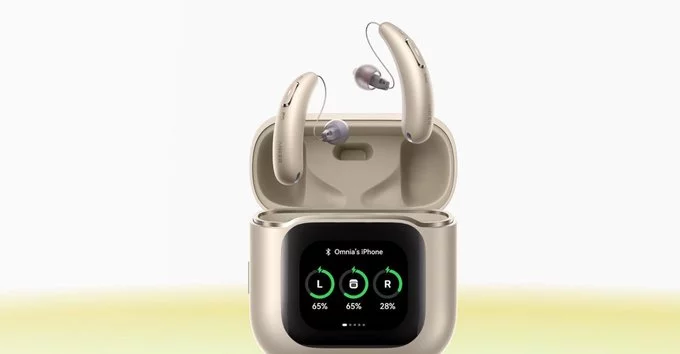
Anker has officially announced its first over-the-counter (OTC) hearing aids, marking the company’s debut in the hearing health space. The move signals a significant expansion for the consumer electronics brand, which is best known for its charging accessories and audio products. By entering the OTC category, Anker is positioning itself to compete in a market that has grown rapidly since U.S. regulations allowed hearing aids to be sold directly to consumers without a prescription or medical exam.
The new devices are designed to address mild to moderate hearing loss, a demographic that the FDA’s OTC rule was intended to serve. Anker’s entry leverages its existing expertise in audio hardware, battery life, and wireless connectivity, potentially offering a more accessible price point compared to traditional prescription aids. While the company has not yet disclosed full specifications or a launch date, the announcement confirms that Anker sees hearing health as a natural extension of its broader mission to make advanced technology more affordable and user-friendly for everyday consumers.
At the heart of Anker’s new hearing aids is the custom-engineered Thus chip. This processor is specifically designed to prioritize vocal quality, making it a standout component for users who struggle most with speech comprehension in noisy environments. The chip’s architecture focuses on isolating and amplifying human voice frequencies while intelligently managing background noise, a critical function for everyday conversations.
According to the product briefing, the Thus chip achieves this by using a multi-band processing algorithm. This allows the device to distinguish between speech and non-speech sounds in real time, ensuring that voices remain clear and natural without the metallic or artificial tone often found in lesser processors. While the company has not published detailed technical specifications, the emphasis is clearly on delivering a more conversational experience. For users, this translates to less effort spent straining to hear a friend across a table or a family member in a busy room. The chip’s efficient power draw also contributes to the device’s overall battery endurance, a practical benefit for all-day wear.
At this stage, the public record on Anker’s over-the-counter (OTC) hearing aids remains remarkably thin. The company has not yet released a full technical datasheet, a user manual, or a detailed specification list. What we know is largely limited to the announcement that the devices will leverage a chip from Thus, a supplier focused on low-power audio processing. Beyond that, concrete figures on battery life, the number of channels, or the specific fitting ranges for mild-to-moderate hearing loss have not been formally disclosed.
Pricing and availability are equally vague. Anker has not confirmed a launch date, a retail price point, or which markets will see the product first. The absence of this data is notable, especially for a category where consumers often need to compare gain curves, latency, and connectivity options. Until Anker publishes those specifics, audiologists and early adopters will have to rely on the company’s broader reputation in consumer electronics rather than on verifiable hearing aid performance metrics. Expect more concrete information only when the device nears regulatory clearance or official retail rollout.
The Thus chip’s architecture is specifically engineered to prioritize the human voice, ensuring that speech is rendered with exceptional crispness and intelligibility. This design philosophy points to a clear goal: enhancing speech understanding for the wearer. Rather than merely amplifying all ambient sound, the chip appears to isolate and enhance vocal frequencies, reducing the cognitive load typically associated with following conversations in noisy environments.
This emphasis suggests that the primary use case is not passive listening but active communication. Users are likely to find that dialogue in person, on the phone, or via television is noticeably clearer, which is a critical factor for those with mild to moderate hearing loss who often struggle with consonant sounds. The result is a more natural listening experience, where the nuances of a speaker’s tone and inflection are not lost in a wash of background noise. This dedicated focus on the spoken word indicates that the product’s value proposition is rooted in maintaining social connection and situational awareness through superior voice reproduction.








Comment