
Alerts
-
6 minutes, 8 seconds
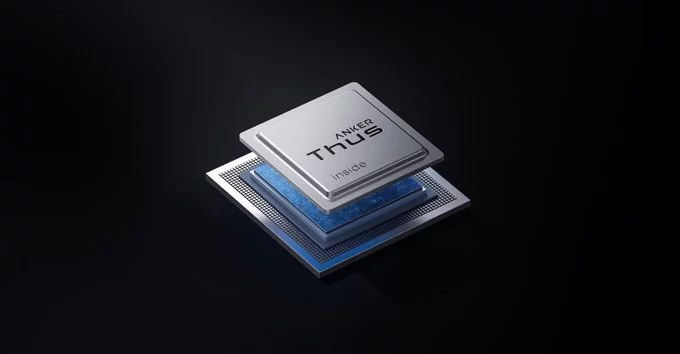
Anker AI chip has become a major talking point in consumer tech as the company unveils its custom-built Thus processor designed to bring artificial intelligence features across its entire product lineup. If you are wondering what the Anker AI chip is, why it matters, and how it will change everyday devices like earbuds and chargers, the answer lies in Anker’s push toward smarter, on-device intelligence. This move signals a shift from app-based AI to embedded hardware intelligence that works seamlessly across products in real time.
We need to explain the Anker AI chip and its purpose. The Thus chip is Anker’s first in-house processor designed specifically for lightweight AI processing on consumer devices. Unlike cloud-dependent systems, it allows earbuds and other gadgets to handle voice recognition, noise control, and smart responses directly on the device. This reduces latency and improves privacy because less data is sent to external servers. Anker’s strategy reflects a growing trend in hardware-driven AI, where companies build custom silicon to optimize performance and energy efficiency. By controlling both hardware and software layers, Anker aims to deliver faster, more personalized experiences. The chip also lays the foundation for future AI-enabled accessories across its ecosystem, making everyday tech feel more responsive and intelligent.
Anker’s rollout strategy begins with earbuds, where the benefits of real-time AI processing are most noticeable. The company plans to integrate the Thus chip into next-generation wireless earbuds to enhance call clarity, adaptive noise cancellation, and voice assistant responsiveness. By processing audio locally, the earbuds can adjust sound profiles instantly based on environment changes such as traffic, wind, or indoor spaces. This creates a smoother listening experience compared to traditional cloud-reliant systems. After earbuds, Anker intends to expand the chip into chargers, speakers, and smart home accessories. This phased approach allows the company to test performance in high-demand use cases before scaling across its broader ecosystem, ensuring stability and user satisfaction while refining AI capabilities over time and reliability ensured.
The introduction of the Anker AI chip marks a shift toward smarter, self-learning devices that adapt to user behavior over time. With on-device processing, gadgets can respond faster and reduce dependency on internet connectivity. This is especially useful in scenarios where connectivity is weak or inconsistent. The chip enables features like real-time language processing, personalized audio tuning, and contextual awareness in supported devices. Users may notice improvements in battery efficiency as well, since optimized AI workloads reduce unnecessary cloud communication. Overall, the technology enhances usability by making devices feel more intuitive and responsive, bridging the gap between hardware and intelligent software systems in everyday consumer electronics with seamless system integration.
This development positions Anker as a stronger competitor in the growing smart accessories market. By designing its own AI chip, the company reduces reliance on third-party processors and gains greater control over performance optimization. This could lead to faster innovation cycles and more tightly integrated products. For users, it means accessories that communicate better with each other, creating a unified experience across devices. The move also reflects a broader industry trend toward vertical integration in consumer electronics aiming to improve efficiency and personalization across connected devices ecosystem over long term.
While Anker’s AI chip strategy is ambitious, it also comes with challenges. Designing custom silicon requires significant investment, long development cycles, and specialized expertise. Competing with established semiconductor leaders is not easy, especially in a rapidly evolving AI landscape. Additionally, ensuring consistent performance across diverse product categories adds complexity. However, if successful, Anker could differentiate itself through tighter hardware-software integration and improved user experiences, potentially setting a new standard in consumer AI-enabled accessories over time evolving.
The future of the Anker AI chip points toward a fully connected ecosystem where intelligence is embedded into nearly every product the company offers. From audio devices to charging accessories and smart home gadgets, the Thus processor could enable consistent AI-driven functionality across categories. As the technology matures, users may see deeper personalization, improved automation, and seamless communication between devices. This long-term vision positions Anker to play a meaningful role shaping next generation smart experiences technology.








Comment