Alerts

-
7 minutes, 15 seconds
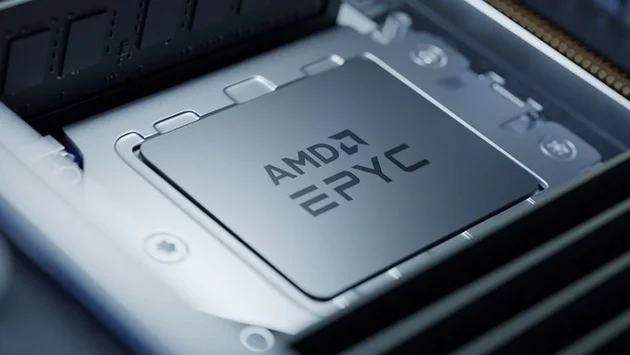
AMD EPYC Sorano is the company’s newest 8005-series processor built specifically for telecom and edge deployments. Featuring up to 84 Zen 5 cores and optimized for virtualized 5G infrastructure, Sorano is designed to boost network capacity, efficiency, and performance. With power ratings reaching 225 watts, it positions AMD as a serious challenger to traditional telecom silicon providers.
Telecom operators searching for higher performance per watt and scalable infrastructure are increasingly turning to general-purpose CPUs for software-defined networks. AMD is betting Sorano will be the processor that accelerates this shift. By focusing on virtualized RAN, core networks, and edge compute, the chipmaker is clearly aiming at one of the fastest-growing segments in data infrastructure.
Sorano represents more than a simple core count increase. It signals AMD’s deeper push into telecom hardware, where reliability, deterministic performance, and power efficiency are just as critical as raw compute power.
At the heart of AMD EPYC Sorano are up to 84 Zen 5 cores, marking a significant step up from the earlier Siena generation. That jump in core density allows telecom operators to consolidate workloads while maintaining predictable latency — a crucial requirement for 5G networks.
Higher core counts translate into more simultaneous packet processing, improved virtualization, and stronger multi-tenant performance. In real-world deployments, that means better handling of traffic spikes, smoother streaming, and more reliable mobile connections.
AMD also continues to refine its architecture to improve instructions per cycle and efficiency. While the chip can reach up to 225W thermal design power, AMD’s track record suggests that lower-power SKUs may follow, giving operators flexibility across central offices and edge locations.
This combination of high core count and adaptable power envelopes is especially important for distributed 5G infrastructure, where space and cooling can be limited.
Modern 5G networks rely heavily on software-defined architectures. Virtualized radio access networks (vRAN) replace proprietary hardware with general-purpose compute platforms. That shift opens the door for processors like AMD EPYC Sorano to play a central role.
Improved LDPC (Low-Density Parity-Check) decoding efficiency is one of Sorano’s standout advantages. LDPC is essential for error correction in 5G transmissions. When decoding becomes more efficient, networks can handle higher throughput with lower latency and less power waste.
For operators, this directly impacts overall network capacity scaling. More efficient decoding means more users served per base station and better data speeds under heavy loads. In dense urban environments or stadium-scale events, those gains can make a measurable difference.
Edge deployments also benefit. As computing moves closer to users for low-latency applications such as autonomous systems, augmented reality, and industrial IoT, having powerful yet efficient CPUs at the edge becomes non-negotiable. Sorano appears engineered for exactly that scenario.
Competition between AMD and its long-time rival Intel has traditionally centered on enterprise servers and data centers. With Sorano, AMD is clearly bringing that battle into telecom infrastructure.
Intel has historically dominated telecom CPUs, especially in network function virtualization. However, AMD’s steady improvements in performance-per-watt and core density have made it increasingly attractive to cloud and enterprise buyers. Telecom operators may now see Sorano as a credible alternative.
Strategically, AMD’s move reflects a broader industry trend. Telecom networks are becoming cloud-native. Hardware vendors that can align with hyperscaler-style architectures are positioned to win. By leveraging the Zen 5 architecture, AMD aims to offer telecom providers the same advantages cloud operators already enjoy: scalability, flexibility, and lower total cost of ownership.
For network operators planning multi-year infrastructure upgrades, diversification away from a single vendor is often appealing. Sorano could help accelerate that diversification.
Power consumption remains one of the most scrutinized metrics in telecom deployments. With top configurations rated at 225 watts, AMD EPYC Sorano sits within expected ranges for high-performance edge processors. Yet efficiency gains at the architectural level may offset the higher core counts.
Telecom providers operate at massive scale. Even small improvements in performance per watt can translate into millions in operational savings annually. AMD’s emphasis on optimized decoding and virtualization efficiency suggests the company understands these economic pressures.
Additionally, Sorano’s design may allow deployment in both centralized data centers and distributed edge nodes. That flexibility reduces complexity for operators managing hybrid architectures.
Mobile traffic continues to surge year after year, fueled by video streaming, cloud gaming, IoT expansion, and AI-powered services. Infrastructure must evolve just as quickly. Processors like AMD EPYC Sorano are designed for this moment.
By delivering 84 Zen 5 cores tailored to telecom workloads, AMD is aligning itself with the software-defined future of networking. Virtualized 5G cores, edge AI inference, and real-time analytics all demand dense, efficient compute platforms.
Industry watchers will closely monitor early adoption across telecom operators. If Sorano delivers on its performance and efficiency promises, it could reshape procurement decisions in upcoming 5G and even early 6G planning cycles.
AMD’s aggressive push into telecom hardware sends a clear message: the fight for next-generation network infrastructure is far from settled. And with Sorano, the competition just intensified.










Comment