Alerts

-
3 minutes, 58 seconds
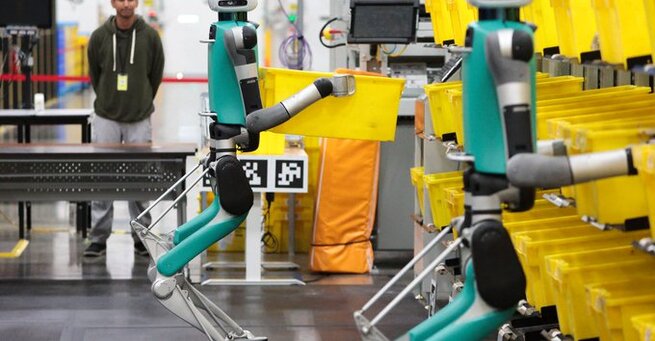
Amazon hopes to replace 600,000 US workers with robots, according to leaked documents that reveal the tech giant’s bold push toward full-scale automation. The internal papers, reportedly reviewed by The New York Times, suggest Amazon plans to automate 75% of its warehouse and logistics operations by 2033. This shift could significantly reduce the need for human labor—even as the company expects product demand to double.
According to the leaked documents, Amazon’s robotics division projects that eliminating 160,000 potential US jobs by 2027 could save roughly $12.6 billion. Automation could cut 30 cents from every item processed, dramatically lowering fulfillment costs. These savings, Amazon believes, will help it stay competitive while maintaining its promise of faster, cheaper deliveries.
The documents also reveal Amazon’s internal communication strategy for handling public backlash. Rather than using terms like “automation” or “AI,” the company reportedly prefers phrases such as “advanced technology” and “cobots”—robots that collaborate with human workers. Amazon executives allegedly discussed participating in community programs to bolster its image as a responsible employer and “good corporate citizen.”
Responding to the report, Amazon spokesperson Kelly Nantel told The Verge that the leaked documents only reflect “one team’s perspective” and not the company’s broader hiring strategy. “Leaked documents often paint an incomplete and misleading picture,” Nantel said. She emphasized that Amazon will continue creating new roles, especially in engineering, maintenance, and AI development, even as automation scales up.
Amazon already has over one million robots operating across its fulfillment centers. The company is testing humanoid machines such as Agility Robotics’ Digit, a bipedal robot designed to perform repetitive warehouse tasks. These innovations could soon reshape Amazon’s operations, potentially making robots the backbone of its workforce within the next decade.
However, critics warn that large-scale automation could lead to mass unemployment, especially among warehouse and delivery workers. Labor advocates have urged Amazon to ensure retraining and fair transition programs for affected employees.
Automation offers undeniable efficiency gains, but the ethical implications remain complex. Replacing 600,000 US workers with robots could have ripple effects across communities, economies, and labor markets. Amazon’s approach to mitigating backlash—by emphasizing collaboration and innovation—suggests it’s aware of the potential reputational risk.
The company’s next steps could define how society perceives the future relationship between humans and machines in the workplace. Whether this shift becomes a model for modern industry or a cautionary tale about technological overreach depends largely on how Amazon executes its automation strategy.










Comment