Alerts

-
3 minutes, 48 seconds
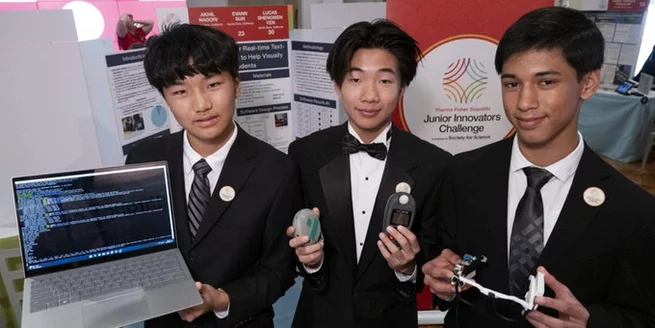
Silicon Valley is currently pouring billions into the race for AI wearables, yet three teenagers from Santa Clara have proven that world-changing innovation doesn’t require a massive corporate budget. Akhil Nagori, Evann Sun, and Lucas Shengwen Yen, all just 15 years old, successfully developed AI-powered smart glasses designed to assist visually impaired students. Their prototype, which cost less than $100 to manufacture, provides real-time text-to-speech translation, offering a cost-effective alternative to the high-priced hardware currently flooding the tech market.
While tech giants are focused on complex hardware and high margins, these young innovators prioritized accessibility and practical utility for the classroom. The trio’s device utilizes integrated AI to scan printed text from any format and convert it into clear audio, allowing students with visual impairments to engage with learning materials more fluidly. By keeping the production costs under $100, they have highlighted a significant gap in the industry where high-tech solutions often remain financially out of reach for the people who need them most.
The journey from a concept to a functional prototype took approximately five months of rigorous development and testing. According to Nagori, the primary objective was to create a seamless user experience that wouldn’t feel bulky or overly technical for a student to use daily. Their dedication paid off when they submitted their invention to the prestigious Thermo Fisher Scientific Junior Innovators Challenge. The project didn't just work—it impressed the judges enough to secure a $10,000 award, validating their approach to "lean" AI development.
The success of these Santa Clara teens is a testament to the democratization of artificial intelligence tools in 2025. With open-source software and affordable micro-components, the barrier to entry for creating sophisticated AI wearables has never been lower. While venture capitalists are betting on "the next big thing" with massive overhead, this trio focused on a specific social problem and solved it using a fraction of the resources. Their achievement suggests that the future of wearable tech might not just come from corporate labs, but from the bedrooms of Gen Z engineers.
The social impact of this sub-$100 device could be massive, especially for educational institutions operating on tight budgets. Current assistive technologies can often cost thousands of dollars, creating an "innovation tax" for students with disabilities. By proving that the core technology can be built affordably, Nagori, Sun, and Yen are challenging the industry to reconsider their pricing models. Their win at the Junior Innovators Challenge is likely just the beginning, as the tech community now looks toward how these young developers might scale their vision for the public.










Comment