Alerts

-
3 minutes, 16 seconds
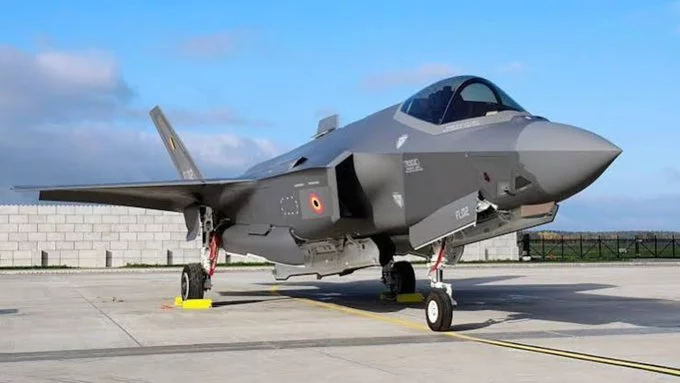
A newly developed artificial intelligence system is enhancing the ability to detect stealth fighters by analyzing their heat signatures. Unlike traditional radar, which struggles to lock onto aircraft designed to scatter radio waves, this AI focuses on the infrared thermal footprint emitted by the aircraft’s engines and airframe friction. The system processes data from ground-based and satellite-mounted infrared sensors, filtering out background heat from the sun, clouds, and other false sources.
According to the research team, the AI was trained on millions of simulated and real flight profiles of both stealth and non-stealth aircraft. It identifies subtle temperature variations and movement patterns that human analysts or conventional software might miss. In early tests, the system successfully tracked a fifth-generation fighter prototype at over 150 kilometers, a range where standard infrared trackers failed. The developers note that the AI does not replace radar but rather complements it, creating a layered detection network that reduces the tactical advantage of stealth in contested airspace.
The system’s core innovation lies in its fusion of hardware and software. Infrared sensors first capture long-wave thermal radiation, which stealth aircraft emit as faint heat signatures from engine exhaust and aerodynamic friction. These signals are often weaker than background noise, making them nearly invisible to conventional detection.
To solve this, the AI applies machine learning algorithms trained on thousands of simulated and real thermal profiles. The model learns to distinguish the unique spectral and temporal patterns of stealth aircraft from clouds, birds, and solar reflections. By analyzing changes in heat over milliseconds, it amplifies weak signatures while suppressing false positives.
Key technical steps include:
This approach enables detection ranges previously unattainable with passive sensing alone. The result is a system that turns a stealth aircraft’s unavoidable thermal emission into its vulnerability.
The core premise of current stealth designs is to minimize radar cross-section (RCS), yet these same aircraft inevitably generate heat through engine exhaust and aerodynamic friction. This new AI-driven detection method, which analyzes thermal signatures, directly challenges that premise. While reducing RCS makes an aircraft nearly invisible to traditional radar, it does little to hide the infrared energy it emits. As a result, even the most advanced stealth platforms could become vulnerable if their heat output is effectively processed by such systems.
This development forces a critical re-evaluation. Stealth designers may need to prioritize infrared suppression alongside RCS reduction, potentially through exhaust cooling or heat-dissipating materials. However, the source notes that these measures add weight and complexity, which can degrade aerodynamic performance. The effectiveness of future stealth, therefore, hinges on balancing these competing demands, as the AI’s ability to detect heat could render current RCS-centric designs less effective in contested environments.
While the AI system marks a significant step forward, its current limitations are tied to the physical constraints of radar detection. The system’s effectiveness is still heavily influenced by range; a stealth aircraft’s reduced radar cross-section means the AI can only provide a meaningful probability of detection at relatively close distances. Furthermore, environmental factors such as heavy rain, atmospheric turbulence, or dense foliage can scatter or absorb radar signals, degrading the data quality the AI relies on.
Ultimately, these improvements aim to push the boundaries of what is detectable, but the fundamental physics of stealth will continue to pose a formidable challenge.










Comment